
A Class at the Home of the Gaon and Tzaddik Rabbi Eliezer Berland shlit"a for
the Students of the 'Breslov - Netzach Netzachim' Yeshiva
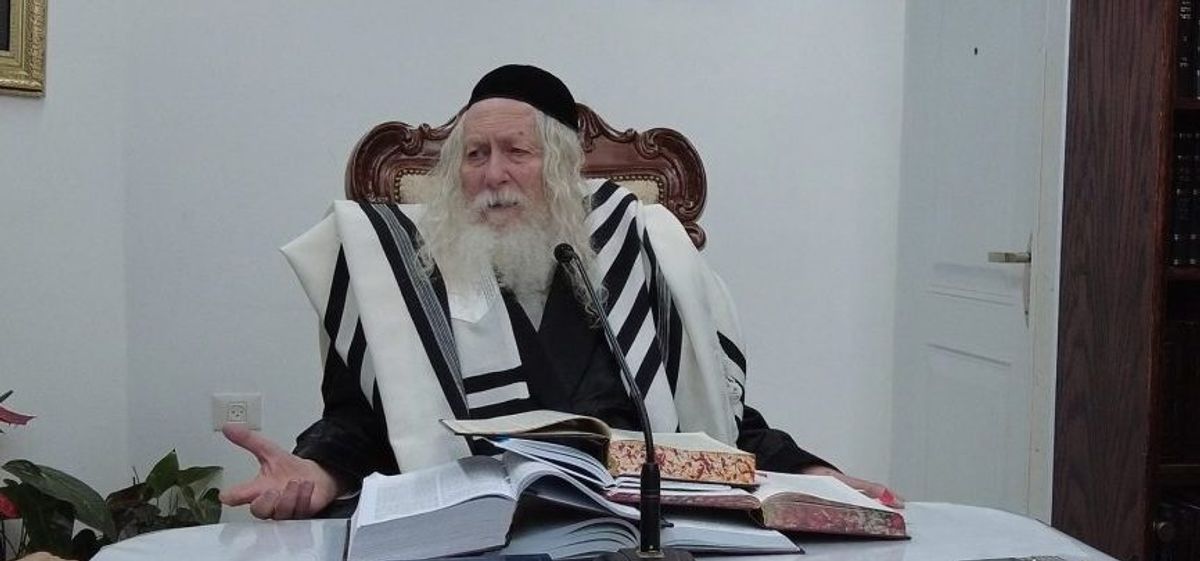
Last Wednesday night, the eve of the 29th of Shevat, during the week of Parshas Mishpatim, the students of the 'Breslov Netzach Netzachim' Yeshiva, led by Rabbi Yaakov Salama shlit"a (may he live long and good days) from the city of Bnei Brak, merited to enter for a class at the residence of the Gaon and Tzaddik Rabbi Eliezer Berland shlit"a.
The following is a summary of the class:
The Rav shlit"a began the class by discussing the matter of Amram divorcing Yocheved (the parents of Moses). He cited Midrashic teachings (homiletic teachings of the Sages) stating that had he not divorced her, he could have brought the Egyptians themselves back in teshuvah (repentance). He spoke extensively to strengthen the importance of shalom bayit (marital harmony). Afterwards, he moved on to discuss the issue of Shimon and Levi killing the people of Shechem, and the dispute between the Rambam (Maimonides) and the Ramban (Nachmanides) regarding why the people of Shechem were liable for the death penalty. Moving from one topic to another, he cited the words of the Ramban in Parshas Vayechi on the verse, "The scepter shall not depart from Judah, nor a lawgiver from between his feet" (Genesis 49:10). He explained that because of this, the Hasmoneans were punished for taking the kingship for themselves and for making a covenant with Rome.
After these words, he returned to the weekly Torah portion—Parshas Mishpatim—and dealt with the verse, "And they saw the G-d of Israel, and under His feet was like a work of sapphire brickwork" (Exodus 24:10). He brought the words of the Arizal (Rabbi Isaac Luria, the great Kabbalist) regarding the secret of the "sapphire brickwork." Continuing the flow, he spoke—distinguishing between the pure and the impure—about the secret of the "bird of impurity" that Balak possessed. This bird would guide him and reveal whether he would be victorious in his wars or not, and because of it, he was called "Balak ben Tzippor" (Balak, son of the bird).
Later in the class, he discussed Jacob's marriage to Rachel and Leah, emphasizing that a person can change their mazal (destiny/fortune) if they merit to pray and cry. This is as it is written regarding Leah, "And Leah's eyes were tender" (Genesis 29:17), because she was originally destined to marry Esau. She would sit at the crossroads and hear about the man's wicked deeds, and she would cry and pray that she should not fall to the lot of that wicked person. During these remarks, the Rav shlit"a added discussions on many other topics, drawing his sources from all the hidden treasures of the Holy Torah.
Towards the end of the class, he returned to the weekly portion regarding the Giving of the Torah, specifically the declaration "Na'aseh V'Nishma" (We will do and we will hear), which is written specifically in this portion—Parshas Mishpatim. Additionally, he spoke about the Sin of the Golden Calf, explaining that they sinned because they did not wait for the Tzaddik—Moses. They were certain he would not return and wanted to draw down the shefa (divine abundance) from the "Ox" in the Heavenly Chariot, as brought in the Sefarim HaKedoshim (holy books).
After about fifty minutes of the class, our teacher the Rav shlit"a concluded with Kaddish (sanctification prayer) and blessed the participants of the class. Within a few minutes, he went out for the Maariv (evening) prayer with a large multitude.
Subscribe to Our Newsletter
Receive Torah articles and inspiration directly in your inbox