
A Lesson for the Residents of Netivot in the Residence of the Gaon and Tzaddik
Rabbi Eliezer Berland shlit"a
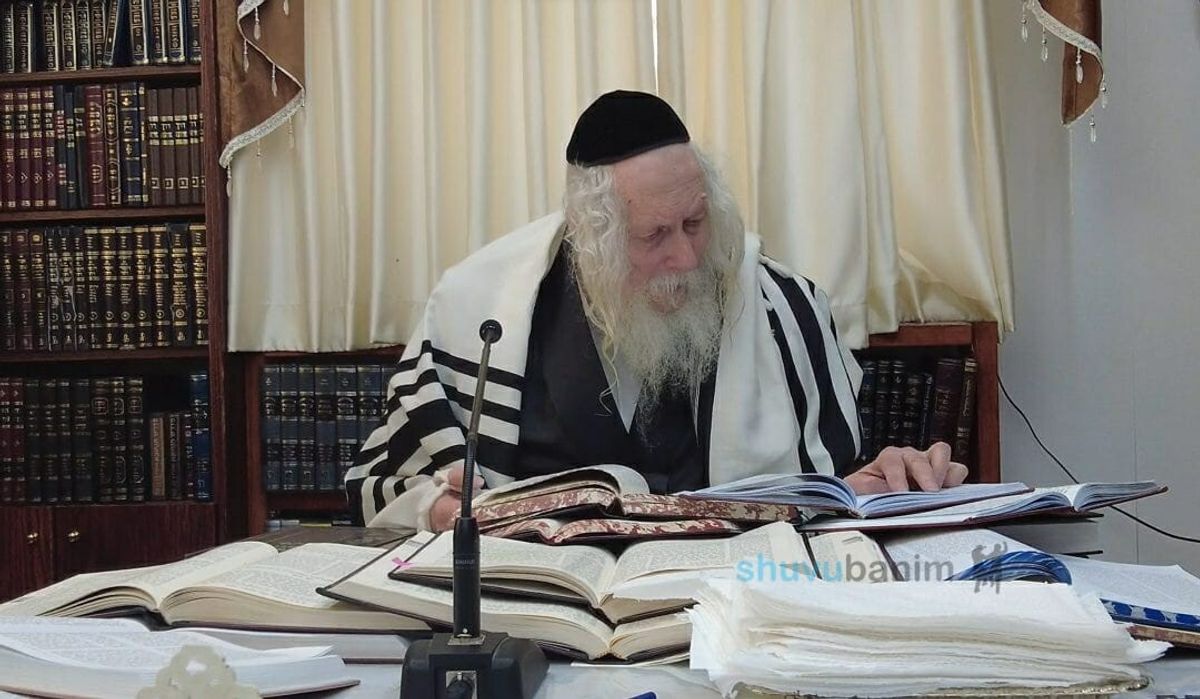
Last night, Wednesday, the eve of the 4th of Nissan 5784, our fellow followers (Anshei Shlomeinu) from the city of Netivot entered for a lesson in the inner sanctum. Before you is a summary of the lesson:
The Rav shlit"a began the lesson with a Midrash (homiletic teaching) discussing the abundance that will exist during the time of the Geulah (Redemption) and explained the verse, "He ties his foal to a vine, and his donkey's colt to a choice branch." Moving from one topic to another, he spoke about the Nesi'im (Princes of the tribes) whose portions are read during these days, noting that on Thursday we read about the tribe of Zebulun. He spoke about how the tribe of Zebulun was "without a double heart" (sincere) and nullified themselves to Deborah the Prophetess.
After these words, he moved on to speak about original insights from the weekly Torah portion of Tazria. From one topic to another, he spoke of the greatness of the women of Israel and how, despite it being said that "the work was sufficient for them" (regarding the building of the Tabernacle), the women continued to bring donations. He also spoke about the secret of the "mirrors of the legions" (the copper mirrors used for the washstand).
Later in the lesson, he dealt with the matter of Eliezer, the servant of Abraham, who merited to enter Gan Eden (Paradise) while still in his body because he accepted the bizyonos (humiliations) from Abraham our Father (who called him a donkey—"Stay here with the donkey"). Afterward, he dealt with the matter of the killing of the people of Shechem by Simeon and Levi and cited the Sefarim HaKedoshim (Holy Books) which say that if a person kills someone, even a gentile, that soul will return in his offspring. Indeed, from the tribe of Simeon, twenty-four thousand died in the incident of Zimri, and those same souls returned as the students of Rabbi Akiva, of whom, as is known, twenty-four thousand also died. Toward the end of the lesson, he spoke about Serach daughter of Asher, who told Jacob our Father that Joseph was still alive, even though she knew he might be strict about it and she might die from his strictness, as happened with Rachel. In the merit of her mesirus nefesh (self-sacrifice)—for one who does not care if they die will live forever—one who follows the Tzaddik will live forever. When a person overcomes his Yetzer Hara (evil inclination), it is as if he built the Beis HaMikdash (Holy Temple).
Subscribe to Our Newsletter
Receive Torah articles and inspiration directly in your inbox