A Lesson for the Residents of Tiberias and Migdal at the Residence of the Gaon
and Tzaddik, Rabbi Eliezer Berland shlit"a
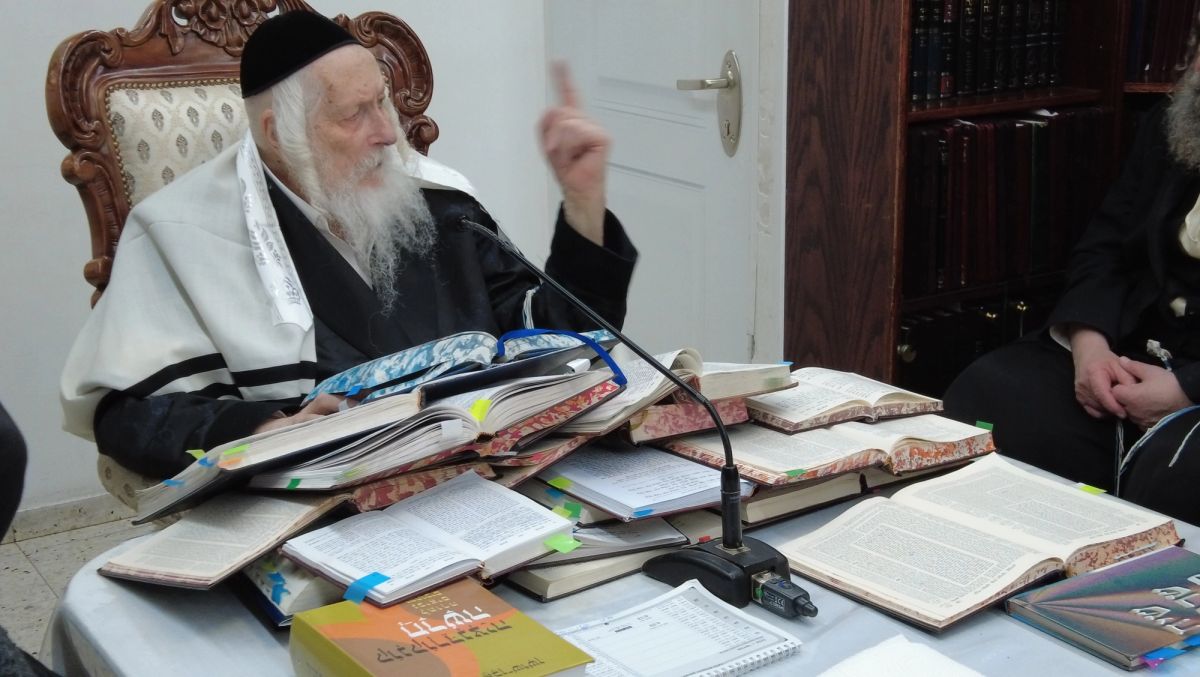
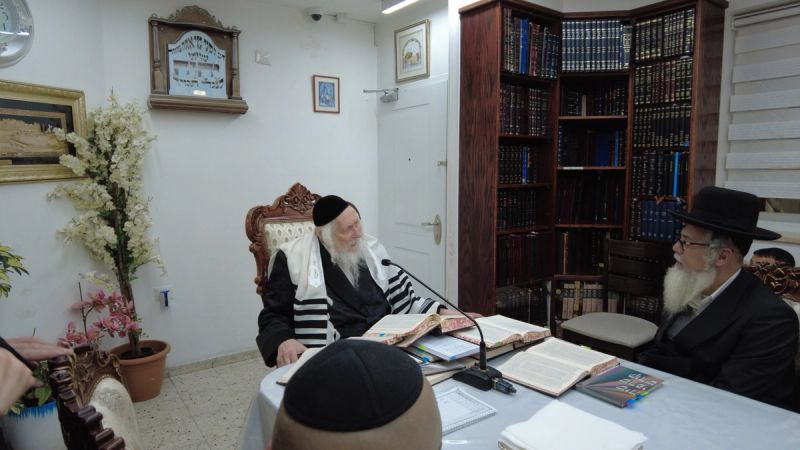
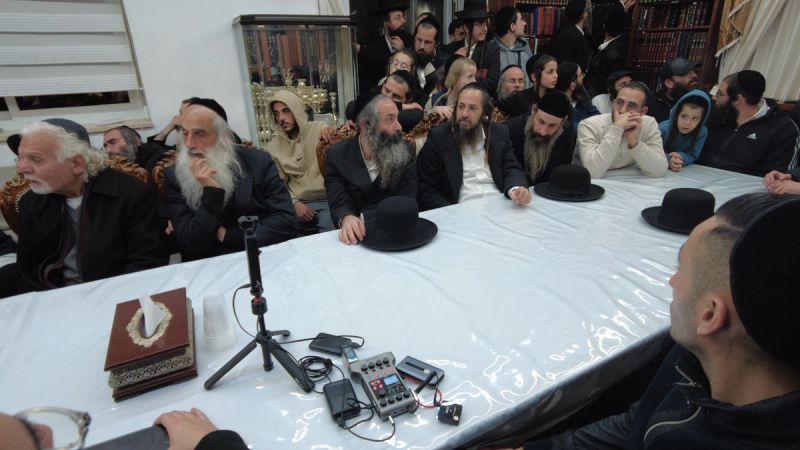
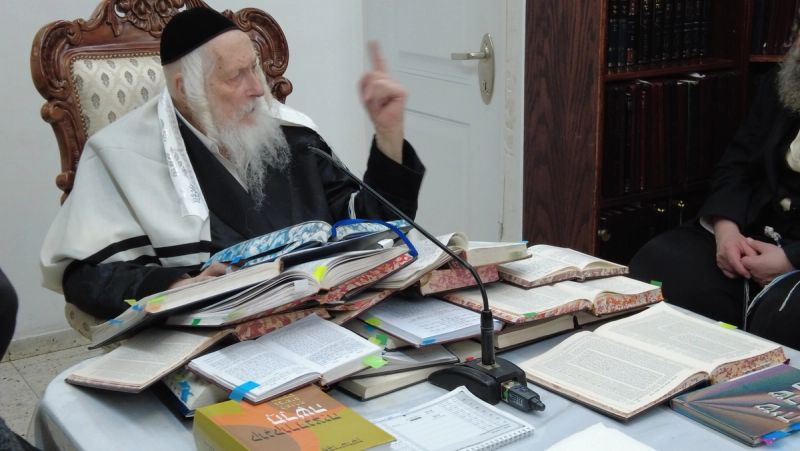
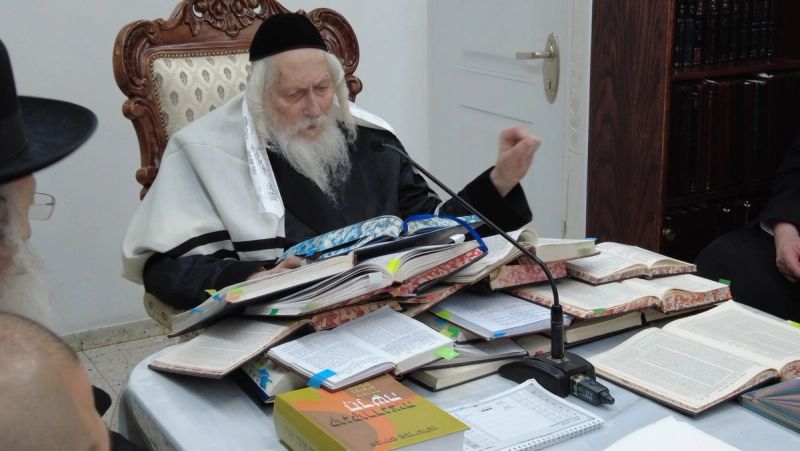
On Monday of Parshat Tetzaveh, the night of the 7th of Adar—the Hillula (anniversary of passing) of Moshe, the Raya Mehemna (Faithful Shepherd)—a lesson was held at the holy residence of our teacher, the Rav, Rabbi Eliezer Berland shlit"a, for the residents of Tiberias and Migdal, students of our teacher, the Rav shlit"a.Before you is a summary of the topics delivered by our teacher, the Rav shlit"a, during the lesson which lasted approximately 56 minutes:1. Why do we celebrate Purim in Adar, given that Haman was actually hanged on Pesach (Passover)? Rather, there are opinions stating that although he was hanged on Pesach, he was miraculously preserved and hanged again on Purim the following year.2. The argument between Vashti and Ahasuerus was whether she should be called "Queen Vashti," meaning the royalty belonged to her due to her lineage from Nebuchadnezzar, who received four generations of kingship, or "Vashti the Queen," implying she was queen only in the merit of Ahasuerus. The promise given to Nebuchadnezzar was for three generations.4. The story of Daniel and the writing that told Belshazzar, "Mene, Mene, Tekel, u-Pharsin"—Hashem (God) has numbered your kingdom and it will end tonight. Also, the dispute regarding the seventy years of exile between the First Temple and the Second Temple.5. On Yom Kippur (Day of Atonement), the daughters of Israel would go out and dance in the vineyards, and they would borrow white garments from one another so that no one would be embarrassed. The reason they danced on Yom Kippur was that the women would place a crimson thread on the window, and by the time of Kol Nidrei (the opening prayer of Yom Kippur), it had already turned white.6. Initially, everyone would place it on the window and it would turn white. This continued until the Sadducees came and corrupted things, after which it no longer turned white for everyone. Therefore, they decreed that it should only be placed at the entrance of the Heichal (the Sanctuary of the Temple).7. "Though your sins be as scarlet, they shall be as white as snow"—even if you have transgressions reaching the heavens. Everything becomes like wool; everything turns into wool in the presence of the Tzaddik. Thus, everything is transformed into wool: "though they be red like crimson, they shall be as wool."8. "Cursed is Haman, Blessed is Mordechai." One must drink until these categories are swapped. The Gematria (numerical value) is five hundred and two. One who merits this level can rectify Haman, for a spiritual Haman exists in every generation. Now it is Khamenei; then it was Hitler, as hinted at in the small letters of the Megillah (Scroll of Esther), which spell out the year 5707 (the year of the Nuremberg executions).9. Nebuchadnezzar became a beast for seven years. He would freeze from the cold at night, and during the day, he would rub against the wall because of the intense heat.10. The Gemara (Talmud) provides signs for when it is Adar and when it is Nisan; when it is Rosh Chodesh (the New Month), when it is Alot HaShachar (dawn), etc.11. Bruriah knew all the homiletic teachings and the books. In the past, there was more focus on Tehillim (Psalms) and Nach (Prophets and Writings). These were shortened so that people would study Gemara (Talmud).12. The difference between Hanukkah and Purim: Purim is an "Asaruta D'Leta'ta" (arousal from below), which requires prayer; therefore, the handle of the gragger (noisemaker) is held from above. Whereas Hanukkah is an "Asaruta D'Le'eila" (arousal from above); therefore, the handle of the sevivon (dreidel) is at the top.13. The story of the seven-headed snake in Bava Metzia contains the secret of the story of the Concubine in Gibeah.14. "From heaven the stars fought, from their courses they fought"—the Hebrew initials of this phrase appear twice as "Haman." All the wicked descend from Sisera, and Rabbi Akiva was the spark of Sisera. For Rabbi Akiva, who was the son of converts, was a descendant of Haman’s grandsons who studied Torah in Bnei Brak.15. Regarding the verse "This month shall be for you," it is said, "their hearts were deaf."16. Every time a new soul comes into the world, each one arrives with a new star. Every time someone is born, a new star is created in the heavens. In the nebula, everything crystallizes into a new star, and this star influences the Geulah (Redemption); it influences everything.17. Everything a person merits is in the merit of his wife. In the merit of his wife, he merits to enter the Kodesh HaKodashim (Holy of Holies), and then he atones for the sins of Israel, for the couple atones for all sins.18. Saul snatched the Tablets from the hand of Goliath, and on that same day, he ran approximately one hundred and eighty kilometers.19. Saul had no sin, but he lacked "bittul" (nullification/submission) to Samuel—to the Tzaddik—regarding the war with Amalek.20. Uriah the Hittite was the only one who knew how to open Goliath's armor after David struck him down. David promised him Bathsheba, but since he was a gentile, Bathsheba was not truly his.21. Two thousand years ago, Rashbi (Rabbi Shimon bar Yochai) stated that the earth is round.22. In Migdal, Jacob planted the cedar trees, and in Be'er Sheva was the "Ammat HaBriach HaTichon" (the middle bar). From these, they made the planks and the middle bar for the Mishkan (Tabernacle).24. "His property, the son of my brother"—this refers to Rava, who was a spark of Lot. Abaye was a descendant of Jael, which is why the law follows him in the cases of "Ya'al Kagam." Abba Umna was a reincarnation of Mamre.25. Aner and Eshkol died because they performed the Bris (circumcision) due to social pressure, whereas Mamre did not die. Therefore, he merited to be reincarnated as Abba Umna.Below is documentation from the lesson within the inner sanctum:
Subscribe to Our Newsletter
Receive Torah articles and inspiration directly in your inbox