
And When a Person Disconnects, Disconnects, Disconnects, Forgets Everything
Leaves Everything Behind, He Receives a New Life
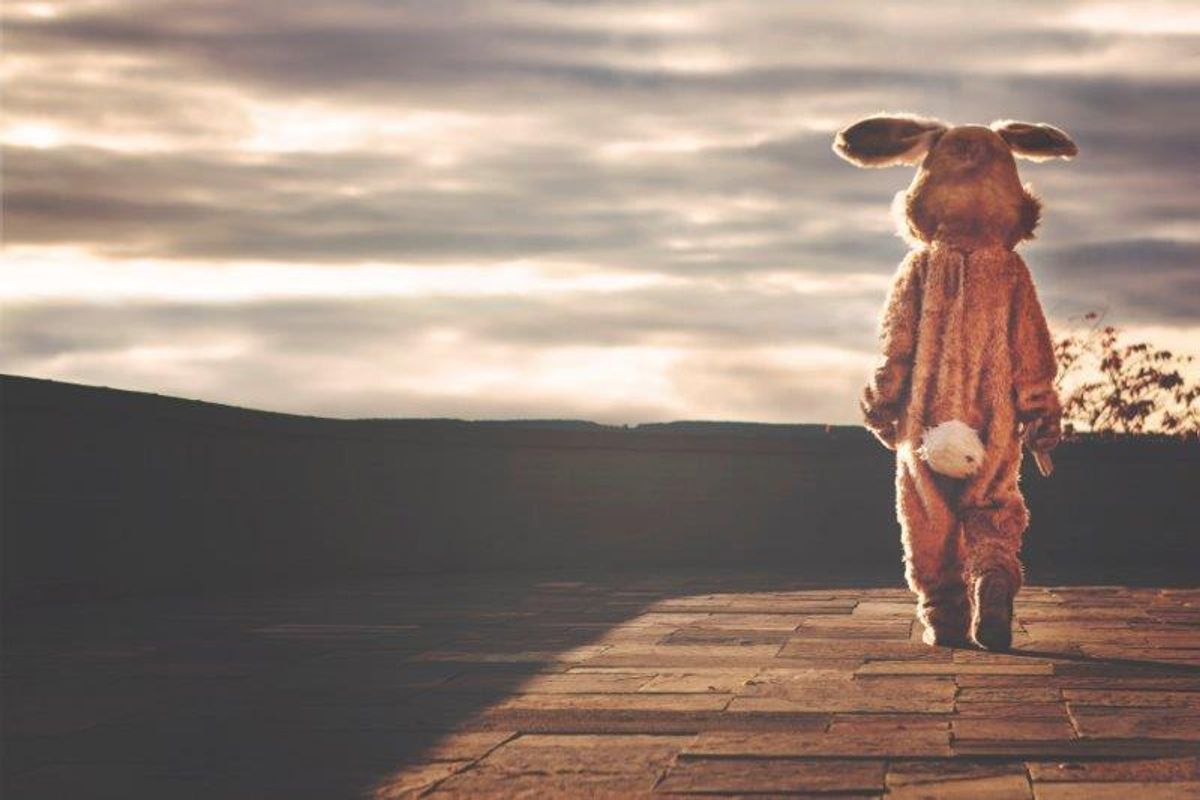
"In the beginning God created the heavens and the earth" (Genesis 1:1)
"For the sake of a beginning God created the heavens etc., for the main purpose of heaven and earth was for the sake of a beginning, meaning that a person should start every time from the beginning, as if today is the very beginning of his start" (Likutey Halachos, Basar BeChalav 4:13).
Everything Starts Anew
When a person starts a new path, he throws everything away. He disconnects from everything. He does not want to take anything with him from what was before. And when a person disconnects, disconnects, disconnects, forgets everything, leaves everything behind, he receives a new life. He receives a higher world.
And so it is in our days as well. Every day is a new day. Yesterday there were confusions, yesterday there was nonsense, yesterday there was anger, yesterday was such and such—today I am a new person. I don't remember anything, everything starts anew. I am not walking now with yesterday's pain, nor with yesterday's confusions, nor with yesterday's anger. Everything starts anew.
Rebbe Nachman says in his holy conversation: "In the world's view, forgetfulness is a great deficiency, but in my eyes, there is a great advantage in forgetfulness. For if there were no forgetfulness, it would be impossible to do anything in the service of Hashem. If one remembered everything that passed, it would be impossible for him to lift himself up to His service, may He be blessed, in any way. Also, all the things that pass over a person would confuse him greatly. But now, through forgetfulness—what has passed is forgotten! Therefore, immediately as the matter passes and goes, he should remove and dismiss it from his mind completely and distract his mind from it entirely, and not start thinking about this matter in his thoughts at all anymore. Understand this well, for it is a very great thing!" (Sichos HaRan 26).
Bereishis (In the beginning)—a word that entirely screams renewal. Hashem, may He be blessed, created everything something from nothing, and everything stands and exists through the utterance of His mouth. Every thing, large and small, is created and comes into being at every actual moment from the mouth of the One who spoke and the world came into being. The Creator of the World says "Let there be light," and at this moment light is created. This is the purpose of creation: that we should know this. That we should recognize the Creator. That we should be amazed by this wondrous creation that He created and is creating. The world is being created right now completely anew, renewing itself and renewing us as well. We need to maintain this renewal, not to fall again into oldness. We are opening a new page in life. Starting a new notebook. And there is no time more fitting for this than Shabbos Kodesh, and not just any Shabbos, but Shabbos Bereishis, the Shabbos of all Shabbosos.
We were created in the image of God. We are inside a body, we are flesh and blood, but we have a Godly soul. Therefore, we are constantly drawn upward, wanting to feel Godliness. The whole wisdom is to put the troubles aside and think good thoughts, to think about what will bring me closer to Hashem. Despite the troubles, despite the difficulties, every single moment we have a choice. We are measured exactly in these things—how much we succeed in lifting ourselves up. To disconnect ourselves a hairsbreadth from the nonsense, from the struggles, from the wasted moments of life. We ascend to a place slightly higher, and there everything looks different. We want *dveikus* (attachment), we want to feel ourselves surrounded by Divine Providence, embraced in the arms of Hashem, protected in the shadow of the Almighty. This is called *Yichud* (Unification). We unite with Hashem. At Matan Torah (the Giving of the Torah), the first *Yichud* took place. The Nation of Israel saw the Holy One, Blessed be He; they saw that there is nothing else besides Him, they heard His voice, and immediately their souls flew to the Holy One, Blessed be He. There were other nations there, everyone was there, only they were terrified; they fled to Balaam, they asked him for an exemption from this "burden"—"This is not according to our strengths, we are not capable, we are not willing, release us from this."
These *Yichudim*, these moments where we connect to the Holy One, Blessed be He, remain forever. Everything else will disappear and cease to be. Like the story of R' Chaikin who asked Rebbe Nachman to bless a certain poor man who had an inn that no one came to, and he had a house full of children and they were all hungry with nothing to eat. So he asked the Rebbe, "Come, enter with me to bless him." But the Rebbe told him, "I have no blessing for him; if you want, you bless him." So R' Chaikin blessed him. He was also a great tzaddik, a devoted student of the Rebbe, who could also bless, and he blessed him here and there, to the north, south, east, and west, that abundance should come. And then abundance began to come, the business flourished, and he had *parnassah* (livelihood) for all the children. Once, this poor man who had become rich was on his way to the market, and back then he would pass by the Rebbe's house. The Rebbe looked through the window, saw him passing, and called him to come up. The Rebbe asked him: "Did you look at the sky today?" And he said no. He could no longer lift his head to the sky; there was no sky anymore. Once, he would lift his head to the sky in the middle of the day—the children are crying, something happens, matters aren't working out in the house, he isn't succeeding, he has confusions—so a person lifts his head to the sky: "Hashem help me, Father help me." This man can no longer lift his head. Under no circumstances. So the Rebbe said to him: "Look here, at this market where you are going to buy merchandise. You see this market there, all the wagons, and all the horses, and all the merchants, and all the people walking, running, and returning? In another 50 years, all those you see here, they will no longer be here. They won't be here. There will be other horses here, and new wagons, and other people, but not those you see here. And I also won't be here. And you also won't be here. So why are you so rushed and troubled that you don't even have time to look at the sky?"
There is external *Yichud* and there is internal *Yichud*. External *Yichud* is the Halacha, it is Daas Torah, it is the Rabbis, it is what is required of you from above. But we want to reach the internal *Yichud* as well, which is the inner work of each individual trying to connect to the truth, to integrity, to what Hashem truly wants from him, and he does it with intention, with all his heart, with all his strength. When a person puts on Tefillin, essentially the laying of Tefillin is external *Yichud*, because it is the Halacha. But his intention in Tefillin, and his emotion when he puts on the Tefillin, is called internal *Yichud*. This connects us with the Holy One, Blessed be He.
["And what if a person doesn't feel? 'I don't feel anything. What, should I pretend? What, should I be a hypocrite? I'll just do it like that.' Yes, do it just like that. Rebbe Nachman says: Make an effort. Pretend that you are praying. Whoever looks at you will think you are the most kosher and righteous Jew in the world. That you are having intention in everything. He won't know that you don't have intention. Don't pay attention to the fact that you don't want to receive false honor, that he will think you are the most righteous. It is like you walking with peyos and a beard and not taking them off, God forbid—because you are not willing to give up on the external. The external is a fence. It is what guards us. But from within this external, suddenly one reaches the internal. Suddenly intention comes to me in prayer. You have no intention, but the movements of intention you must do. You shouldn't say, 'Because I have no feeling and I am sealed, and everything is blocked to me, I won't do it like this.' I *will* do it like this! In the end, suddenly the internal will also come. Because how much can a person be connected to Hashem from the internal? It is not an easy thing. But in his conduct, in what he does—that he doesn't give up kissing the Mezuzah, and he doesn't give up walking with proper clothing, and he doesn't give up on the customs at home... And now we need to bless, now we need to sit at the table and sing Shabbos songs—this is all the external *Yichud*. These things I will do without feeling; I am not waiting for feeling to sit and sing Shabbos songs. I need to seat the whole family to sing Shabbos songs even without feeling. I have no feeling at all, I want to sleep now, I don't feel well, I don't feel holiness, I don't feel anything—but I must. A person says the main thing is the internal, but the internal has no substance, it has no standing if it has no external. Internal is Godliness. What, is God with me all the time? It is a merit that I have a spark of Godliness. So can I build on the internal? No. I will build on the external, and then automatically it must enter the internal. I will ask the Holy One, Blessed be He, 'Give understanding to our hearts,' that the understanding should enter the heart, that it should enter inside as well."] (Be'or Pnei Melech)
The external is my greatness—that even though I don't feel, I do, I am obligated; the Holy One, Blessed be He, wants me to do even without feeling. The only month in the year that has no holiday and no day worthy of note is specifically the month of MarCheshvan, which comes immediately after the month most loaded with holidays and festivals, the month of Tishrei. From the heights of the month of Tishrei, we are cast straight into the grayness, into days devoid of uniqueness and festivity. This is the true test: to live a Jewish life even in gray and ordinary days.
One needs to start learning faith anew every time. To renew oneself with simple faith, that everything Hashem does to you is to bring you closer. Where is there faith when one understands? No! When one understands, there is no faith. There is faith when one doesn't understand what this is and how this is and what happened suddenly that the child wasn't accepted to Cheder, he didn't succeed, and there is no Cheder for him, and they send him from place to place, and I don't know what to do, and there is no *parnassah*, and no apartment—everything is *l'chatchila* (intentional from the start), everything is written in advance, this is the plan, this is the track that our souls need to pass through to reach our clarifications. We cannot run away from this. Every single person has a different part in creation that he needs to rectify, and he is responsible for this part, and if he doesn't do it, no one will do it in his place; the corruption will remain. And even if there are others more righteous than him, greater geniuses than him, they cannot do it in his place, only he can do it because he received this part in Godliness, and he cannot run away from it. This is his *tikkun* (rectification), this is the track, this is what he needs to fix.
Hold on, hold on with strength, even if you feel nothing and have no sweetness in your service. If you want closeness to Hashem, this is the process, this is the truth. This is how one gets closer to Hashem.
R' Yisrael Ber Odesser zt"l went through many sufferings in life. He had humiliations, bloodshed (shame), persecutions, poverty and distress, physical suffering; he went through a lot. In his old age, he said to his people: "Today I see that all the darkness, and all the bitterness, and all the hell I went through in my youth—all this darkness has today turned into the Great Light. From within that darkness, today the light of the Torah shines for me, the light of the Tzaddik shines for me, the pleasantness of Hashem shines for me. The bitterness I suffered then has turned today into such sweetness, and all the hell I went through has turned into such a Garden of Eden, that what I regret is—why didn't I suffer more..."
"Bereishis Bara Elokim" (In the beginning God created)—the final letters spell *Emet* (Truth). Because the world is founded on truth. This is the foundation of all faith. And what is this truth? That alone, I cannot. That I need Hashem for every little thing. That I depend on Hashem every second. I cannot do anything without the Holy One, Blessed be He. This is the truth. And this is what brings me closest, because I must lift my head and pray for everything. In material matters and in spiritual matters. I pray for everything. The Creator of the World waits for our prayers. He created the plants on the third day, but they did not break through; they only came out to the opening of the soil and waited for the sixth day, when Man was created and prayed for rain, and only then did they emerge.
To renew oneself in faith is to throw away the intellect now, because the intellect gives you all kinds of explanations that lead to anger, to sorrow, to despair, to vengeance, to self-blame. You must throw away this intellect and strengthen yourself in the faith that there is nothing else besides Him, that everything is by the will of Hashem, that everything happening to you is the Creator's will, to bring you closer to Him.
"The main faith is in a place where his intellect shows him regarding a certain event that it is not for the good, and he throws away his intellect and holds onto faith that everything is for the good... For in truth, if everyone listened to the voice of the Tzaddikim to always believe in Hashem, may He be blessed, that everything is for the good, and to give praise and thanks to Hashem, may He be blessed, whether for good or for bad, certainly all the troubles and all the exiles would be nullified completely, and there would already be a complete Geulah (Redemption)" (Likutey Halachos, Prikah u'Teinah 4).
Rebbe Nachman says: "For Hashem, may He be blessed, created the world because of His mercy, for He wanted to reveal His mercy" (Likutey Moharan 64). If so, everything that passes over me is all mercy. This is how to look at life.
Every day of our lives we must renew ourselves and renew the war against pride, for it is the source of all evil; it distances us from Hashem more than anything, as it is written, "I and he cannot dwell together." The Serpent seduced Eve, our mother, to eat from the forbidden fruit, and through this "You will be like God." This is the sin of pride! A person thinks he is already God! He controls the world!
The Rav (Rabbi Berland shlit"a): ["With every thought of pride, a person loses all his spiritual and material bounty; all salvations are delayed, all because of pride. Through a thought of pride, the Shechinah disconnects from the person more than any other sin. Sometimes a person fails in a sin, so he is broken... and through this, he merits to do *teshuvah* (repentance). But a person who is in pride has no broken heart at all! Because pride is the opposite of a broken heart, and therefore he does not merit to do *teshuvah*. When a person is in pride, he cannot tolerate anyone in the world; he thinks, 'Who even approaches me? Who is equal to me?' A person walks with the thought that he is the wisest and the smartest. If a person feels that he did some thing—'Here, I prayed with intention, I got up for *Vatikin* (sunrise prayer),' and thinks to himself, 'I am better than that one who is sleeping in bed now'—then everything is lost. That one lying in bed now, perhaps he is a weak person? And perhaps he is shedding tears now under the sheet? What do you know? The moment you have a thought of pride from the fact that you got up for *Vatikin*, or behaved with abstinence, or you have some holy conduct, and therefore you think you are better than the other, at that same moment everything goes to the *Sitra Achra* (Other Side).
A person needs to know that pride and lusts do not belong to a Jew; this is not the essence of the Jew, it is only an external garment. One needs to fight with this and know 'This is not me,' 'This is not what I want,' 'This is not my true will'"] (Until here, The Rav).
The time has come for us to renew ourselves and strengthen ourselves in taking responsibility as well. We have some natural tendency to always look for excuses, to blame the whole world except for ourselves. What does Adam HaRishon answer Hashem, may He be blessed, to the question: "Have you eaten from the tree which I commanded you not to eat from?" He answers: "The woman whom You gave to be with me, she gave me of the tree, and I ate." My wife is guilty. I am always fine. And what does the woman answer to Hashem's question, "What is this you have done?" "The serpent deceived me, and I ate." The serpent is guilty. I am fine. The Garden of Eden is not suitable for people who do not take responsibility for themselves and their actions. I constantly need to check myself: how could I have acted differently to prevent what ultimately happened? And when necessary, to do *teshuvah* and beg before Hashem to help me change. Because if not, the change might come, but it is liable to be much more painful.
Subscribe to Our Newsletter
Receive Torah articles and inspiration directly in your inbox