
"And When Moses Entered the Tent of Meeting" • Shabbat Naso in the Shadow of the
Gaon and Tzaddik Rabbi Eliezer Berland shlit"a
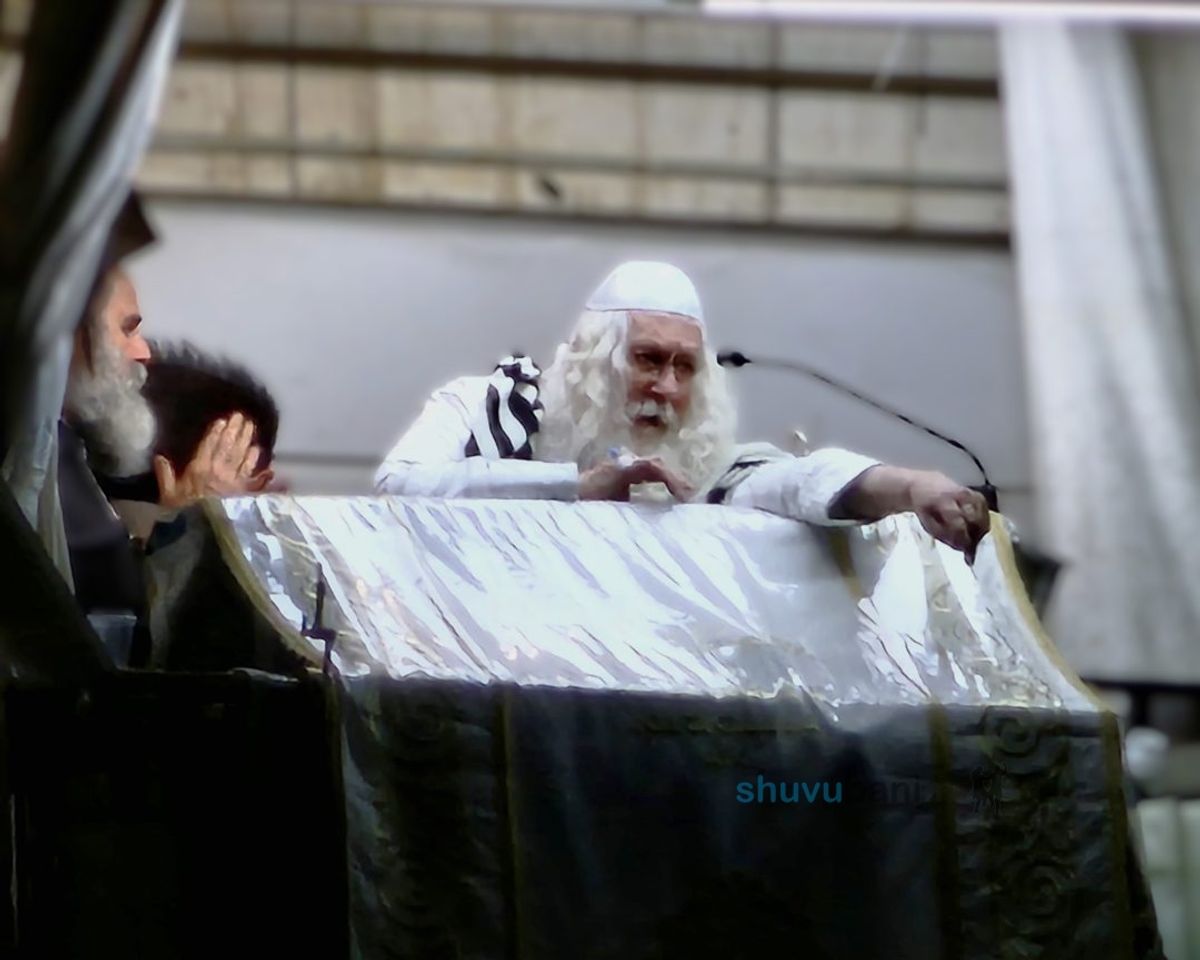
Also on Shabbat Parshat Naso 5784 (2024), we were privileged to experience an uplifting Shabbat in the presence of our teacher, the Rav, Rabbi Eliezer Berland shlit"a. Presented before you is the full report of the prayers, lessons, and meals in the holy shadow of the Tzaddik:
On Erev Shabbat (Friday afternoon), the Rav went out for the Mincha (afternoon) prayer about five minutes before candle lighting at 7:12 PM. He began with the singing of "Or Zarua" (Light is sown for the righteous) for twenty minutes with great vitality. It is worth noting the awesome and immense wonder: although it is known that since the holiday of Shavuot the Rav shlit"a has been under "home hospitalization" due to his medical condition—suffering from heart failure—and despite the IV drip still being attached to him, the Rav shlit"a jumped with joy and extraordinary vitality.
After the singing, the congregation stood for the Mincha prayer. At the conclusion of Mincha, he recited the Seder HaHiskashrus (order of spiritual connection): "Modeh Ani Lefanecha that You have set my portion..." "Harei Ani Moser" (I hereby surrender my will), "Harei Ani Mekasher" (I hereby connect myself). Our teacher, the Rav shlit"a, recited it word by word with everyone repeating after him. Afterward, the Rav began Kabbalat Shabbat (the service welcoming the Sabbath) with "Lechu Neranena" (Come let us sing), psalm after psalm, with all the fire, vitality, and bren (spiritual fervor). He then began the pleasant singing of "Lecha Dodi" (Come, my Beloved), which lasted about twenty-five minutes, as they repeated all the stanzas again and again with immense vitality. Following "Lecha Dodi," the Rav continued the prayer service as usual—the Maariv (evening) prayer with all the melodies in the Shuvu Banim nusach (prayer style), at the height of vitality and joy. The Rav shlit"a then concluded the prayer with the singing of "Adon Olam" (Master of the Universe) and "Yigdal Elokim Chai" (Exalted be the Living G-d). Afterward, the traditional Shabbat songs were added, which the Rav shlit"a is accustomed to reciting together with the public: "Shalom Aleichem" (Peace be unto you), "Ribon Kol HaOlamim" (Master of all Worlds), and "Eshet Chayil" (A Woman of Valor). He entered his holy home at 9:22 PM, following a Friday night prayer service that lasted two hours and ten minutes.
On the morning of the holy Shabbat, the Rav shlit"a entered for prayer at 4:33 AM, approximately two hours before sunrise. Our teacher, the Rav shlit"a, immediately recited the Birkat HaTorah (Torah blessings) and then began the Shacharit (morning) prayer in its order, starting from Chatzos (the Midnight Lament)—specifically Tikkun Leah—followed by the morning blessings. During the morning songs, the Rav shlit"a wrapped himself in his Tallit (prayer shawl). He recited the Korbanot (sacrificial readings) and Pesukei D'Zimra (Verses of Praise) with melodies and great vitality. The only extended portion this Shabbat was during the first song of Pesukei D'Zimra, "Hoshia Et Amecha" (Save Your people), which lasted about five minutes. It was notable that the Rav shlit"a moved like flames of holy fire in a very special way this Shabbat. This was a unique kind of vitality, such that it is impossible to describe these awesome intensities or put them into writing.
Only about two hours after the start of Shacharit, at 6:30 AM, the Rav shlit"a stood for the Shemoneh Esrei (the silent standing prayer). After the Chazzan (cantor) finished the repetition of the Amidah, the Rav shlit"a began the Kriat HaTorah (Torah reading) for Parshat Naso. Although throughout the Jewish world this portion is considered very long and the reading takes extra time, in Shuvu Banim the length was not felt. As on every Shabbat, many people were called up for the Aliyos (Torah honors) to mark various joyous occasions and yahrtzeits (anniversaries of passing). Furthermore, as is his holy custom, the Rav shlit"a personally called up guests and those close to him for the Torah reading, which lasted about forty minutes.
The Rav sang "Zera Chaya VeKayama" (Living and enduring offspring) for about five minutes. Afterward, the Rav sang "Ki Lekach Tov" (For I have given you a good teaching) as the Torah scroll was returned to the Aron Kodesh (Holy Ark). At 7:40 AM, the Rav shlit"a stood for the Musaf (additional) prayer. After the conclusion of the Chazzan's repetition of Musaf, he finished the prayer service in its order. Our teacher, the Rav shlit"a, then recited Kiddush (sanctification over wine) and delivered a brief lesson for about two minutes. Following the lesson, at 7:54 AM, our teacher the Rav shlit"a entered his holy home after nearly three hours and twenty minutes of Shacharit, the Torah reading, Musaf, and the lesson.
It should be noted that before the Rav shlit"a entered his holy home after the conclusion of the "Kiddusha Rabba" (the morning Kiddush), he announced that the Mincha prayer would be at 7:30 PM. Indeed, at exactly 7:30 PM, our teacher the Rav shlit"a entered for the Shabbat Mincha prayer on the balcony of his home, beginning with the recital of Kaddish. He then began saying "Brich Shmeh" (Blessed be the Name) and singing "Yehe Ra'ava" (May it be the Will) for several minutes. Afterward, the Torah was read—Parshat Behaalotecha—with three people called up for Aliyos. This was immediately followed by the Shemoneh Esrei. At the conclusion of the Mincha prayer, which lasted about twenty minutes, the Rav shlit"a washed his hands for Seudah Shlishit (the Third Meal) at 7:48 PM, about three minutes before sunset. As is his holy custom, he began with the first kezayit (olive-sized piece of bread) and started the songs of the Third Meal for twenty minutes. Following these, he sang "Yah Ribon" (G-d, Master of the world) for thirty-six minutes, with the entire large crowd repeating the verse "Ravrevin Ovadach VeTakifin" (Great and mighty are Your deeds) dozens of times. He then continued with the singing of "Ko Amar Hashem: Matza Chen BaMidbar" (Thus says Hashem: He found grace in the desert) for about six minutes, followed by the singing of "Ko Amar: Zacharti Lach Chesed Neuraich" (Thus says Hashem: I remember for you the kindness of your youth) for twelve minutes. Finally, the Rav shlit"a recited the Grace After Meals over a cup of wine.
At 9:08 PM, he began singing "Lamnatzeach BiNginot" (To the Chief Musician with stringed instruments) twice. He then began the Maariv prayer for Motzaei Shabbat (the conclusion of Shabbat) with melodies. After Maariv, during the recital of "Vayehi Noam" (May the pleasantness...), our teacher the Rav shlit"a extended the singing of "Baruch Hu Elokeinu SheBeranu Lichvodo" (Blessed is our G-d Who created us for His glory) for about ten minutes with great length, followed by the next song, "Hu Yiftach" (May He open [our hearts]), for another ten minutes.
In conclusion, the Rav performed Havdalah (the ceremony marking the end of Shabbat) with the singing of "LaYehudim Hayta Ora..." (The Jews had light...) for about a minute. After Havdalah, a surprising new development occurred: instead of washing his hands immediately for the Fourth Meal as is his holy custom, the Rav shlit"a began delivering a chizuk (encouragement) lesson on matters of Tznius (modesty) and upholding the boundaries of Kedushah (holiness).
After this unexpected lesson, the Rav washed his hands for the Melaveh Malkah (the "Escorting the Queen" meal)—this is the meal of David the King Mashiach. Our teacher, the Rav shlit"a, sang all the traditional songs with vitality and a special sweetness. Before the song "Eliyahu HaNavi" (Elijah the Prophet), he delivered another lesson for thirteen minutes! He finally entered his holy home at 10:49 PM, after a continuous period of three hours and twenty minutes that we were privileged to be with him, from the Mincha prayer until the end of Melaveh Malkah. In total, we merited about nine hours in the holy shadow of the Tzaddik throughout this Shabbat Naso, 9 Sivan 5784 (2024).
Subscribe to Our Newsletter
Receive Torah articles and inspiration directly in your inbox