Hannah's Prayer for Chanukah • The Daily Lesson from Rabbi Eliezer Berland
shlit"a
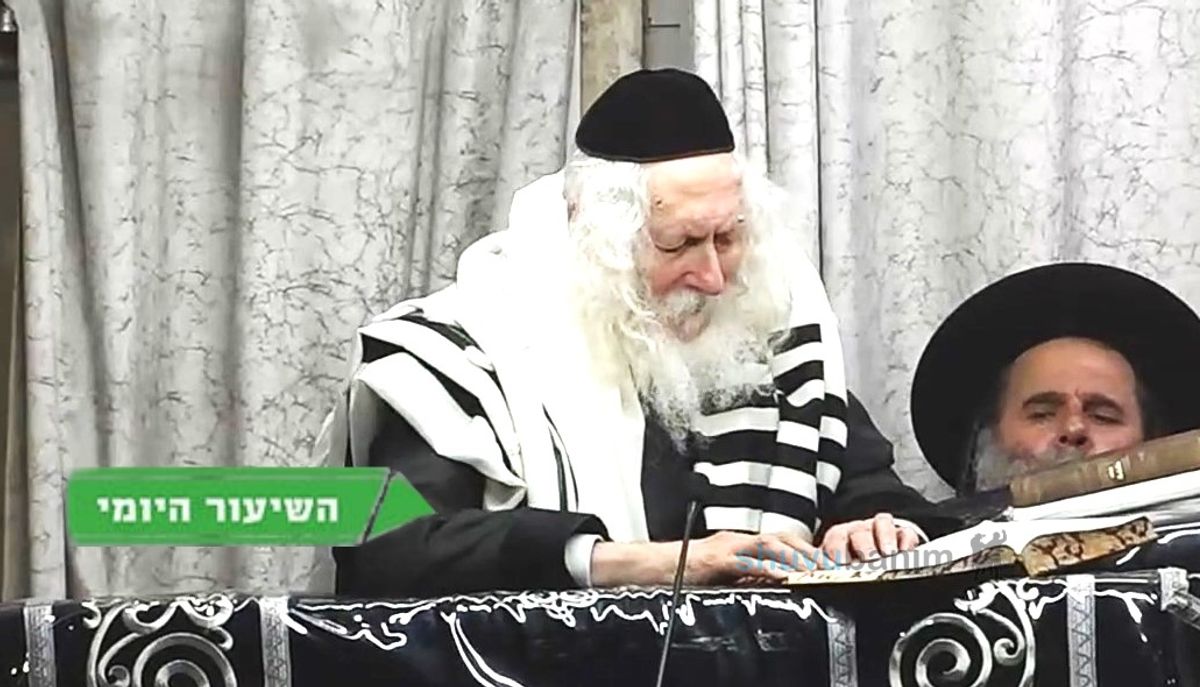
Before you is a summary of the topics from the daily lesson as delivered by our teacher, Rabbi Eliezer Berland shlit"a (may he live long and good days) – yesterday after the Maariv (evening) prayer, Thursday night, the eve of the 6th of Teves 5786, Parshas Vayigash:
- Everyone should learn from the prayer of Hannah about Chanukah, as she prayed for Chanukah.
- Moshe Rabbeinu (Moses our Teacher) also prayed for Chanukah, saying, "Smash the loins of those who rise against him" (Deuteronomy 33:11).
- The Chanukiah (Chanukah Menorah) of Chanukah is a Menorah of fire; the light of Chanukah lasts for the entire year, and every Chanukah, the light doubles itself.
- Everyone doubles themselves by a billion; it turns out that every mitzvah (commandment) a person performs is multiplied by a billion.
- It is possible to turn any metal into gold. The Rebbe (Rebbe Nachman) says this in the 13th Tale (The Seven Beggars).
- Today Chatzos (midnight) is at 23:04; one can say Tehillim (Psalms) and then Chatzos (the midnight lamentation) until one o'clock. The boys should study for 12 hours, 12 pages of Gemara.
- Yaakov (Jacob) did not believe it was Yosef (Joseph) until he saw the wagons, which alluded to the law of the Eglah Arufah (the decapitated heifer).
- Yaakov studied all the laws of Eglah Arufah with Yosef. And Yosef studied every day, only reviewing Eglah Arufah, like "Yankele HaKones" who studied only one page during the Holocaust. Every single page studied during the Holocaust is like a billion pages of Gemara (Talmud).
- "The bows of the mighty are broken"—this refers to the Greeks. "And those who stumbled are girded with strength"—these are the Hasmoneans. "Those who were full have hired themselves out for bread"—this refers to the seventy sons of Haman. "And the hungry have ceased"—this refers to Mordechai and Esther. "While the barren woman has borne seven"—this applies to all generations and all the tribes, including Menashe who performed teshuvah (repentance), until the Techiyas HaMeisim (Resurrection of the Dead).
Subscribe to Our Newsletter
Receive Torah articles and inspiration directly in your inbox