Just as He Entered the Covenant • The Joy of the Bris for the Great-Grandson of
the Gaon and Tzaddik Rabbi Eliezer Berland shlit"a
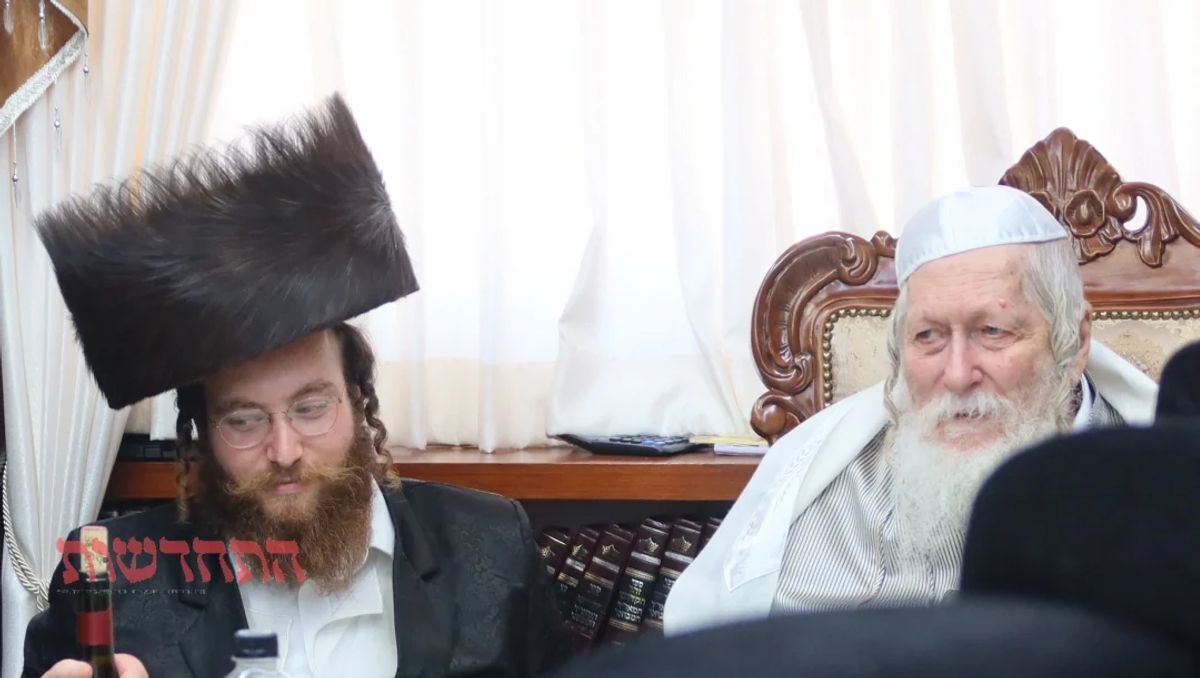
Last night, Sunday, the 21st of Av, Parshas Re'eh, a Bris (circumcision) was held for the great-grandson of the Gaon and Tzaddik Rabbi Eliezer Berland shlit"a (may he live long and good days) in his holy residence. The baby is the son of R' David Weisel, son-in-law of R' Chaim Reicher, may Hashem protect him and give him life, of the Zucker family.
As mentioned, the Bris took place in the residence of our teacher, the Rav shlit"a. The Rav shlit"a was honored with the blessings and the baby was named in Israel: Yissachar Dov Ber, son of R' David Weisel. After the Bris, the Rav shlit"a entered his room and emerged about an hour later for the seudah (festive meal) of the Bris. During the seudah, the Rav shlit"a delivered a shiur (Torah lesson) for about twenty minutes. Below is a summary of the shiur:
He began the shiur with the greatness of the day, the 21st of Av—the yahrtzeit (anniversary of passing) of the Belzer Rav, Rabbi Aharon of Belz zt"l. He told at length how he was saved from the clutches of the Nazis. Afterward, he told how the Jewish settlement in the Land of Israel was saved in the merit of the yahrtzeit of the holy Or HaChaim. He said that surely this baby, who merited a Bris on the yahrtzeit of the Belzer Rav, merited a spark from his soul and also from the soul of Rebbe Nachman. He added that all the souls of the Tzaddikim are rooted in Rebbe Nachman. Then he spoke of Eliyahu (Elijah), the Angel of the Covenant, and the insight on "What are you doing here, Eliyahu?"—that he wanted to receive "mouth to mouth I shall speak with him" (a level of prophecy). Afterward, he spoke of the secret of "the measure of my days, what it is" (Psalm 39:5). "Midat" (measure) is the gematria (numerical value) of Goliath. David wanted to know who his klipa (spiritual husk) was, because every person came to the world to subdue a specific klipa. Afterward, he spoke of the holiness of man. Later in the shiur, he spoke from the Ramban (Nachmanides) in Vayishlach, who said that our entire fall into the hands of Edom (Rome) began because the Hasmonean house went to make peace with Rome. He spoke further about the wars of the Hasmoneans. He also spoke from the Haftarah (prophetic reading) of the weekly portion—Re'eh: "O you afflicted, tossed with tempest, and not comforted... and I will make your windows of rubies, and your gates of carbuncles"—and he calculated how many gates Jerusalem had. Next, he delved into the study of Torah from the topic of mustard and bees in Tractate Bava Batra. Afterward, he spoke about the war of Sisera, and how Devorah (Deborah) the Prophetess renewed the priah (uncovering the crown during circumcision), saying that in this merit they would win the war against Sisera, which seemed lost from the start. He said that what the Tzaddik says does not require proofs or even Ruach HaKodesh (Divine Inspiration). He continued with stories from the Nach (Prophets) regarding Eliyahu's deeds in Tzarfat (Zarephath). He returned to the matter of "mouth to mouth I shall speak with him"—that like Moshe Rabbeinu (Moses our Teacher), one cannot be like the Tzaddik! Because Moshe completely stripped away the physical body, as brought in the Rambam (Maimonides). Finally, he spoke of the dispute of Korach and his assembly, saying: "Know that even if you are swallowed by the earth, do not believe in Moshe Rabbeinu, for even this is sorcery..." Such was the power of the dispute against the Tzaddik!
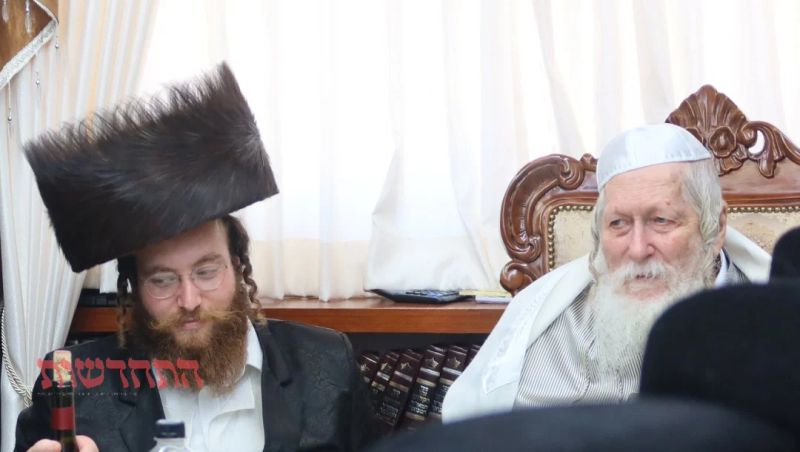
After the conclusion of the shiur, the Rav shlit"a made a L'chaim (toast) and honored one of those present with the Zimmun (invitation to lead Grace After Meals) for Birkat HaMazon, and was later honored with reciting the "HaRachaman" prayers. He then began singing "Biglal Avos Toshiya Banim" (For the sake of the fathers, save the children) for many long minutes.
Photo gallery from the seudah (festive meal) courtesy of the "Hischadshus" bulletin:
Subscribe to Our Newsletter
Receive Torah articles and inspiration directly in your inbox