Lesson for the Residents of Ariel at the Residence of the Gaon and Tzaddik
Rabbi Eliezer Berland shlit"a
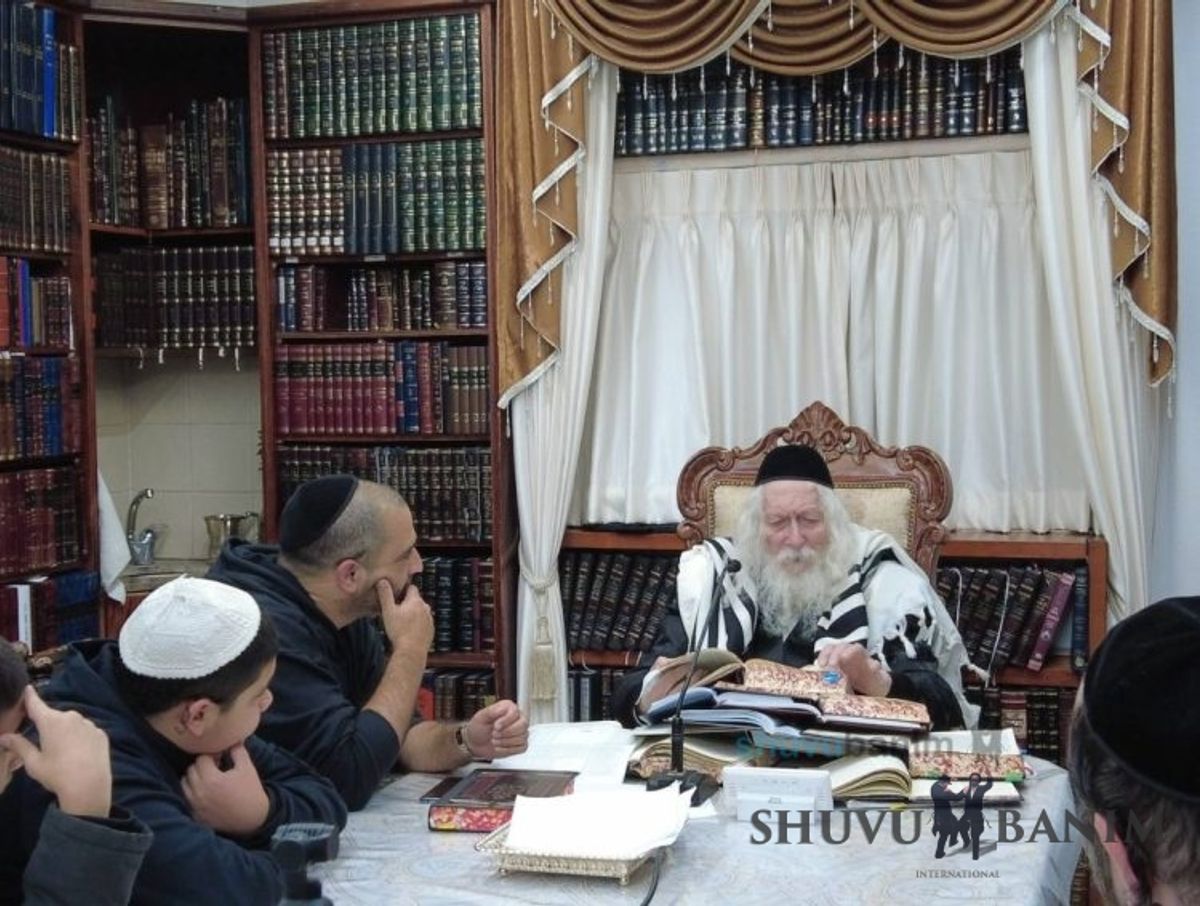
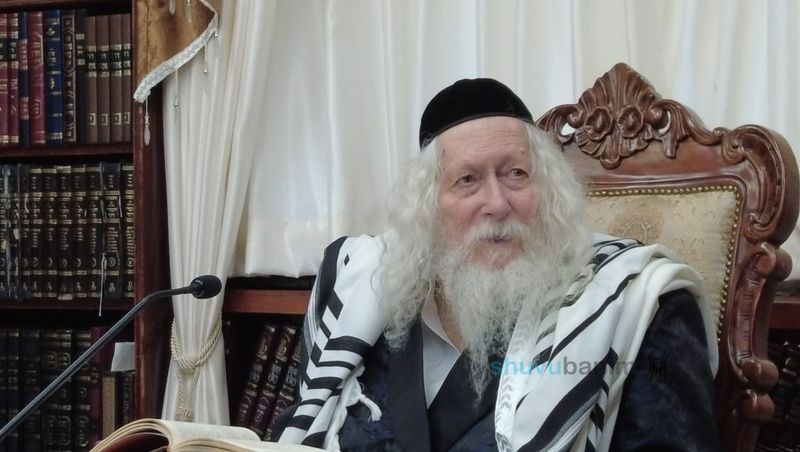
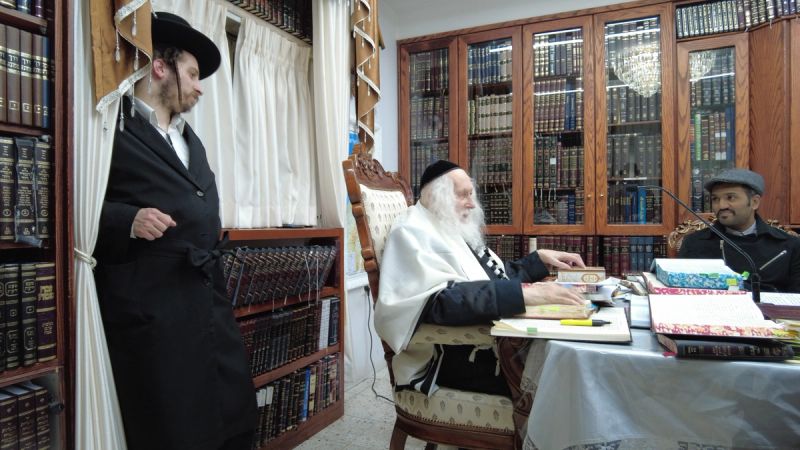
On Monday, the night of the 1st of Iyar, during the week of the Torah portion Tazria-Metzora, a lesson was held at the residence of our teacher, the Rav, Rabbi Eliezer Berland shlit"a (may he live long and good days), for the residents of Ariel in the Shomron (Samaria). The lesson lasted about fifty minutes; before you is a summary of the topics presented during the lesson:
Sukkot (the Festival of Booths) should have been observed in the month of Nissan, not in Tishrei. Moshe (Moses) knew when he sent the spies that they would speak against him. Korach's wife was in shock that Moshe shaved off her husband's beard and peyos (sidelocks). The whole world is against Israel; in 1970, newspapers wrote that Hitler was right and was a true patriot. Until now we had Biden who was against Israel; now we said the Tikkun HaKlali (the General Rectification), "He sent a king and he saved him, a ruler of nations and he released him" (Psalm 105:20). When we say the Tikkun HaKlali, Hashem (God) replaces the rulers. Trump arrived; he is also not a great lover of Israel, but at least he is not like Biden. No one agreed to establish a state for Israel because they said it is a "people"—a rabble that came from all countries. This is what Balak said: "A people has come out of Egypt." All longevity comes from Atik (the "Ancient One," referring to the highest, most hidden level of the Divine Will). It is not enough to study Gemara (the Talmud); one must be connected to the tzaddik (righteous leader) and travel to Uman (the burial place of Rebbe Nachman in Ukraine). The Torah Ohr (a foundational Chassidic work by the Alter Rebbe of Chabad) explains that 777 is the highest level; it comes from Atik. Therefore, the entire Sefirat HaOmer (the 49-day Counting of the Omer) is Atik, and during Sefirat HaOmer, one merits longevity. Rabbi Nachman of Horodenka fled his home immediately after the chuppah (wedding canopy), so the Baal Shem Tov (the founder of the Chassidic movement) said, "You will have a righteous son." For twenty years, I used to go to Shechem (Nablus). I walked to Qalqilya and from there I took Arab service taxis (shared transport) and walked through the Casbah (the old city market area) in Shechem; all the Arabs were trembling with a deathly fear of touching you. We would say there the Tikkun HaKlali, Likutey Tefilot (Collected Prayers), and Gemara, until the Intifada (the Arab uprising) arrived in 5749 (1989). King David said, "I will pursue my enemies and overtake them." David saw miracles every second; today, all miracles are in the merit of the tzaddik. There is a dispute between Beis Shammai and Beis Hillel (the two great schools of Talmudic thought) regarding how to light [the Chanukah candles], whether from eight down to one or from one up to eight. On the eve of the seventh day of Pesach (Passover), it is Mochin d'Katnut d'Ima (the "smallness of mind" or spiritual constriction stemming from the Divine attribute of Understanding); this is the greatest state of spiritual constriction there is. They didn't understand what Moshe wanted from them, to enter the sea... Aaron grabbed the Angel of Death by the throat, and an argument began between Aaron and the Angel of Death: who is greater—Moshe who sent Aaron, or Hashem who sent the Angel of Death? Aaron said to him, "You do not understand what Hashem is saying to you." We need the tzaddik so that we can understand what Hashem wants from us. It is necessary to establish a cheder (traditional Torah school) that speaks Yiddish; whoever studies in a Yiddish cheder, it saves him from the hazards of technology. Nadav and Avihu did not receive blood on their ear; they wanted to abolish death from the world. If a person is attached to the tzaddik, he can live until one hundred and twenty (the traditional lifespan of the righteous). The Gemara says that David accepted lashon hara (evil speech or slander) that Mephibosheth was also against him. A Bat Kol (a Heavenly Voice) went out and said, "Since you divided the field, the kingdom shall be divided." "A covenant is made with the lips"; if a person hears lashon hara, he believes it. It is written, "Rejoice, Zebulun," because Zebulun is the only one who follows the tzaddik without a [double] heart, as it is written, "without a heart and a heart" (meaning with total sincerity and no ulterior motives). One can see at birth: if he looks straight ahead, the child will be a tzaddik. But if he looks to the sides, it is a sign that all his life he will search for "sides" (distractions or deviations). As written in the Midrash Shocher Tov (a collection of Midrashim on Psalms), for forty years every day a Bat Kol went out saying that Shmuel (the Prophet Samuel) was destined to be born. So every mother named her son Shmuel, but they saw from the eyes immediately at birth that they were searching [looking to the sides], until Hannah arrived and gave birth to a son, and they knew it was Shmuel because he looked straight ahead.
Subscribe to Our Newsletter
Receive Torah articles and inspiration directly in your inbox