
Mar Ukva Gave Food and Had to Flee into a Burning Oven • Shabbat Class on Parashat Vayikra
Rabbi Eliezer Berland shlit"a begins this fascinating class with the concept of the small Aleph found in the word "Vayikra," explaining why Moshe Rabbeinu initially refused to write this word. Continuing with his sweet words, Rabbi Berland shlit"a explains how Ruth the Moabite descended from Balak. The Rav further explains the deeper meaning of the sons of Tzruyah, and finally, he offers words of strengthening regarding giving charity and food in secret.
Here is the complete class:
"Vayikra El Moshe (And He Called to Moshe) – The Dispute Between Moshe and Bilaam"
"Vayikra el Moshe" – there is a small Aleph (in the word Vayikra). The Baal HaTurim says that there was a dispute between Moshe Rabbeinu and Bilaam. Moshe claimed, "I am Bilaam," while Bilaam claimed, "I am Moshe." Bilaam argued that he was on the same level as Moshe. Bilaam said about himself: "He who knows the knowledge of the Supreme One," "I see it, but not now," "I behold it, but it is not near," "A star has stepped forth from Yaakov" (Bamidbar 24:16-17). Bilaam said that he sees everything, so he claimed, "I am Moshe."
There was a dispute between them. I tried to bridge the gap between them, to make a compromise so it would be half-and-half, but it was impossible. Because Bilaam "knows the knowledge of the Supreme One," "A star has stepped forth from Yaakov, and a scepter has arisen from Israel" (Bamidbar 24:17) – he knew that a descendant was going to come from him who would destroy two-thirds of Moav, leaving only one-third. "A star has stepped forth from Yaakov" – this refers to David; "and a scepter has arisen from Israel" – this refers to Mashiach.
"Seven Prophets for the Nations of the World – Ruth Left Everything Behind"
There were seven prophets for the nations of the world. One was Iyov (Job). Iyov reincarnated seven times – during the time of Terach, Avraham, Yitzchak, Yaakov, the Tribes, and later during the time of Achashverosh. There were seven prophets – you can learn all about this in Tractate Bava Batra from page 10 to page 17, regarding the seven prophets of the nations of the world: Bilaam, Iyov, Eliphaz the Temanite, Bildad the Shuhite, and Tzofar the Naamathite. They had images of each of their friends engraved on their crowns. If an image darkened slightly, they knew that something had happened to that friend, whether he was sick or had died. This is how they knew to go to one another.
So Bilaam said, "I know the knowledge of the Supreme One," and he knew that David would emerge from Moav – from his granddaughter, Ruth the Moabite. Because Ruth left everything behind. She had everything made of gold – golden clothes, golden pillows, golden blankets – and she left it all just to glean stalks of grain in the field. This is true conversion – only this. Because usually, when a convert converts, they have ulterior motives: they want a shidduch (marriage match) or they want parnassah (livelihood). But here, Ruth converted even though it meant she would be reduced to gleaning stalks of grain.
Therefore, only from such pure intentions could Mashiach ben David emerge, because her conversion was completely for the sake of Heaven. In another 70 days, we will read the Book of Ruth.
"If the Mother is Like Avigail Bat Nachash – Without Desires, the Children Can Fly in the Air"
Just like Avigail the daughter of Nachash (Shmuel II 17:25) and Tzruyah – why is she called Avigail the daughter of Nachash (literally, snake)? I don't agree to bring snakes into this; rather, it means she had no physical desires. Just like a snake has no desire – it doesn't taste any flavor in its food – she too had no physical desires. And whoever brings children into the world without physical desires, those children can fly in the air, like Avishai and Yishbi. This is brought in Tractate Sanhedrin 95, which relates that Avishai flew in the air to save David.
At that moment, he didn't know where to travel – he didn't know where to go: to Moscow, to Iran, or where? Ultimately, he arrived at the gates of Gaza, and there he saw that Yishbi had thrown David 100 meters into the air, and placed his sword on the ground so that David would fall onto it. He had 10 seconds, because every 10 meters takes one second to fall; 100 meters is 10 seconds. There is no difference whether an airplane falls or a tennis ball – they are both the same: every 10 meters is one second.
Missiles are intercepted at an altitude of 100 kilometers, which is why the interceptions are heard very faintly – it's like the distance from here to Haifa, 100 kilometers; sometimes even 500 kilometers. 500 is the maximum.
So he (Avishai ben Tzruyah) uttered a Holy Name, and David remained suspended in the air. Afterward, he said to him (to Yishbi): "Go say hello to your mother." What was his mother's name? Orpah. She was David's great-aunt; she was the sister of his grandmother (Ruth). So he said to him, "Go say hello to my aunt – your mother" – because Yishbi greatly honored his mother. He had the trait of honoring his parents – the first and foremost thing is honoring one's father and mother. Then Yishbi saw that his mother was dead, which confused him slightly, and that is how they were able to kill him.
"Zevulun – Giving Food to Another in Secret is the Hardest Test"
Today we read about Zevulun; today is the day of the Prince of the Tribe of Zevulun. Zevulun is named after Zevul (one of the heavenly firmaments). There are seven firmaments: the first is Vilon, then Rakia, then Shechakim, then Zevul; Zevul is the fourth. The Talmud says in Tractate Chagigah 12b that the Heavenly Temple is located there – in Zevul. Because Leah was spiritually in Zevul when she brought Zevulun into the world, she was connected to the firmament of Zevul.
Zevulun merited both to bring in parnassah (livelihood) and to study Torah, because this is the highest level – to both earn a livelihood and sit and learn is the highest level. He also provided parnassah for Yissachar, because the hardest test is to give food to someone else; he merited to provide food for Yissachar. Therefore, the Zohar says in Parashat Vayetzei that Zevulun corresponds to the Sefirah of Kesser (Crown). (The Arizal also stated this during the Third Meal, as brought in Shaar HaGilgulim).
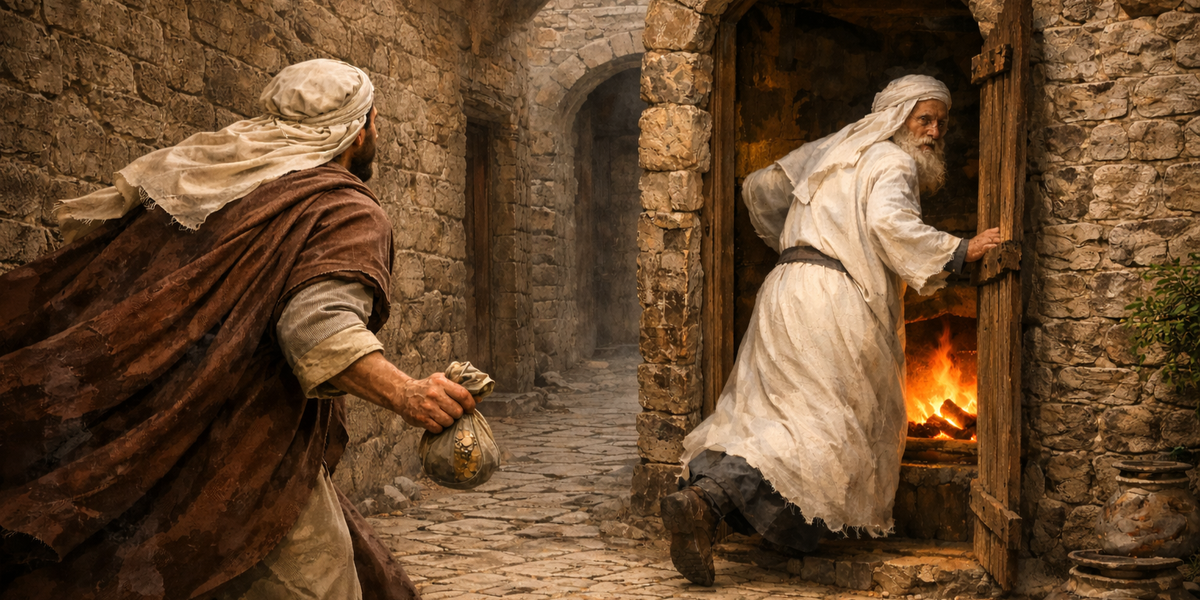
But the highest thing, the hardest test, is to give food to another person. The Talmud in Tractate Ketubot 67b tells the story of Mar Ukva, who fled into a burning oven – he and his wife – because they would secretly give a poor person 10 shekels worth of food every day, ensuring the poor person wouldn't see them. Because if a person gives charity and the poor person knows who gave it to him, the giver has already lost his reward. The poor person will now greet him more nicely, and thus he has already lost the pure merit of the charity. It is necessary that the poor person does not know who gave him the charity.
Inside the oven, his wife felt cold; she apparently forgot to bring a sweater. But Mar Ukva's feet were burning. So his wife said to him, "Stand on my feet." Why did his feet burn while his wife's did not? Because his wife would give actual food to the poor, whereas he would give money.
If a person gives money to a poor person, the poor person makes a calculation: "He gives me 10 shekels every day; so in 400 days I will have 4,000 shekels, and I can buy an electric bicycle." So he prefers to starve and not eat. But his wife would give actual food to the poor person, so he would eat it immediately. That is why her feet did not burn. Therefore, giving actual food to a poor person is on a much higher spiritual level.
"The Entire Nation of Israel Continued to Exist in the Merit of Miriam"
Recently, ninety young men traveled to Lizhensk, and the airport manager had pity on them, so he let them board. Now they are putting him on trial for this, because the planes are returning empty – they bring people there and return empty – so he had pity and let them on.
Miriam had people spit in her face, as it says, "If her father had but spit in her face" (Bamidbar 12:14). Yet everything was in the merit of Miriam. The entire Splitting of the Red Sea was in the merit of Miriam. "The horse and its rider He has hurled (ramah) into the sea" (Shemot 15:1) – "hurled into the sea" (ramah ba'yam) alludes to Miriam, because the entire generation existed in the merit of Miriam. All the men had already despaired of bringing children into the world, but the women did not. Miriam was the midwife of the entire generation – all the 600,000 men who left Egypt, and all the myriad of women who were there – they all existed in the merit of Miriam.
Subscribe to Our Newsletter
Receive Torah articles and inspiration directly in your inbox