
Parashat Vayishlach - The Secret of the Shining Countenance and Bringing the Distant Near
"And Yaakov came safely to the city of Shechem" (Bereishit 33:18)
Whoever brings people back in teshuvah (repentance), all the doors are opened for him and all the keys are handed to him...
Rabbeinu (Rebbe Nachman) explains in Torah 27 on the verse "And Yaakov came safely to the city of Shechem":
"The awakening of the aspect of 'to serve Him with one accord (shechem echad)' (Tzephaniah 3) is through peace (shalom), and peace is through the aspect of Yaakov, which is the shining of the countenance (ha'arat panim)."
That is to say, when Yaakov arrived in Shechem, he arrived with a shining countenance, with such a radiant face, that there was such an awakening in the city. Everyone wanted to do teshuvah (repentance), to keep Shabbat, to throw away their idolatry, to break free from the lust for money, and to begin serving Hashem. Yaakov Avinu had already established Shabbat boundaries (techumin) for them, instituted coinage for them, and established bathhouses for them, and everything Yaakov told them to do was holy in their eyes.
As Rabbeinu explains (in Torah 23):
"When Yaakov came to Shechem, emunah (faith) was rectified, and this is the secret of 'he instituted coinage,' that he rectified the lust for money. And when he rectified the lust for money, the blemish of idolatry was rectified, and this is 'he established bathhouses for them,' as it is written, 'And the daughter of Pharaoh went down to bathe,' and our Sages expounded: to wash herself from the idols of her father's house."
Yaakov's Pain and the Hope of the Geulah (Redemption)
And this is how the Ramban explains what pained Yaakov when he said to Shimon and Levi, "You have troubled me," because in fact, the people of Shechem were already about to do true teshuvah (repentance). All the people of Shechem had begun to return in teshuvah (repentance); they saw Yaakov and his sons as angels, as exalted people, and all of Shechem nullified themselves before them.
It pained Yaakov that behold, if they had already accepted the Shabbat boundaries, and he had already instituted coinage for them, this means they had already somewhat emerged from the lust for money. And if he had established bathhouses for them, they had already somewhat washed themselves of idolatry, and therefore, "You have troubled me!" I wanted to bring everyone back in teshuvah (repentance), and you destroyed everything I wanted, because this was my entire hope.
The entire hope of the Geulah (Redemption) is to convert the whole world, to bring the whole world back in teshuvah (repentance). There is no greater shame than a person living in a generation and not bringing them back in teshuvah (repentance)! Any generation that does not bring the world back in teshuvah (repentance) is as if they themselves are causing them to sin. The greatest thing is to bring people back in teshuvah (repentance).
The Rav wanted people to go throughout the entire Land, from Dan to Be'er Sheva, from Metula to Eilat, and bring people back in teshuvah (repentance), as it is brought in the holy Zohar:
"Praiseworthy is the one who takes the hand of the wicked"
Whoever brings people back in teshuvah (repentance), the holy Zohar says, no gate is closed before him. All the gates and all the pathways are opened for him, all the doors are opened for him, and all the keys are handed to him. A person goes and brings others back in teshuvah (repentance), Hashem is glorified through him, Hashem is glorified through him in all realms, in all the worlds: "See what a person I have, a person who brings people back in teshuvah (repentance)."
The Power of Learning Gemara to Illuminate the Countenance
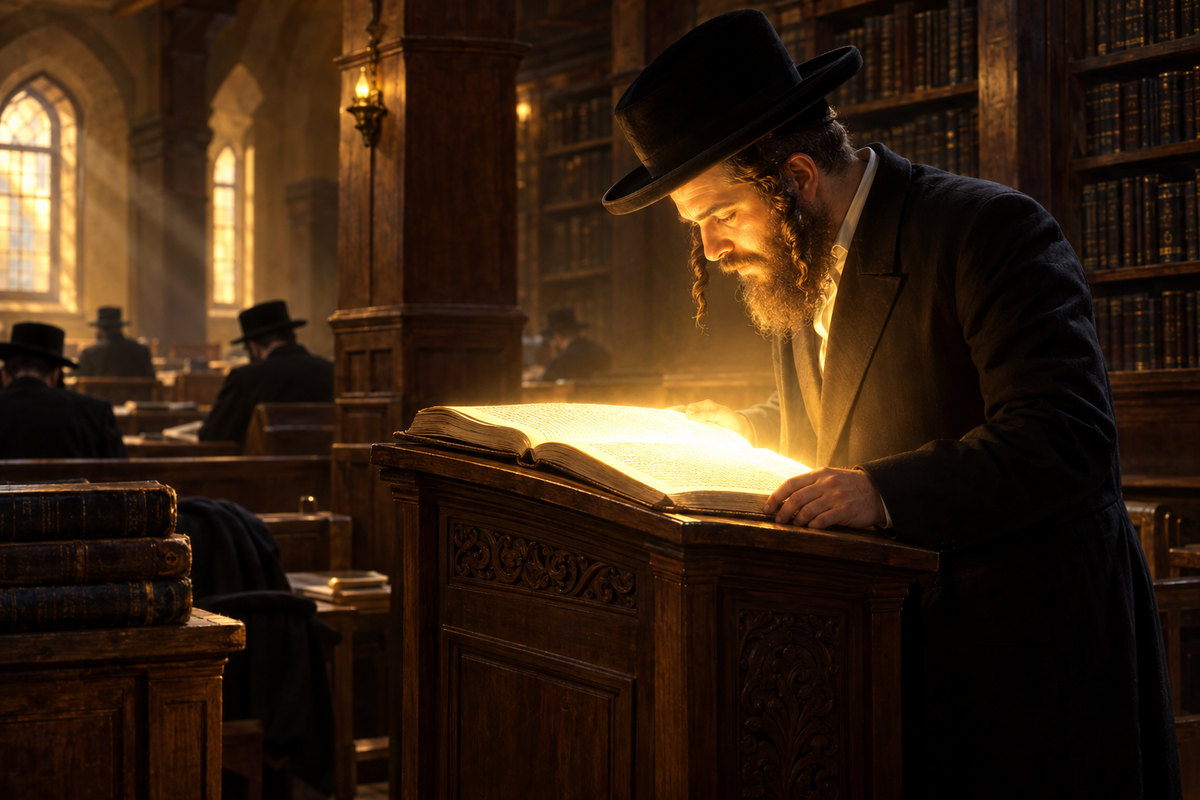
Truly, the greatest thing is to bring people back in teshuvah (repentance), but how does one do this? How does one merit this? Only if a person merits a majestic countenance and has a shining face, a holy face, so that just by looking at his face, from the face alone they will be awakened to teshuvah (repentance).
As they tell of Rabbi Aharon the Great of Karlin, upon whose tombstone it is written that he brought eighty thousand people back in teshuvah (repentance). How did they return? Did he go and deliver classes and lectures? Rather, they merely saw his shining face, his majestic countenance, and everyone returned in teshuvah (repentance).
And to merit a majestic countenance, a shining countenance, Rabbeinu says in Torah 27, this is only through the study of the holy Gemara, because it is impossible to bring people back in teshuvah (repentance) if there is no intellect and no knowledge (da'at). A person needs to have a great intellect, as the Rav says: "I wanted you to have such a great intellect that for several generations there has not been such an intellect." Let us not miss out on the Rav's desires, let us do what the Rav wants, let us do the will of the Rav. The Rav does not want us to just wander around and dance for no reason.
The moment a person learns Gemara, learns Poskim (halachic decisors), he will receive such a light, he will have the 370 myriads of lights. Everyone will run after him, everyone will throw away their heresy, all their questions will be answered. He will come with such a light, with such a shining countenance, with such a radiance—"A man's wisdom illuminates his face." People see such light, such happiness, such joy on the face, and then they return in teshuvah (repentance). What do people want? People want joy, that is what they want. And the moment they see that joy is found with someone who learns Torah, with someone who learns Poskim, and his face shines like the sun, everyone returns in teshuvah (repentance).
To Learn in Order to Teach
The main essence of Torah study is to teach others, as it is written, "And instill in our hearts... to learn and to teach." This is the main thing; the moment a person knows Torah, he is obligated to teach it to others. The true tzaddik never learns for himself; he only learns in order to teach Torah to others. The Torah that a person learns is measured by how much loving-kindness (chesed) and self-sacrifice he is willing to do in order to teach others.
After a person has learned for 8 hours, 10 hours, he must show that he has the strength, the light, and the courage to bring others back in teshuvah (repentance). This is the main practical outcome of all the learning. Everyone can bring thousands upon thousands back in teshuvah (repentance). A group of a hundred people can bring a thousand people back in teshuvah (repentance); within a few years, the entire Jewish people will do teshuvah (repentance).
And if we begin to bring people back in teshuvah (repentance), then the nations of the world will also return in teshuvah (repentance). Our goal is to bring the whole world back in teshuvah (repentance), even the non-Jews. This is what Hashem loves; Hashem is waiting for you to bring the entire Jewish people back in teshuvah (repentance), all the nations of the world back in teshuvah (repentance):
"And all children of flesh will call upon Your Name, to turn unto You all the wicked of the earth. Let all the inhabitants of the world recognize and know..."
What do we say this for? What do we say these verses for? We must bring near the most distant. That everyone will call upon the Name of Hashem - even non-Jews. But first, we will bring back the Jews. If we start with the Jews, we will be able to bring back the non-Jews as well. Everyone will do teshuvah (repentance) and draw near to the faith of Israel, to serve Him with one accord.
Shabbat Zemirot: Life-Force and Joy for the Entire Week
"And he encamped before the city"
In this verse, there is an additional secret. During the six days of the week, you learned, you worked, you traveled to bring people back in teshuvah (repentance)? Now Shabbat has arrived, do nothing, just sing to Hashem. And this is the meaning of "Vayichan" (and he encamped)—that Yaakov made an encampment (chanayah) for them. He taught them not to leave their homes on Shabbat: "Sit on Shabbat, sing on Shabbat!" A person is given one day a week to sing to Hashem.
Shabbat arrives, sit with the children, sing with the children, learn with them, so the children will see what Oneg Shabbat (Shabbat delight) is. This will create such a Kiddush Hashem (sanctification of Hashem's Name) in the world, in all the worlds, in all the Sefirot. A person sings Shabbat songs, it is heard all over the world, in all the countries, and this awakens the souls to return in teshuvah (repentance). A person sits in the innermost chambers and sings songs to Hashem, all the souls hear his zemirot (songs) and his niggunim (melodies).
"And you shall return unto Hashem your God"
Sit at home, sing Shabbat songs, you will see that the whole world returns in teshuvah (repentance) just from the songs of Shabbat. From the melodies of Shabbat, people will return in teshuvah (repentance). A person sits on Shabbat and sings Shabbat songs; this is the time when the children receive their Yirat Shamayim (fear of Heaven). They see their father sitting calmly, singing and chanting, it makes them feel so good in their hearts, such calmness. This is their entire life-force, this is their entire joy. Through this, they are not interested in what is in the street; they are not interested in the vanities that are in the street.
What does a child need more than this? He needs to see a smiling, calm father, a father who sings, a father who plays melodies. Sitting for at least two hours at the Shabbat table and singing, this is the child's life-force for the entire week. Start being a simple Jew. The minimum of a Jew is Shabbat zemirot; without this, he doesn't even begin to be a Jew. The child sees that the father doesn't sing on Shabbat, doesn't learn with him, he has nothing to do at home, in the end he will go off the derech (abandon the path of Torah), Heaven forbid. He doesn't absorb holiness, he doesn't absorb purity.
A person doesn't know what Shabbat zemirot are. With Shabbat zemirot, one can revive the dead! As it is told of Rabbi Mordechai, who composed the piyyut (liturgical poem) "Mah Yafit U'Mah Na'amt Ahavah BaTaanugim." His son passed away on Friday night after candle lighting. R' Mordechai asked to place the child on the sofa in the living room so he would hear the zemirot, and he began to sing "Chai Zakuf Mach," and the son woke up to life! When Shabbat arrives and a person sings all the zemirot, he revives everyone. Everyone is revived, everyone is happy, everyone is joyous, because the zemirot of Shabbat provide the joy and life-force for the entire week.
In the Light of the King's Face is Life: The Power of Ba'alei Teshuvah and Nullification (Bitul)
It is written in the sixth chapter of the Rambam's Eight Chapters that Hashem does not know what He enjoys more, He does not know what He desires more: the deeds of the tzaddikim or the deeds of the wicked—which obviously refers to those returning in teshuvah (repentance), who leave their wickedness. It is impossible to know whether Hashem (Yitbarach) enjoys more the tzaddikim, who are always tzaddikim and give Him such immense nachat ruach (pleasure), or those who struggle, and have such suffering every minute because all the lusts are within them.
There are tzaddikim who were born with such traits, with such devekut (cleaving to God), with such purity. And there are those who were born from terrible kelipot (husks/impure forces), but they struggle, they want to get out of it. What this accomplishes in Heaven is something immense and awesome. It is a pleasure to be a tzaddik. But those who were born with the traits and desires of the wicked, they are tormented, they suffer, they have great afflictions over everything they do. So the fact that they do this with such suffering is beloved before the Omnipresent. Their suffering brings them closer to Hashem; Hashem has such indescribable nachat ruach.
And the advice for this is bitul (self-nullification). Because when a person merits bitul, then he needs nothing more, because essentially, the moment a person is nothing, Godliness clothes itself within him and he becomes everything. By being nothing, he loses nothing; he only gains that all the Divine light clothes itself within him, and he has the Tzelem Elokim (Divine Image), and he becomes so radiant and so wise, and everyone just loves him and just runs after him because he has such immense light. With bitul, one can go from 'cursed' to 'blessed'. When a person nullifies himself, he creates such indescribable nachat ruach in Heaven.
Crying Out to Hashem from the Depths
Additional advice is crying out to Hashem, and in crying out to Hashem there are two aspects. For we learned in Pirkei Avot (3:14):
"He used to say: Beloved is man, for he was created in the Image [of God]; it is a sign of even greater love that it was made known to him that he was created in the Image, as it is stated: 'For in the Image of God He made man.' Beloved are Israel, for they are called children of the Omnipresent; it is a sign of even greater love that it was made known to them that they are called children of the Omnipresent, as it is stated: 'You are children to Hashem your God.'"
And the explanation is as follows: There is a person for whom everything is so excellent, and wonderful, everything is great for him. About him it is said, "Beloved is man, for he was created in the Image." He has the Tzelem Elokim, he learns and prays, everything is wonderful for him - so that is excellent. But, there is another, deeper cry. What happens when he is in a difficult situation? What power does he use then? Then he cries out - "Abba (Father)!" Hashem, You are my Father, I have nothing in the world but You, only You can save me, do not forget that I am Your son. This is already a different aspect of "children of the Omnipresent." With this cry, he reaches a higher place than the Tzelem Elokim. "Children of the Omnipresent" is already the Name "Havayah" (Tetragrammaton), and this is higher than the Name "Elokim."
Hashem loves even the lowest places. And the lowest people. Even if the Jewish people committed, Heaven forbid, all the sins in the world, they are still His children, this is His son, this is His baby. Hashem loves him even with what happened to him, He cannot leave him - they are children of the Omnipresent.
Insights on the Torah
"And Yaakov sent angels before him to Esav his brother" (Bereishit 32:4)
According to our Sages, heavy fears nested in Yaakov's heart on the eve of the meeting with his brother. At that time, Yaakov surely remembered the threatening words Esav had voiced before his departure to Lavan's house, about twenty years earlier ("Let the days of mourning for my father draw near, and I will kill my brother Yaakov"). Therefore, Yaakov prepared himself for three things: for a gift (sending a present to Esav), for prayer, and for war.
This path of Yaakov Avinu must, according to our Sages, serve as a guiding line for us, his children, in all generations: to pray to the One Who dwells on high and ask for His help for us, the children of His nation, against our enemies who surround us. At the same time, we must prepare ourselves simultaneously "for a gift and for war." That is, on the one hand, we must do everything possible to appease the oppressors of Israel, and at the same time, we must prepare with all our strength, in case the enemy chooses the path of war.
"And Yaakov was very afraid..." (Bereishit 32:8)
On this verse, we learned in Bereishit Rabbah: "Yaakov said: All these years, he (Esav) has been dwelling in the Land of Israel. Could it be that he comes against me with the power of dwelling in the Land of Israel?" (Is it possible that the merit of the mitzvah of dwelling in the Land of Israel will be to his aid?)
Rabbi Shmuel Mohilever asks about this: Seemingly, it is perplexing that Yaakov Avinu, who testifies about himself - "I have sojourned with Lavan and kept the 613 mitzvot" (Rashi) - would be afraid of Esav, his wicked brother, because the latter (Esav) fulfills only one mitzvah - the mitzvah of settling the Land of Israel! We therefore learn from here that this single mitzvah - dwelling in the Land of Israel - fulfilled even by a wicked transgressor like Esav, can be weighed against many, many mitzvot fulfilled by a tzaddik, the foundation of the world, like Yaakov Avinu.
Rabbi Shmuel continues and says: How much more so that the dwelling of a Jew in our days in the Land of Israel, even if he is lenient with other mitzvot, is beloved and precious before Hashem, may His Name be blessed. And indeed, we find vigorous urging by our Sages for the aliyah (ascent) of every Jew to the Land of Israel:
"Hashem said: Would that the children of My nation were in the Land of Israel, even though they defile it." (Yalkut Shimoni, Eichah 3)
Stories of the Parashah
"And Basemat the daughter of Yishmael, sister of Nevayot" (Bereishit 36:3)
A group of Chassidim once gathered for a "Melaveh Malkah" gathering, and it was the Shabbat of Parashat Vayishlach. After the attendees had gladdened their hearts with food and drink, one of the elders of the group began with words of Torah, and among other things, he said: At the end of Parashat Vayishlach, the Torah tells us that Esav married "Basemat the daughter of Yishmael, sister of Nevayot." Rashi comments on this that at the end of Parashat Toldot, the verse called her Machalat, as it is written: "And Esav went to Yishmael and took Machalat." And we find in the Aggadah of Midrash Sefer Shmuel: Three (types of people) - all their sins are forgiven: a convert who converts, one who ascends to greatness (receives an important position), and one who marries a woman... Therefore she is called "Machalat," to hint to us that all of Esav's sins were forgiven when he married her.
And here there is room to ask about the words of this Midrash: It is natural that the sins of a convert who converts are forgiven, since the person opens a new page in his life from the time of conversion onwards, and our Sages have already said (Yevamot 22a): "A convert who converts is like a newborn child." And also one who ascends to greatness is worthy of the forgiveness of sins, so that a basket of reptiles (a tainted past) will not hang behind his back while he leads others and serves as an example and role model for them. However, by what merit does one who marries a woman have all the transgressions he committed prior to his marriage erased with a wave of a hand?
And while the speaker hesitated slightly in giving his answer, one Chassid among the attendees intervened and called out jokingly: In my opinion, there is no question or wonder here, for our Sages have already ruled (Berachot 5a): "Suffering cleanses (purifies) all of a person's sins."
"I have sojourned with Lavan and delayed until now..." (Bereishit 32:5)
It is told of the Gaon Rabbi Chaim of Sanz, that he once sat at his holy table, grasped his beard that flowed down his garments, and said: "I have sojourned with Lavan (lavan also means white)" - behold, my beard is already white - "and delayed until now" - and I have been delaying all my days, and I still have not returned in teshuvah (repentance)...
After a moment of silence, he continued and told: In the city of Lizhensk, the workers of the "Chevra Kadisha" (burial society) were very simple and small-minded people. When the time came for Rabbi Elimelech to pass away from the world, they came and said to him: Rebbe, confess your deeds!
R' Elimelech answered them: And where were you all those days, when I sat at the table, and ate a full plate of meat with appetite? Was it not then that I still had the strength to repent... Why have you come now, when I am helpless...? After he told them how he would eat and drink excessively, he went on to detail other sins that he had supposedly stumbled in, and thus he calculated and enumerated the sins that each of those present had committed and continued to commit - and they all burst into great weeping, and did not move from there until they all became true ba'alei teshuvah...
Read more
Subscribe to Our Newsletter
Receive Torah articles and inspiration directly in your inbox