The Baal Shem Tov is a Completely New World • The Hillula of the Light of the
Seven Days on the Holiday of Shavuot from the Gaon and Tzaddik Rabbi Berland shlit"a
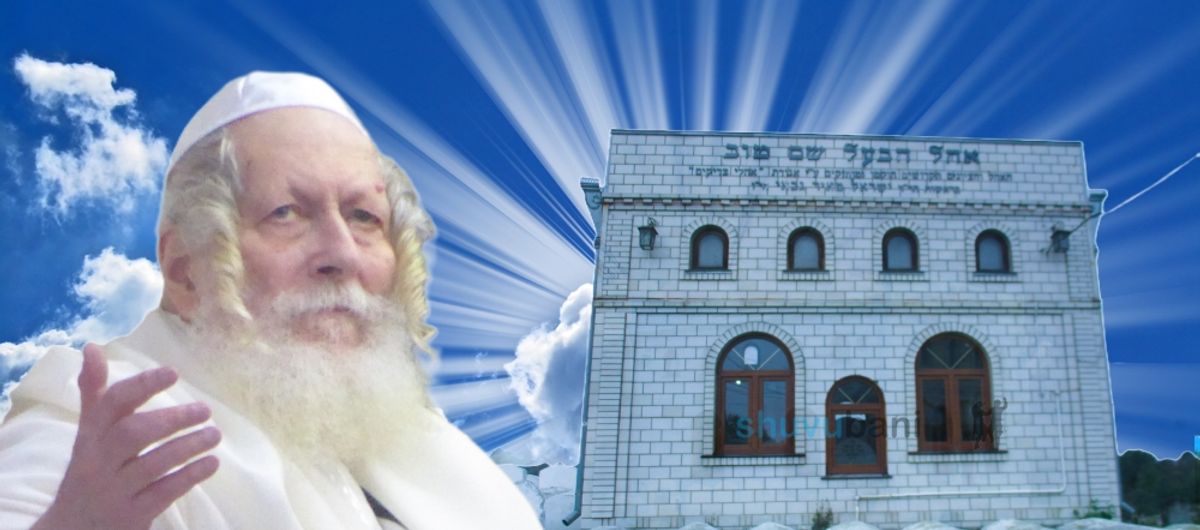
On Shavuot, the festival of the Giving of the Torah, the Hillula (anniversary of passing) of the "Light of the Seven Days," our master Rabbi Israel ben Eliezer, the holy Baal Shem Tov zy"a (may his merit protect us), the grandfather of our holy Rebbe Nachman of Breslov zy"a, will take place. Before you is an excerpt from two lessons by our teacher, the Gaon and Tzaddik Rabbi Berland shlit"a, speaking of the greatness of the Light of the Seven Days:
The Baal Shem Tov was born in 5458 (1698), so he was two years old then [at the turn of the century]. We do not know exactly when he was born, but it is estimated to be the year "Nachat" (5458), and in 5520 (1760) he passed away. He passed away at about sixty years old, from 5460 to 5520, and the Rebbe [Rebbe Nachman] was born 12 years later. The Baal Shem Tov said, "I will come back in another 12 years." So all those who were born after 12 years said, "We are the Baal Shem Tov," but the one who was truly the Baal Shem Tov is our Rebbe; he is the true Baal Shem Tov. He said, "In another 12 years I am descending and I will renew the world; the world will be completely new, there will be a new change here, the world will be something entirely new."
For our Rebbe invented the melodies and the songs; it is all our Rebbe. Previously, there were no songs and no melodies; there was no such thing. There were barely any Zemiros (Sabbath songs); it is all our Rebbe. Rabbi Nathan began [singing] "Azamer Bishvachin" (I will sing praises): this is what the "Nachal Novea Mekor Chokhma" (The Flowing Brook, Source of Wisdom - a title for Rebbe Nachman) would say—"Azamer Bishvachin le-me’al go pitchin" (I will sing praises to enter the gates), because praises open all the entrances; there is no gate that song does not open.
A person needs to just sing and play music all day long; all day to sing and play music, then he opens the gates. Even if he is "zero"—meaning there is no chance he will have children—it doesn't matter; he opens the gates, just like Sarah who was blessed with a child (nifkeda) at age ninety, Yocheved at age one hundred and thirty, Hannah at age one hundred and thirty, and the wife of Noah at age five hundred. A person can live up to five hundred years; only at age five hundred was their first child born, and at age six hundred, Shem the son of Noah was not yet a hundred years old.
We must study Gemara (Talmud) every day. The Rebbe said it is impossible to receive the Tzelem Elokim (Divine Image) unless one studies Gemara. The Gemara builds the brain. All the scientists—their brains atrophy and they commit suicide. Many scientists... the one who invented spaceships committed suicide in Russia. A person reaches the age of sixty or seventy, the brain is already completely atrophied, and out of great sorrow, he commits suicide. The greatest scientists and composers—Mozart died at age thirty-three, and Beethoven at age seventy and he was completely deaf. He was deaf, how did he know...? He wrote symphonies; every symphony is twenty musical instruments together, it's twenty choirs. He made an "Unfinished Symphony"; he didn't manage to finish it. Mozart died at thirty-three; Hashem helped him and at age three he absorbed all the melodies. They only performed symphonies in churches then; there were no operas yet. And they had such melodies in the churches that would capture the heart, and people were drawn to Christianity. He absorbed all the melodies already at age three and wrote them in notes and published them. They actually wanted to kill him. All of this was during the time of the Baal Shem Tov when the Heichalei HaNigun (Chambers of Melody) were opened. How did such melodies arrive? Because if a person believes in the Tzaddik, the first thing that happens is that the Chambers of Melody are opened for him, and he can play and play day and night without ceasing. They had such talents to write twenty operas together, twenty operas in one second, but it didn't help at all. Mozart died at thirty-three and Beethoven died deaf. Van Gogh, the greatest painter, cut off his ear; he made the sunflowers and all the paintings, but he cut off his ear because they said he was just crazy. Today each work would sell for two and a half billion, but out of despair, he cut off his ear.
Regarding the gentiles, the Rebbe says that all the wisdoms they invent are to their detriment. But for us, there is only Gemara. For us, a person needs to know from the moment he is born—at age three they already start learning Gemara. The "Heichal HaBracha" (a Chassidic work) says that by age seven one must finish the entire Shas (Talmud). At age seven, a person must finish the entire Shas, the entire Etz Chaim (Kabbalistic work), everything. After that, in one year, they finish seven pages a day.
This year we have thirteen months; they added another month for us. People fasted on Yom Kippur and Tisha B'Av, so we received a reward of an extra month. That's what the Badatz (Rabbinical Court) decided; I don't know why they added another month for us. So we have 384 days; it's possible to manage to finish the entire Shas a time and a half. A person needs to know that the Rebbe's whole matter is only the study of Gemara; that is the Rebbe's focus. Therefore, Yaakov Avinu (Jacob our forefather) says, "Into their secret (sodam) let my soul not enter" (Genesis 49:6)—what they studied of the "Toras HaSod" (Secret Wisdom/Kabbalah) and were occupied with secrets all day, it did not help them; they did not know the Halacha (Jewish law) exactly.
It is written, "These are the generations of Shem: Shem was a hundred years old, and begot Arpachshad two years after the flood" (Genesis 11:10). Japheth was two months less [than a hundred] because it was forbidden to be a hundred years old [at the time of the Flood]. Today it is permitted to be a hundred years old, but then it was forbidden, because whoever was already a hundred years old drowned in the flood; either he did not protest [the sins of the generation] or he himself committed transgressions. It was forbidden to be a hundred years old; it was a total prohibition. Japheth was two months before the age of a hundred, he was the first [born], after him was Ham, and Shem was the last. It is written that Arpachshad was born two years after the flood.
We have the exact date so we know how old Ham was, and how old Shem and Japheth were. Afterward, Japheth studied in the Yeshiva (Torah academy) of Shem; Japheth studied all his life in the Yeshiva of Shem. As soon as the flood ended, he went—"May God enlarge Japheth, and he shall dwell in the tents of Shem" (Genesis 9:27). All the architects and all the buildings, it's all from Japheth. Japheth built the Second Holy Temple; the first was built by King Solomon, but the second was built by Cyrus, who was from the seed of Japheth. He gave permission to start the construction, but because people slandered the Jews to him, he stopped giving the building permit. Cyrus died, Ahasuerus also died and he did not give permission to continue building the Holy Temple. Then there was Darius, who did give permission to continue building the Holy Temple, and in his days, on the 3rd of Adar, they finished the building of the House. Darius was the son of Esther, but he was the son of a "shedah" (a female spirit/demon). Esther and Yael sent a "shedah" [in their place] because they saw they had no choice, for the Yetzer Hara (Evil Inclination) is like such a demon. The whole point is to bring children without the Yetzer Hara; the later a person brings a child, the less Yetzer Hara he has.
The Baal Shem Tov was born when his father was a hundred years old. Rabbi Eliezer, the father of the Baal Shem Tov, was in captivity, and at the age of a hundred, they released him. They took the father of the Baal Shem Tov to Africa, and he became a slave there to one of the ministers. Then the king went to conquer some country, but he couldn't conquer it because it was an island surrounded by sea, rocks, and storm winds. So he said, "If within twenty-four hours you don't bring me a plan on how to conquer this island, I will kill everyone, all the ministers! It is important to me to conquer this island." One minister went and asked Rabbi Eliezer, the father of the Baal Shem Tov—he didn't have children yet, he hadn't been home at all for thirty years, they took him into captivity at age seventy. He asked him, "What do you want?" He told him, "The king said that within twenty-four hours he will kill all the ministers; he must conquer this island, and if they don't give him the plan on how to conquer the island, he will kill everyone." The father of the Baal Shem Tov said, "No problem, show me the island and bring me the map; I will show you how to conquer the island and how to travel between the rocks and the mines." He immediately sketched it for him, and this minister immediately ran to the king and said, "Here, I have a sketch of how to conquer the island." The king said, "You didn't do this! Who did this? Tell the truth, who did this! Tell the truth, you are a cheat and a liar." He said, "It is my slave whom I bought thirty years ago." Immediately they made the plan and conquered the island, and they said to the father of the Baal Shem Tov, "Now you are free." He gave him soldiers to guard him until he arrived there in Medzhybizh, the place where the Baal Shem Tov was born. The Rebbe [Nachman] was born in the room of the Baal Shem Tov; in the room of the Baal Shem Tov, the Rebbe merited to be born. There was also a miracle because there were terrible hemorrhages [during the birth], and they managed to stop it in a miraculous way.
The Baal Shem Tov was born in 5458 (1698), so he was two years old then. We do not know exactly when he was born, but it is estimated to be the year "Nachat" (5458), and in 5520 (1760) he passed away. He passed away at about sixty years old, from 5460 to 5520, and the Rebbe was born 12 years later. The Baal Shem Tov said, "I will come back in another 12 years." So all those who were born after 12 years said, "We are the Baal Shem Tov," but the one who was truly the Baal Shem Tov is our Rebbe; he is the true Baal Shem Tov. He said, "In another 12 years I am descending and I will renew the world; the world will be completely new, there will be a new change here, the world will be something entirely new."
For our Rebbe invented the melodies and the songs; it is all our Rebbe. Previously, there were no songs and no melodies; there was no such thing. There were barely any Zemiros; it is all our Rebbe. Rabbi Nathan began: this is what the Nachal Novea Mekor Chokhma would say—"Azamer Bishvachin le-me’al go pitchin" because praises open all the entrances; there is no gate that song does not open.
A person needs to just sing and play music all day long; all day to sing and play music, then he opens the gates. Even if he is "zero"—meaning there is no chance he will have children—it doesn't matter; he opens the gates, just like Sarah who was blessed with a child at age ninety, Yocheved at age one hundred and thirty, Hannah at age one hundred and thirty, and the wife of Noah at age five hundred. A person can live up to five hundred years; only at age five hundred was their first child born, and at age six hundred, Shem the son of Noah was not yet a hundred years old.
We must study Gemara every day. The Rebbe said it is impossible to receive the Tzelem Elokim unless one studies Gemara. The Gemara builds the brain. All the scientists—their brains atrophy and they commit suicide. Many scientists... the one who invented spaceships committed suicide in Russia. A person reaches the age of sixty or seventy, the brain is already completely atrophied, and out of great sorrow, he commits suicide. The greatest scientists and composers—Mozart died at age thirty-three, and Beethoven at age seventy and he was completely deaf. He was deaf, how did he know...? He wrote symphonies; every symphony is twenty musical instruments together, it's twenty choirs. He made an Unfinished Symphony; he didn't manage to finish it. Mozart died at thirty-three; Hashem helped him and at age three he absorbed all the melodies. They only performed symphonies in churches then; there were no operas yet. And they had such melodies in the churches that would capture the heart, and people were drawn to Christianity. He absorbed all the melodies already at age three and wrote them in notes and published them. They actually wanted to kill him. All of this was during the time of the Baal Shem Tov when the Chambers of Melody were opened. How did such melodies arrive? Because if a person believes in the Tzaddik, the first thing that happens is that the Chambers of Melody are opened for him, and he can play and play day and night without ceasing. They had such talents to write twenty operas together, twenty operas in one second, but it didn't help at all. Mozart died at thirty-three and Beethoven died deaf. Van Gogh, the greatest painter, cut off his ear; he made the sunflowers and all the paintings, but he cut off his ear because they said he was just crazy. Today each work would sell for two and a half billion, but out of despair, he cut off his ear.
Regarding the gentiles, the Rebbe says that all the wisdoms they invent are to their detriment. But for us, there is only Gemara. For us, a person needs to know from the moment he is born—at age three they already start learning Gemara. The Heichal HaBracha says that by age seven one must finish the entire Shas. At age seven, a person must finish the entire Shas, the entire Etz Chaim, everything. After that, in one year, they finish seven pages a day.
This year we have thirteen months; they added another month for us. People fasted on Yom Kippur and Tisha B'Av, so we received a reward of an extra month. That's what the Badatz decided; I don't know why they added another month for us. So we have 384 days; it's possible to manage to finish the entire Shas a time and a half. A person needs to know that the Rebbe's whole matter is only the study of Gemara; that is the Rebbe's focus. Therefore, Yaakov Avinu says, "Into their secret let my soul not enter"—what they studied of the Secret Wisdom and were occupied with secrets all day, it did not help them; they did not know the Halacha exactly.
It is written, "These are the generations of Shem: Shem was a hundred years old, and begot Arpachshad two years after the flood" (Genesis 11:10). Japheth was two months less because it was forbidden to be a hundred years old. Today it is permitted to be a hundred years old, but then it was forbidden, because whoever was already a hundred years old drowned in the flood; either he did not protest or he himself committed transgressions. It was forbidden to be a hundred years old; it was a total prohibition. Japheth was two months before the age of a hundred, he was the first, after him was Ham, and Shem was the last. It is written that Arpachshad was born two years after the flood.
We have the exact date so we know how old Ham was, and how old Shem and Japheth were. Afterward, Japheth studied in the Yeshiva of Shem; Japheth studied all his life in the Yeshiva of Shem. As soon as the flood ended, he went—"May God enlarge Japheth, and he shall dwell in the tents of Shem" (Genesis 9:27). All the architects and all the buildings, it's all from Japheth. Japheth built the Second Holy Temple; the first was built by King Solomon, but the second was built by Cyrus, who was from the seed of Japheth. He gave permission to start the construction, but because people slandered the Jews to him, he stopped giving the building permit. Cyrus died, Ahasuerus also died and he did not give permission to continue building the Holy Temple. Then there was Darius, who did give permission to continue building the Holy Temple, and in his days, on the 3rd of Adar, they finished the building of the House. Darius was the son of Esther, but he was the son of a "shedah." Esther and Yael sent a "shedah" because they saw they had no choice, for the Yetzer Hara is like such a demon. The whole point is to bring children without the Yetzer Hara; the later a person brings a child, the less Yetzer Hara he has.
The Baal Shem Tov was born when his father was a hundred years old. Rabbi Eliezer, the father of the Baal Shem Tov, was in captivity, and at the age of a hundred, they released him. They took the father of the Baal Shem Tov to Africa, and he became a slave there to one of the ministers. Then the king went to conquer some country, but he couldn't conquer it because it was an island surrounded by sea, rocks, and storm winds. So he said, "If within twenty-four hours you don't bring me a plan on how to conquer this island, I will kill everyone, all the ministers! It is important to me to conquer this island." One minister went and asked Rabbi Eliezer, the father of the Baal Shem Tov—he didn't have children yet, he hadn't been home at all for thirty years, they took him into captivity at age seventy. He asked him, "What do you want?" He told him, "The king said that within twenty-four hours he will kill all the ministers; he must conquer this island, and if they don't give him the plan on how to conquer the island, he will kill everyone." The father of the Baal Shem Tov said, "No problem, show me the island and bring me the map; I will show you how to conquer the island and how to travel between the rocks and the mines." He immediately sketched it for him, and this minister immediately ran to the king and said, "Here, I have a sketch of how to conquer the island." The king said, "You didn't do this! Who did this? Tell the truth, who did this! Tell the truth, you are a cheat and a liar." He said, "It is my slave whom I bought thirty years ago." Immediately they made the plan and conquered the island, and they said to the father of the Baal Shem Tov, "Now you are free." He gave him soldiers to guard him until he arrived there in Medzhybizh, the place where the Baal Shem Tov was born. The Rebbe was born in the room of the Baal Shem Tov; in the room of the Baal Shem Tov, the Rebbe merited to be born. There was also a miracle because there were terrible hemorrhages, and they managed to stop it in a miraculous way.
Subscribe to Our Newsletter
Receive Torah articles and inspiration directly in your inbox