
The Dream
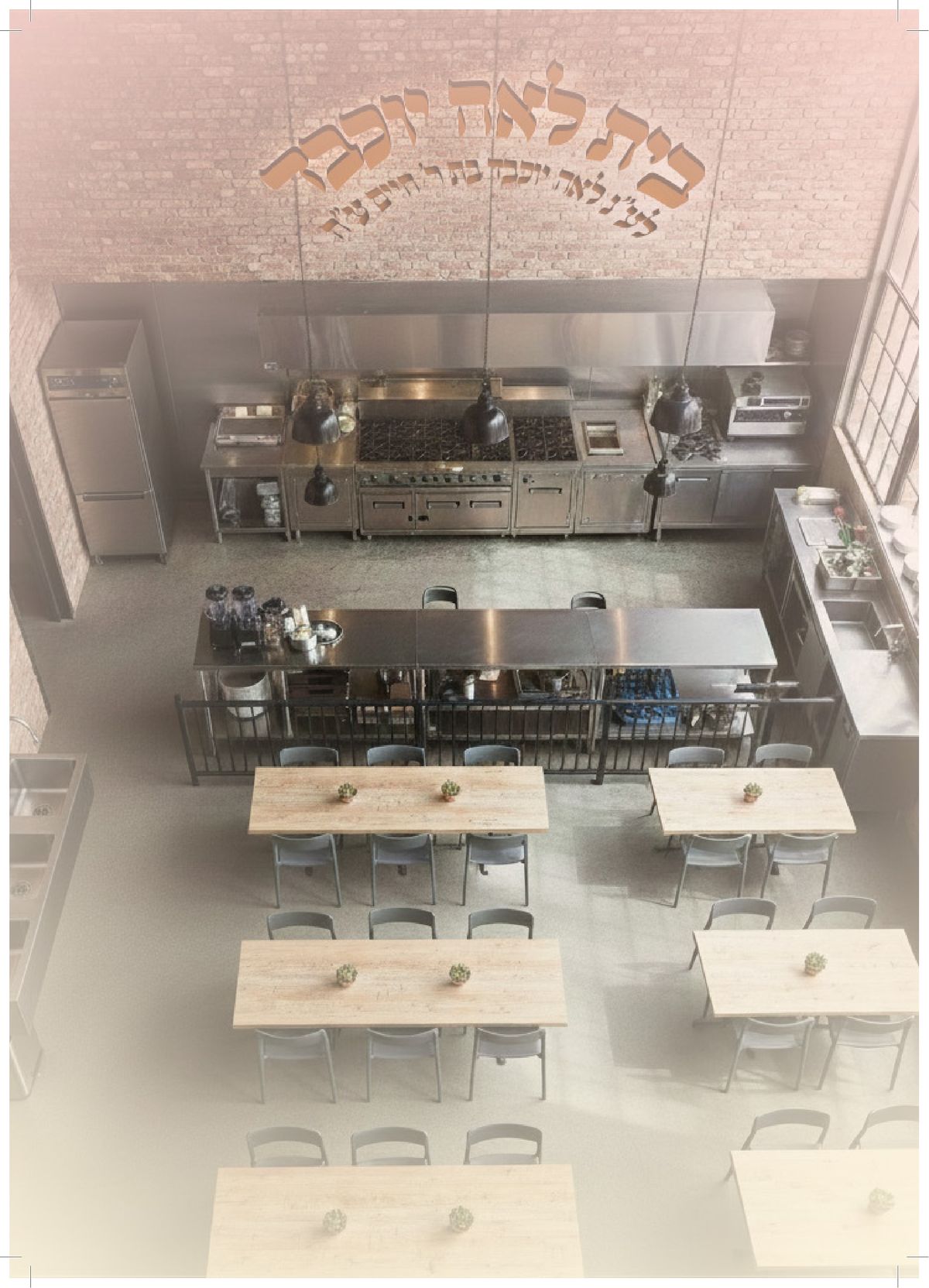
An interview with Leah Yocheved Singer a"h (of blessed memory) published in the "Marva LaTzama" magazine, Parshas Shlach, 24 Sivan 5785 (June 2025) — about ten months before her tragic passing. By P. Stern.
Parents enter the hospital with quick steps, faces tense and foreheads wrinkled with worry. Children drag behind them apprehensively, not wanting to enter this foreign world. The painful one. The scary one. They just want to run away. Exactly like that baby girl, thirty years ago...
And suddenly they stop in front of a magical room. In front of Leah'leh's radiant face. In front of her warm invitation: "Come, enter, you can do it now or later, a tasty treat, an awesome prize, and an amazing game are waiting for you."
The child enters for a moment, and behold, he is in another world. Toy strollers. Large and small dolls. Kitchen sets. Shelves collapsing under the weight of books. Crayons. Markers. Papers. Bags of sweets. A closet full of 'prizes.' Ever-renewing arts and crafts materials and fascinating activities.
The parents breathe a sigh of relief. Now they can take a breath for a moment. To see their child, who hasn't laughed in a long time—happy. Mesmerized by all the colorful abundance waiting for him. Now they are free to fill out forms and arrange procedures, knowing that their child's waiting time is passing pleasantly.
Time passing pleasantly? In the hospital? It sounds like a dream. But it is reality. The beautiful reality of the Room of Dreams.
How does it happen, Leah, that a woman whose worst nightmare was the hospital—chooses to come here day after day?
"The truth is," she says, "the description I gave earlier wasn't just a dream. It was almost real, with a few added brushstrokes of nightmares... I really was a little girl amidst the long corridors of a huge hospital."
Her story takes us thirty years back.
Mazel tov, a tiny baby girl is born. Weighing a kilogram and a half. The commotion begins immediately. Respiratory distress. Immediate danger. Collapsing bodily systems.
The doctors do not give her much of a chance. Father and Mother do not give up. They fight for life alongside their baby. Blessings from Rabbis. Fervent prayers. Endless love and devotion. And the miracle occurs, Baruch Hashem (Thank God). The baby shatters all predictions and emerges from danger. She embarks on a life that is a journey.
The journey passes through continuous tests and treatments. The baby, who has grown in the meantime, continues to visit the hospital regularly. She arrives at all sorts of clinics, undergoes medical procedures, and is pricked countless times. And she doesn't want to go to the hospital. She is afraid. She is truly traumatized. But she has no choice, and her parents have no choice either, other than to coax her again and again to come.
Today, about three decades later, the girl knows that the nurses did their jobs faithfully. They were compassionate and wanted what was best for her, but the scars of fear and pain remained seared in her heart, like a recurring nightmare.
And today she has a mission. She wants all the babies and children who are forced to come to the hospital—not to run away and not to be afraid. She wants to see their eyes laughing and their tears drying. She wants them to have good dreams and sweet memories.
Because yes, sometimes you have to get an injection in life. And it hurts. And it pricks. And it stings and aches. But instead of running away, you can take a deep breath, open your eyes, and see that there is a beautiful, colorful world around us. We can see prizes waiting for us and candies that sweeten difficult moments, and then understand that no one is chasing us to prick and hurt us. All the treatments are meant only for our own good.
When Leah'leh says this, she doesn't just mean injections and the hospital. She means spiritual trials, and she knows what she is talking about. Trials? She has tasted them in the past, and she tastes them today as well. And their taste is sweet in her mouth.
The Room of Dreams Opens
Quite a few children know Mrs. Leah Z. They know her from the 'Room of Dreams,' the unconventional playroom located on the first floor of the 'Mother and Child' building at Hadassah Hospital, opposite the elevators that take children up and down to the wards and institutes, leading them between tests and treatments.
Long corridors. Opaque walls. Rows of doors. Harsh lighting. A huge, giant, and terrifying hospital, and I am a little girl. Tiny. Maybe three years old, looking like a one-year-old. Quick as mercury. Slipping away in a millisecond...
"Whoever sees me running around opens their eyes wide. Who is this baby? How does she know how to run?! And I... am running away. Running for my life. Fast. Fast—my little legs run fast.
"A stern-faced nurse is chasing after me, a huge syringe in her hands. She demands that I stop, right now and immediately. 'Leah'leh, Leah'leh, we're going to catch you anyway... just stop already...'
"I run faster and faster. This nurse wants to prick me. I know it. And her syringe hurts so baaaad. I don't want it to hurt, and I don't want a nurse, and I don't want a hospital at all. I don't want to!!! I want the yellow sun and blue sky and to go home. I want my pink bed and my doll Riki. I want to see Mommy baking challahs for Shabbos, to sit on Tatty's lap when he sings Zemiros, and to breathe in the scent of home.
"The nurse is faster than me. She catches me in the end, one moment before I find the exit of the hospital and already see a sliver of the sun. Her hands are as strong as iron. With one hand she grips my tiny arm like a vise, and with the other she brings the huge syringe closer to me—and...
"I wake up. Drenched in sweat. In my small home in Jerusalem. A cool breeze blows from the window, drying beads of cold sweat on my forehead.
"That was the nightmare of my childhood days."
To Dream of the Future, To Live the Present
"For nine years I have been managing the 'Room of Dreams' playroom in the hospital, as part of the activities of an important chessed (loving-kindness) organization that I merit to partner with. I am a personal coach, specializing in personal coaching through art. And I am also waiting. For over a decade, I have been eagerly waiting for my children to arrive.
"I didn't choose this gift, but right now, this is the spiritual trial that Hashem is giving me. This is the injection meant for my personal good. The big question is how I go through this period. Do I become forged and stronger, or do I fall? Do I cope, or do I collapse? Do I focus on the waiting? On the lack? On the pain? On the sorrow—or on hope? On Emunah (faith)? On the good that awaits me?
"Just like in the story of Ruti (the name is a pseudonym and details have been blurred, like all the stories of the children from the 'Room of Dreams' appearing in this article). Every Sunday she has to come to the hospital. Due to a deficiency of an essential substance in her blood, she must receive an injection week after week. But Ruti is a sociable and lively girl, and on Sunday there are two hours with the homeroom teacher and two hours of arts and crafts, and there are cheerful recesses with jump ropes and balls, and she doesn't want to miss out. Why on earth should she miss out? And all to get a painful treatment!
"Every single time she would struggle, screaming from the entrance: 'Enough, take me away from here, I don't want to go in!' The first time I saw her, I waved to her invitingly and called her to see the Room of Dreams. I showed her the games, the gift closet, and promised her a dream: 'When you come back from the injection, a special surprise is waiting for you here!' A short hour later, Ruti arrived cheerful and full of anticipation. 'The injection didn't hurt me today,' she smiled at me sweetly, 'the whole time during the injection I thought about the present waiting for me'...
You are moving, Leah! So are you essentially recommending to anyone who is struggling, to build themselves some sort of 'Room of Dreams'? A place that allows them to hope for the gift waiting for them in the future, and to be excited about it?
"Yes. But not only that. I didn't open my story for the dear readers of 'Marva' with the point of waiting. First, I told about the mission, about the playroom, about what I do today—this is so you know for sure: the anticipation for children is, of course, significant in my life. To be blessed with children is my great dream, but my life itself continues to blossom every day. To shine. Even now, amidst the trial.
"I am not just 'the one waiting for children.' There are many other good and beautiful things in my life besides that, Baruch Hashem. I have a husband who is a Torah scholar and God-fearing, devoted parents, and a pleasant home. I love to cook and bake, I enjoy my work, and I am also busy with my goal, which is to turn the hospital into a pleasant and accommodating place.
"Every morning I thank Hashem for the privilege to wake up to another day of action. Another day where I choose anew to live a life full of beauty and majesty, and not... not to pass it in nerve-wracking waiting, in sadness and depression. To live this day! And what a life! The most beautiful life there can be! Because everything that is in my hands, all the gifts given to me from Heaven, I want to maximize to the very last centimeter. And everything else? I let Hashem lead me... and I learn to let go.
"My power sentences in life are the verses from Tehillim (Psalms): 'I shall not die, but live,' and also 'He has not given me over to death.' True, there are injections, and they hurt. True, there are trials, and they are bitter. There are physical and emotional agonies. But despite everything—'He has not given me over to death.' Despite everything, I am not dead. I received life and I am living it, living a life that has substance. Every day anew. And I wait to recount the miracles that Hashem will do for us."
To Open Eyes, To See Emunah
In the Room of Dreams, she encounters sad and happy stories, moving and amazing ones. And she observes them, seeing not only what is happening but also what is in the depths, what is beyond. And she learns Emunah.
She tells us about Roey. Roey arrived at the Room of Dreams tense and nervous. In two hours he was supposed to enter the operating room, and he was afraid. Terrified. His whole body was trembling with fear. "Come to me after the surgery," Leah'leh whispered a secret to him, "I will pamper you..."
Roey heard this and a light lit up in his eyes. He gave his hands to his father and mother and agreed to walk with them to the operating room floor. Leah'leh asked for his name for prayer, and recited chapters of Tehillim in his merit.
A few hours later, in the recovery room, when little Roey was still half asleep, he mumbled: "Leah'leh, I want to go to Leah'leh, she promised me..." And the promise was kept, of course, the very next day. Because this is an ironclad rule in the Room of Dreams. In the hospital, children can lose trust: The nurse is nice, and suddenly, hop, she gives an injection. The doctor is pleasant but sentences them to detention, meaning: hospitalization. The Room of Dreams is the place where they try to build trust and prevent children from having the destabilizing feeling that the world is an unpredictable place. Here, what is promised is guarded at all costs. A word is a word.
Words I Wrote Between Night and Day / Leah Z.
Everyone is busy and preoccupied with the day-to-day: waking up early, getting kids ready for school, welcoming them home, serving meals, and putting them to bed. I am busy fulfilling only my own needs, organizing my day with accomplishments on one hand and filling empty hours on the other.
Everyone is looking for a babysitter so they can go out to work and run errands. I am looking for someone to go out with and how not to be alone in the house.
Everyone fills shopping carts with weekly groceries. I occasionally buy a few items on the way home.
Everyone makes sure the house is full of abundance, that there is enough. I make sure no leftovers remain so they won't be thrown in the trash.
Everyone barely reads, barely manages to listen to anything. I make sure to have reading materials and good content hotlines, so I won't feel empty.
On the eve of a Yom Tov (holiday), they can barely breathe, busy up to their necks. I manage to clean and cook, and still have free time left over.
For everyone, the evening is bedtime, full of pressure and the exhaustion of a tiring day. I manage to do laundry, rest, or go out.
Everyone is looking for ways to supplement their income, trying to learn something that can bring in a little more. I look for courses for the sake of occupation, a pleasant time, and company.
Everyone wants to sleep a full, calm night, but the kids don't always let them. I, too, long for a calm sleep, without waking up from tension, pressure, and thoughts of 'what will be.'
Everyone knows pediatricians and family doctors. I know doctors and professors from every field.
Everyone fills albums with newborn photos, Chalakah (first haircut) pictures, Bar Mitzvahs, and Mishloach Manos (Purim gift) photos. I have a few photos of myself at simchas (celebrations).
Everyone has two candlesticks and an abundance of illuminating flames. I have two candles for 'Shamor' and 'Zachor' (the Shabbos candles), and a prayer that stretches from one end of the world to the other: 'And grant me the merit to raise children...'
Everyone is busy with conversations about strollers, kindergartens, and maternity convalescent homes. I have conversations with doctors about 'how we move forward now.'
Everyone fills suitcases with clothes, bottles, and baby formula. My suitcase is full of medications and reading materials.
I wanted a house with children; I received an empty, desolate house.
I wanted vitamins for strength, and I received endless injections, pills, and medications.
I wanted quality time with children, a home, and a job, and I received a lot of time to think and dream...
I wanted normal, happy topics of conversation, and I received diverse topics—oh, how diverse... about treatments and doctors, and how to cope on all fronts and stay strong...
I wanted to be busy with children of all ages, and I received a search for occupation and ways to fill my time.
I wanted to be a 'Yiddishe Mamme' (a Jewish mother), to hug and love my baby, to tell him, 'Mommy is here... Mommy won't leave you,' to receive in return a wondrous smile and eyes that look up at me with trust. I received a hole in my heart and a great void, and a need to receive kind words myself.
I wanted, Master of the Universe, I wanted so much... But You want otherwise. For now... And I ask so deeply to make my will like Your will. With love.
Because I am Your child. I am an only daughter. Beloved. Unique. And I have, I know, other pamperings and other privileges.
And You, Tatty (Father)—as the Rav once told us—You keep our tears... our sighs... our moments of pain... And You love our broken, shattered words so much. They are so close.
What a beautiful parable this is. How comforting to know that there is Someone who is always waiting for us with the good reward He promised to those who keep His Mitzvos, who always remembers us, whom we can always trust and believe in.
We can also learn a lot from the story of Yosef Chaim: He is only seven years old, and already knows medical terms and treatment methods firsthand. Yosef Chaim has dangerous skin lesions, and to remove them he undergoes treatments in a long, painful, and very unpleasant process.
Yosef Chaim's point of light is the Room of Dreams. Every time they arrive at the hospital, before going up to the doctor—Yosef Chaim enters the Room of Dreams. He plays, receives an awesome candy and prize, and forgets all the difficulties and challenges in his life.
One day his mother came to take him from the Cheder (Torah school) to the hospital. Another appointment for treatment. The courtyard of the Talmud Torah was bustling and noisy, colorful inflatables filled it and the children shrieked with happiness.
The mother's heart pinched. Yosef Chaim... how much he suffers... and now he will also miss out on the exciting experience with all his friends... And suddenly Yosef Chaim stood next to her, holding out a small hand: "My friends have inflatables, but I have Leah'leh. They don't earn all the surprises I get. Let's go already..."
"He is a little boy, but his words are immense," Leah'leh is moved when she tells this story. "A balloon of pain, a difficult trial... but here, exactly here, the gifts are revealed. We don't always see them, not always immediately—but they exist, and they are so sweet. Comforting closeness to God, strengths we never knew we had, reward in this world and the Next World. Gifts. Gifts that we merit specifically because of the pain."
How does one reach such intensities of Emunah? Enlighten us too...
"How do we do it? With the mouth and the heart... 'In your mouth and in your heart to do it.' Emunah is inside us. We need to speak words of Emunah, internalize it into the heart, and pray to merit feeling it.
"Every morning I entreat the Master of the Universe in prayer for the three treasures most precious to me: Emunah, Simcha (joy), and Tikvah (hope).
"Emunah in Hashem and in Moshe His servant. Emunas Chachamim (faith in the Sages) in our Rav, the Tzaddik, in whose merit and the path he guides us in serving Hashem, I do not fall into the abyss. True joy, and illuminating hope. These are my three treasures. As our Rav says: 'Either Emunah or Gehennom (Hell).' The opposite of Gehennom is Emunah. To live with Hashem—that is a life of Paradise on earth."
Everything You Dreamed Of
How do we cope correctly with trials? How do we help others in their struggles? The Room of Dreams is a school for these subjects.
"Tiferes would arrive at the hospital completely tense. Terribly afraid. She didn't cooperate with the doctors. She barely spoke.
"Once, when her mother went out for errands, and Tiferes stayed to play in the Room of Dreams, I gave her the 'Personal Diary'—a thin, pleasant booklet I prepared for the children, one that helps them clarify to themselves what they are feeling. It has short questions and space for answers: My name is... How old am I... My place in the family... And then: How I feel today. What hurts me. What I thank Hashem for. What my request from Hashem is. And there is also the question: What am I afraid of?
"Tiferes's answer explained everything. 'I am afraid to die,' the letters said. When her mother returned, she opened the subject with her. That's how she found out that the girl had overheard part of a conversation the parents had with the professor, where he spoke to them about consequences that could lead to a life-threatening situation if they didn't treat this and that. The words cast a terrible fear upon the girl, who misunderstood the context.
"'You are not in a life-threatening situation, my dear,' her mother promised her now. 'Not at all.' In an instant, before our eyes, Tiferes returned to being a happy and relaxed girl."
How much do we sometimes fear nothing? From something we imagine, that we thought we understood? And how much does it help us to release the fear, to understand that it is nothing...
"Sometimes," Leah'leh shares her conclusion, "simple questions and clean listening are what open the heart, allowing it to release the fear and fill with serenity."
And sometimes, even questions aren't needed...
Mirimi, thirteen and a half years old. A patient in the psychiatric ward. She enters the Room of Dreams. Emaciated. It seems like any light breeze would blow her to the ceiling.
"How are you today, Mirimi? What do you say about the new game they brought to my room? Wow, look at this baby, how sweet... look how he crawls with all the tubes... what do you say about the rain... what do you say about the sun... soon it's Chanukah, what should we bring to the Room of Dreams?"
Talking-talking-talking. Smiles-smiles-smiles. Never 'What are you doing here? What happened to you? What does Mom say? What does Dad say? Do you have sisters? What are you thinking of doing?'
At first, Mirimi is silent. Then she throws out a word. Then she adds two and three, and then the waterfall rises and overflows. "They don't love me... not in class and not in the family... The truth? I don't love myself either... I can't eat. I'm not capable. I want to, really... but I can't." Then she gets up. Promises to return tomorrow. And something new shines in her eyes.
"Maybe she wants me like this," says Leah'leh, explaining the approach that guides her. "Simple. Innocent. Cheerful. She wants me to chat with her, to give her space and time to air out, to give her a sweet and normal hour. Maybe later she will talk, or maybe not. The main thing is that she feels good."
Maybe this is what others need from us amidst their pain. Not questions, not explanations...
Dreams of Mothers
There are also mothers in the hospital. Sometimes they are with their sick children, sometimes they themselves are struggling. And if there are mothers in the hospital, there are also mothers in the Room of Dreams.
"'My children are arriving today,' Leah told me. She has been hospitalized for a long time, and today the children are coming to visit. She doesn't want them to be distressed; she wants them to have a good feeling. 'Bring them here!' I flashed an idea. Leah was enthusiastic.
"We organized a corner in the Room of Dreams, and a short hour later they arrived. Five sweet children. They stopped for a moment, stunned, seeing Mom smiling and calm, and in the background dreamy games and fascinating craft kits, sweets, and prizes.
'Mommy? Really? This is your hospital? And I was so afraid...' the oldest girl almost cried.
'How fun it is for you here!' the little ones cheered. And since then they come to visit twice a week. Happy and joyful.
"Soon Leah will return home. The children will wait for her with a smile. They went through the difficult period in the easiest way possible, Baruch Hashem. Because even difficult moments can be painted in colorful, pleasant, and joyful colors. Later you will remember the colorful, not the black..."
To turn what is hard into something beautiful. To take what is lacking, and flow a lot of 'what exists' into it. It seems this is the life philosophy of Leah'leh, the girl who took the fear and pain and turned them into a mission that changes the lives of others. The woman who chooses to look at the great lack in her life, and fill it with immense meaning.
And the mothers who come to the Room of Dreams, they learn too. Each in her own way. Not because someone tells them to, but because how could it be otherwise?
Dalia, a heroic mother, has to come to the psychiatric ward twice a week. She is broken by her mental state, broken by the fragile situation at home. Her little children want the mother of the past. They want a mother at home.
After the appointment, Dalia sits in the Room of Dreams and tries to catch her breath. Leah'leh prepares sweet gifts matching the number of children waiting for Dalia at home. The next time Dalia arrives with sparkling eyes: "The children no longer cry when I leave. On the contrary, they ask, 'Mom, when are you going out to bring us gifts'..."
Unlike Dalia, Yael was hospitalized in the psychiatric ward, unable to return home. She arrived at the Room of Dreams crying. "I will run away from here, Leah'leh, and don't tell anyone... you'll see, one day I'll run away. It's not good for me here. I don't know what they want from me, why I can't go out into the world." Scattered games. Rolling blocks. Children crying. Children laughing... and Yael fixes her eyes on Leah'leh, waiting for sympathetic words.
"You are right, Yael," Leah'leh answered her, "so right. But come see what you have here: a pleasant room, a bed, meals, activities. You can rest. In a while you will gain strength and return home, with Hashem's help. And in the meantime, come see what is nevertheless good in this situation..."
The words are not immediately accepted by the heart. Day after day Yael arrives, angry, threatening. Threats that are actually a silent plea: Tell me calming words. Day after day she hears the good words. And one day she suddenly says: "Actually, you are right. All in all, it's good for me here." Her eyes opened to see 'what exists,' and then hope could enter the heart, dripping more serenity into it.
How moving it is to hear about mothers whom the Emunah flowing in the Room of Dreams touched as well, opened their hearts, filled it with the emotion they thirsted for so much. For example, Osnat.
"She had already gone through all the stages, Osnat. At first, there was the denial stage: 'He is not sick, why on earth would he be sick... it's just a temporary weakness. It will pass shortly. Soon we'll forget about everything.' When reality slapped her in the face, and the tests and the results, and the sight of her child withering away—the great anger arrived. Why didn't we notice earlier. And why did this happen to us. Why specifically to our Oz. And then came acceptance. But not an acceptance of coming to terms. It was a frightening acceptance, of despair. Of nothingness.
"Osnat would sit in the Room of Dreams, not speaking. Slowly, carefully, like dripping water on a dried-out plant, I told her about Emunah. About Divine Providence. About Hashem's love which is like an ocean of mercy... about the injections we receive for our own good, and about the gifts we receive along with them. The Emunah awakened. The hope too.
"Oz returned to his full strength. And so did Osnat, his mother. She took the Emunah with her moving forward."
This article was published in the "Marva LaTzama" magazine, Parshas Shlach 5785 (June 2025). Leah Yocheved Singer a"h was killed in a car accident on 1 Nissan 5786 (April 15, 2026). For the elevation of her soul and to perpetuate her legacy of chessed (loving-kindness), a 'Women's Soup Kitchen' named after Leah Yocheved Singer a"h is being established by the 'Linas HaChessed' organization, headed by Rabbi Chaim Cohen shlit"a (her father).
Donate to the soup kitchen in memory of Leah Yocheved Zinger a"h
Subscribe to Our Newsletter
Receive Torah articles and inspiration directly in your inbox