
The Secret of Abundance and Wealth: The Spiritual Power of a Wife
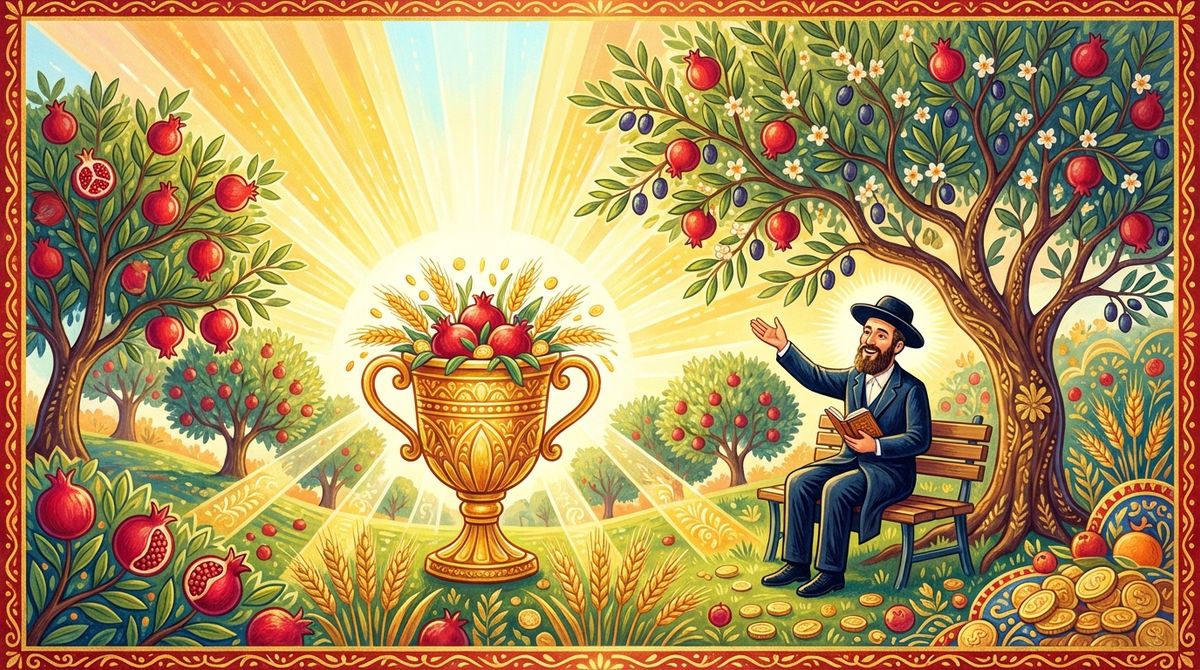
Lesson No. 52 | * Night of the 10th of Teves, Parashas Vayechi, 5756 - Yahrtzeit (anniversary of passing) Seudah (festive meal) of Moharnat zy"a in the Yeshiva - Part 3
According to the teachings of Rebbe Nachman of Breslov and the holy Zohar, all of a person's abundance and wealth come into the world exclusively through his wife. The article explains why a woman's joy is the key to parnassah (livelihood), why shidduchim (marriage matches) never change, and how a husband's spiritual greatness is entirely dependent on his wife.
Rebbe Nachman says in Torah 69: "Know that one who robs his friend of money is robbing him of children." A person must guard his money so that it is not stolen, because the essence of a person's wealth comes to him through his wife. The moment someone's money is stolen or he is swindled, it is a real danger—this could harm his wife, lead to divorce, or, Heaven forbid, harm the children.
Rebbe Nachman teaches that money is closely tied to the soul of the woman. All abundance arrives through the "light of her soul." Every spiritual light ultimately materializes in this world, turning into a table, a chair, furniture, an apartment, and money. Everything comes from her. Therefore, the more a husband brings joy to his wife, the more she shines and overflows with abundance. A husband must constantly look only for ways to bring her satisfaction and joy, and never say an insulting word to her.
The Wife as the "Feet" That Bring Parnassah (Livelihood)
The woman is referred to as the aspect of "Nefesh" (the lower soul), which is the lowest level in the order of Nefesh, Ruach, and Neshamah. Therefore, she represents the feminine aspect that receives, acting as the conduit for all abundance. The woman is the aspect of "feet," as the Sages expound on the verse:
"He will guard the feet of His pious ones" (I Samuel 2:9) - this refers to the wife.
She is the one who brings him all the wealth in the world, in the aspect of "She is like the merchant ships, she brings her bread from afar" (Proverbs 31:14). If a man would honor his wife and bring her joy, he would not need to take a single step for parnassah (livelihood). He could sit and learn in the yeshiva, and she would bring him all the abundance, because the essence of wealth depends on her. However, if he hurts her, it is as if he "cuts off her feet," and then he is forced to run around the entire world himself searching for parnassah (livelihood).
The Exact Shidduch (Marriage Match) from the Root of Creation
The Sages say: "One who dwells without a wife dwells without a wall, without wealth." When a person comes into the world, it is immediately determined at the root of creation which woman he will marry and how much money he will have. Shidduchim (marriage matches) do not change. The holy Arizal explains this based on the verse in Daniel, which describes an image whose feet are made of iron and clay that do not mix: "Just as iron does not mix with clay" (Daniel 2:43). The same applies to shidduchim (marriage matches)—iron goes with iron, and clay with clay.
A person must believe with complete emunah (faith) that this is his exact, destined shidduch (marriage match). Sometimes a person experiences a few disappointments after the wedding; he thought he received Sarah Imeinu (our Matriarch), and in the end, he sees he received Queen Esther. He must know that everything is calculated from Above, and if he is bound to true tzaddikim, they protect him and ensure that he receives his true shidduch (marriage match).
The moment the groom places the ring on the bride, endless abundance is supposed to flow to him. But sometimes, before the abundance arrives, he manages to insult his wife a bit, belittle her, and humiliate her, and then the money cannot arrive—because the money only comes when she is radiant and joyful.
A King Without a Queen is Not a King
The holy Zohar explains the verse, "Great is Hashem and exceedingly praised in the city of our God" (Psalms 48:2), saying that the essence of praise and exaltation is only when there is a union of male and female. The second day of the week is the aspect of a "bride" to the first day, and therefore in the song of the second day it says "Shir Mizmor" (A Song, a Psalm)—a double praise, because now they are two.
Hashem is, so to speak, praised and called "Great" only when He has the Congregation of Israel, which is the aspect of His bride. The Zohar states: "A king without a queen is not a king and is not great." A king without a queen is not a king. The same applies to a person: If a man does not have a wife whom he brings joy to and who brings joy to him, he is not called a 'husband', he is not 'great', and he is not 'praised'. All of a man's praise depends on his wife. Whoever has not merited to be in the aspect of male and female, all praises are removed from him and he is not considered a person at all.
The Greatness of Job – In the Merit of His Wife
Before a person gets married, he is not yet considered a complete person. When he gets married, all his sins are forgiven and he becomes like a newborn child. The Chasam Sofer explains that a person is considered a "baby" and only begins his true building after the wedding. Suddenly he is placed in an apartment, he has to deal with a new job, and it takes him years until he stabilizes and finds himself.
A person's perfection depends entirely on his wife. This is brought down in the Zohar (Sifra d'Rav Hamnuna Sava) regarding Job, about whom it is said:
"And that man was greater than all the people of the East" (Job 1:3).
In what merit did Job become so great, pure, upright, and God-fearing? It was all in the merit of his wife! Because he had a wife who was entirely filled with the fear of Heaven ("with the awe of Hashem"), he drew strength from her and merited to reach his immense spiritual level.
Part 1 of 2 — Lesson No. 52
All parts: Part 1 (current) | Part 2
Subscribe to Our Newsletter
Receive Torah articles and inspiration directly in your inbox