
The Three Weeks - Tikkun Chatzos Even During the Day
The Gaon and Tzaddik Rabbi Eliezer Berland shlit"a
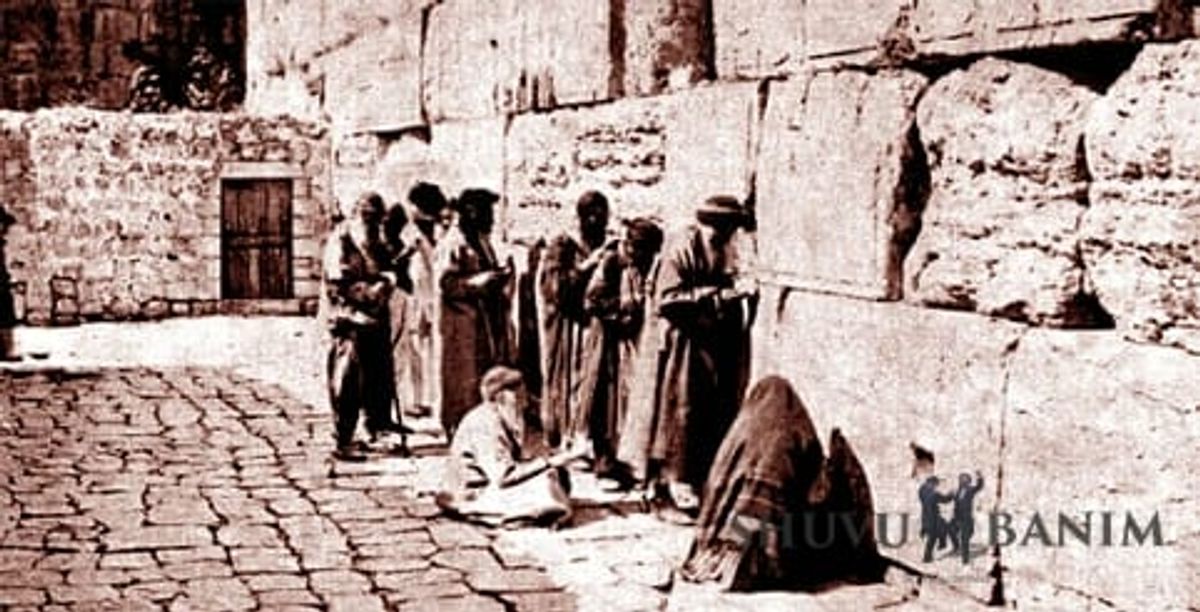
"During the days of the Three Weeks (Bein HaMetzarim), everyone sits on the ground, recites Tikkun Chatzos (Midnight Lamentation), and weeps. It is possible to weep even in the middle of the day, to sit on the ground and say Tikkun Chatzos. When the Three Weeks arrive, everyone sits on the ground, puts ashes on their head, and cries like babies."
We don't know what we are lacking, therefore we don't cry
"If a person knew what the Holy Temple was, they would weep and mourn every night at midnight, and not just during the days of the Three Weeks. But for almost no one is it missing; almost no one needs the Holy Temple. Everyone has cake at home, they have good food, they have drinks at home—they don't need the Holy Temple. Baruch Hashem, everyone feels good until 120, but there are those who do lack the Holy Temple, and they weep every night and recite Tikkun Chatzos."
You can't get up? Be silent! Do not weaken your friend!!
"Fifty years ago, all of Jerusalem would rise for Chatzos (midnight); it was an unbreachable law. Now people have become weak; it is hard for them to say Tikkun Chatzos every night. But the problem is that they also weaken the other person who does want to rise for Chatzos, and that is the trouble! You are weak? Be silent! Sit on the side! Let your sons rise for Chatzos, let your students rise for Chatzos, just be silent! Do not tell anyone that you are weak and that you cannot get up at midnight."
Tikkun Chatzos awakens the lions and terror falls upon the enemies of Israel
"From then until today, the nations seek to exterminate the Nation of Israel. There are constantly harsh decrees, and there is no counsel and no wisdom to be saved from them except through Tikkun Chatzos. We need the roars of midnight, as it is written, 'He shall surely roar over His habitation' (Jeremiah 25:30). When one says the words 'He shall surely roar' (Sha'ag Yish'ag) during Tikkun Chatzos, it casts fear upon all the nations of the world, upon all the wicked, so they will do us no harm. There are 370,000 lions in Heaven, and those who say Tikkun Chatzos awaken the lions above. There are such roars in Heaven that even the greatest evildoer can no longer do anything. All the wicked tremble from great fear; with every single roar, a tremendous dread falls upon everyone. With every single roar, the wicked are shaken, and they cannot move a hand or foot due to the fear."
To cry to Hashem over the state of the soul
"A person must begin to arouse Supernal Mercy, to start awakening compassion for his soul and spirit, to cry to Hashem: 'What about my G-dly soul?' He must arouse mercy over the fact that he disconnected himself from the Name Havayah (Hashem), blessed be He; over the fact that his soul fell into the Ten Crowns of Impurity (Asara Kitrin d'Mesavuta). Now his vitality comes from blemishes of the covenant, he speaks unpleasantly with idle chatter. Now he sustains the chambers of the Sitra Achra (the Other Side/Impurity) through bad thoughts and blemishes. He gives strength to impurity—sustaining terrorists, sustaining murderers, sustaining Nazis. He causes the Shechinah (Divine Presence) to be in exile, as it is written, 'A King held captive in the tresses' (Song of Songs 7:6)."
"A person does not even know that he is lying within the Ten Crowns of Impurity. He does not even know that he needs to start having mercy on his soul. He feels good with his lusts, good with the bad thoughts; it's wonderful for him, it's fun for him. He doesn't feel bad about it at all; he doesn't even try to get out of it."
"So how does one begin to have mercy on the soul? One sits on the ground, puts a little ash on the head, says Tikkun Chatzos, and cries to Hashem. And when saying 'The crown of our head has fallen' (Lamentations 5:16), one should have the intention that 'the crown of our head' is the soul. How is the soul held captive in the armies of impurity and the Sitra Achra? How does the body imprison the soul? How does the body overpower the soul? We cry for the soul that has fallen into the depths of the husks (klipot). 'The crown of our head has fallen,' 'Woe to us for we have sinned.' There is no greater insult than this: a G-dly soul, hewn from the Throne of Glory, which is from His very Essence, blessed be He—they imprison it within a body with lusts, with such low desires. And each and every one, according to the measure of his intellect and understanding, should begin to feel bitterness over this: 'Where am I found? How do I think about nonsense?' If a person says Tikkun Chatzos with such a broken heart, with such submission, then this Tikkun Chatzos, with this intention, will be a rectification that influences a flow of life to all his 248 limbs and 365 veins."
To say Tehillim (Psalms) for the troubles of Israel
"When we hear that a Jew has died, Heaven forbid, we must immediately scream! If a Jew is critically injured, we must say a few chapters of Tehillim; perhaps we will succeed in reviving him. Every Jew is a soul from the Throne of Glory. From every Jew, 600,000 souls can emerge—why should a Jew lose his life? And for this, one must weep every day, and specifically at midnight. The main thing is to know: it is my sins that caused this. I am the one making a joke of everything, making a joke of the service of prayer, making a joke of the service of rising for Chatzos."
"How can one know that Mother Rachel is crying at midnight and do other things at that time?!"
"A person must know, 'Rachel weeps for her children; she refuses to be comforted for her children, for they are not' (Jeremiah 31:14). If Mother Rachel is crying, then we must rise at midnight and cry together with Mother. We must participate in her weeping. Mother cries for the six million who were killed in the Holocaust; Mother cries for all those killed every day; Mother cries for the souls that they should return in teshuvah (repentance). How can one know that Mother Rachel is crying at midnight and do other things at that time?!"
"Rachel is the Holy Shechinah! Does it not suit you to participate with Rachel? Does it not suit you to participate in her weeping? A person needs to have a drop of a Jewish heart, a drop of feeling. To say Tikkun Chatzos, to feel Rachel's weeping, the pain of all the generations, of all those killed. We have a Mother who can accomplish everything. Rachel can do everything, everything is in her hands. She is alive and enduring; she can take us out of exile in a second, in this very moment. She only wants to see who is crying with her."
Subscribe to Our Newsletter
Receive Torah articles and inspiration directly in your inbox