
Three Days of Dancing • The Daily Lesson from Rabbi Eliezer Berland shlit"a
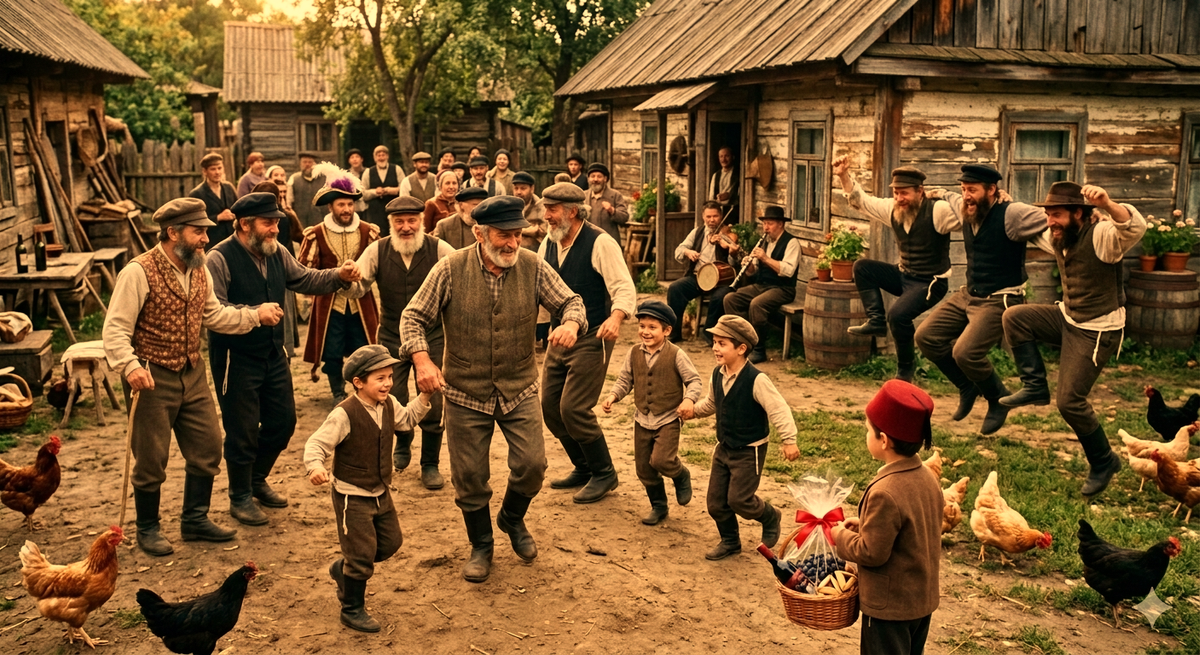
Here is a summary of the topics from the daily lesson as delivered by our teacher, Rabbi Eliezer Berland shlit"a (may he live long and good days) – after the Maariv (evening) prayer on Monday night, the 14th of Adar 5786, the night of Purim de-Prazim (Purim in unwalled cities), Parshas Ki Tisa:
1. Now, Purim consists of three days of non-stop dancing.
2. The Gemara (Talmud) in Kesubos brings a dispute between Beis Shammai and Beis Hillel regarding whether one dances before the bride "as she is" or as a "beautiful and graceful bride." Everyone needs to study this Gemara to know what to say and what not to say.
3. Why did Eliezer ask Rivka (Rebecca) for a pitcher of water? After all, he arrived with immense wealth. Furthermore, he asked to water all the camels.
4. Rather, he wanted to see if the water in the well would rise toward her (the pitcher "jumped" on its own). When the water rose and she watered all the camels—a task that should have taken at least a week—he understood that she was the right shidduch (marriage match).
5. The Gemara in Yevamos, page 61, brings a dispute regarding how old Rivka was. According to Rashi, she was only three years old, while Tosafos disagrees and maintains she was 14. Everyone should study this Gemara.
6. The Gemara in Kesubos, page 17, mentions that Rabbi Shmuel ben Yitzchak would dance with three myrtle branches at every wedding. In the merit of this, he merited an amuda d'nura (pillar of fire) at his funeral even greater than that of Rabbi Zeira.
7. The Gemara in Megillah brings the story of "Rabbah arose and slaughtered Rabbi Zeira" (during a Purim feast). The Chasam Sofer explains that they were studying whether analytical sharpness precedes clarification. The reason he didn't revive him until Shushan Purim was because through the power of Shushan Purim, all the dead in the world can be brought back to life.
8. Vashti said to Achashverosh: "My father [Belshazzar] drank a thousand measures of wine and did not get drunk, but you drink one small cup and speak nonsense. You don't know how to drink." When one says such a thing to a gentile, it is the greatest possible humiliation.
9. When Achashverosh's scepter miraculously lengthened, he was not moved by this miracle and still wanted to kill Esther; then an angel struck him across the face.
10. This is similar to Nebuchadnezzar; if he had continued speaking in praise of Hashem (the Omnipresent), he would have received eternal kingship. However, in the merit of the angel who struck him across the face, he fell silent.
11. Rashi explains why it is written, "And Deborah, Rivka's nurse, died," in order to teach us when Rivka herself passed away. They concealed her passing so that people would not curse her for having given birth to Esau. Everyone should study that Rashi in Parshas Vayishlach.
12. There is a piyut (liturgical poem) for Simchas Torah, "Yocheved my mother, after me be comforted," which describes Moshe (Moses) comforting his mother Yocheved. Regarding this, the Midrash states that she lived 250 years. The Ibn Ezra disagrees with this, and concerning his words, the Ramban says that one should pour molten gold into his mouth (a metaphor for silencing a sharp critique of the Sages' traditions).
Subscribe to Our Newsletter
Receive Torah articles and inspiration directly in your inbox