Torah Leaders Come Out Against the Controversy Over the Tzaddik
The End of the Exile and Redemption with Mercy?

The Length of the Controversy is as Long as the Exile
"Now Korah, the son of Izhar, the son of Kohath, the son of Levi, with Dathan and Abiram, the sons of Eliab, and On, the son of Peleth, sons of Reuben, took men; and they rose up before Moses, with certain of the children of Israel, two hundred and fifty men, they were princes of the congregation, the elect men of the assembly, men of renown; and they assembled themselves together against Moses and against Aaron, and said unto them: 'Ye take too much upon you, seeing all the congregation are holy, every one of them, and Hashem is among them; wherefore then lift ye up yourselves above the assembly of Hashem?'" (Numbers 16:1-3). Parshat Korah, the Torah portion of the week in which we currently find ourselves, is one of the most difficult portions in the Torah—a terrible controversy arises against the Tzaddik (righteous leader), a controversy specifically from within the children of Israel themselves.
Although Parshat Korah is short in its scope, which might confuse the reader into thinking the time of the controversy was brief, in reality, the controversy of Korah and his assembly against Moses lasted many years. During all that time, the Tzaddik was persecuted and publicly humiliated (as written in all the Midrashim), and false accusations were leveled against him, as if he were stealing the donations of the Mishkan (Tabernacle) and coveting the women of Israel, Heaven forbid.
And Moses, for his part, not only remains silent, but attempts to appease his pursuers. "And Moses sent to call Dathan and Abiram, the sons of Eliab..." but they remained stubborn, "and they said: 'We will not come up'" (ibid 12).
And Moses continues to pray for them, "And when Moses heard it, he fell upon his face" (ibid 4), but they hold fast to the controversy and refuse to part from it: "Is it a small thing that thou hast brought us up out of a land flowing with milk and honey, to kill us in the wilderness, but thou must needs make thyself also a prince over us? Moreover thou hast not brought us into a land flowing with milk and honey, nor given us inheritance of fields and vineyards; wilt thou put out the eyes of these men? we will not come up" (ibid 13-14).
The Controversy Against Moses Passes from Generation to Generation
All the books of Chassidus and Jewish thought that deal with this difficult controversy state unequivocally that the controversy is not a thing of the past. This is not an interesting historical document; rather, in every generation, the controversy returns, and with it, the souls of Moses and the people of Israel are reincarnated. This is because this controversy must be rectified at its root; everyone must eventually accept Moses our Teacher. Therefore, whoever was involved in the controversy then is reincarnated in every generation until the coming of the Mashiach.
We look at the past and ask in wonder—how was it possible to disagree with Moses our Teacher? After all, he is the faithful messenger of Hashem, the "Aspaklaria HaMeira" (the luminous mirror/clear lens of prophecy), etc. But we do not realize that the answer is right before our eyes—even today, the controversy against Moses, against the true Tzaddik of the generation, is alive, breathing, and kicking—to our great sorrow.
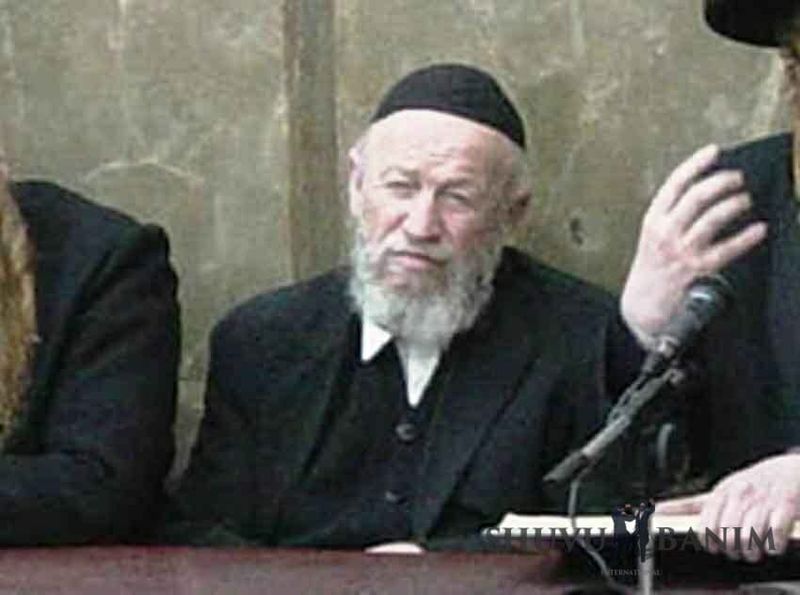
The Chassidic Rabbi, Rabbi Zvi Pesach Frank zt"l (of blessed memory) - supported the Gaon and Tzaddik Rabbi Eliezer Berland shlit"a during the controversy 26 years ago
The False Depiction of the Sitra Achra
In every generation, the Sitra Achra (the "Other Side" / forces of evil) succeeds in hiding the greatness of the Tzaddik from the eyes of a large portion of the generation, until a situation arises where the generation of Mashiach wonders if the words of Moses are a fabrication (Heaven forbid), an attempt by him to rule over the people of Israel, or the words of the Living God. "Wherefore then lift ye up yourselves above the assembly of Hashem?" What chutzpah (audacity), right? How do they dare to speak and think this way about Moses, after all he has done for them? — And what about our generation?!
The Day Controversy Was Created Becomes a Rectification?
As is known, regarding the second day of the six days of Creation, it is said: "And let it divide the waters from the waters" (Genesis 1:6). This is the day on which controversy was created; therefore, it is not said of this day "that it was good." This is the day when all the great leaders of Israel gathered against Hashem and against Moses, and this is the day when the Torah leaders of our time, in a "Teshuvat HaMishkal" (a counter-balancing repentance), began to publicly stop the controversy against the holy and awesome Tzaddik, the Moses of the generation, our master the Gaon and Tzaddik Rabbi Eliezer Berland shlit"a (may he live long and good days), who suffers for our transgressions!
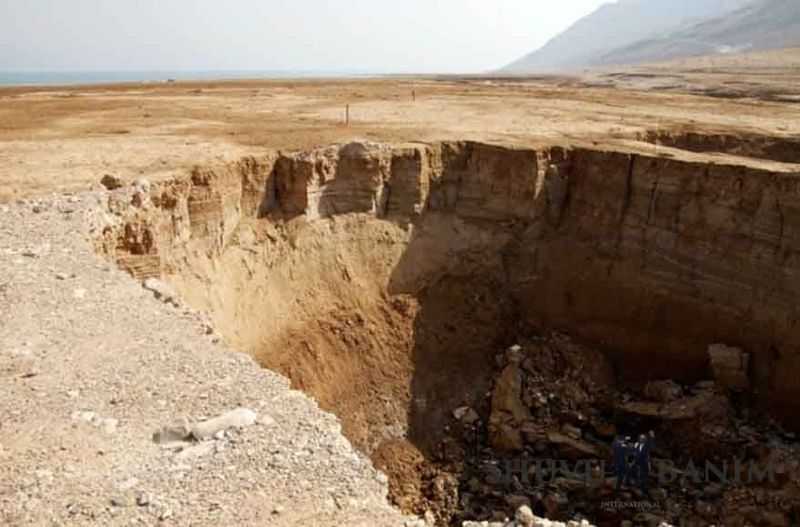
The controversy of Korah - the earth opened its mouth
It is startling, and more than symbolic, that on the very day of Korah's controversy against Moses and Hashem, a piercing letter was published by a "Beis Din (Rabbinical Court) representing the most important courts in the land."
In the letter, all the great Torah leaders signed below request "to immediately cease all hatred, persecutions, quarrels, and slanders, whether in writing, by word of mouth, or through any written or broadcast media.".
Among the Difficult Things Delaying the Redemption
The severe controversy against the Tzaddik and Hashem is one of the primary things delaying the Geulah (Redemption). Therefore, rectifying the controversy is one of the essential requirements before the Gmar Tikkun (Final Rectification). We see that the period we are in is difficult, yet it is highly auspicious for Teshuvah (repentance) and the end of the exile. The words spoken by the Rav, Rabbi Berland shlit"a, at the end of the Matan Torah (Giving of the Torah) assembly in Hebron are literally unfolding before our eyes:
"Today is the revelation of Moses our Teacher on the 4th of Sivan, and Gog and Magog will be in Cheshvan; all the nations will gather against Israel, Moses will blow a great Shofar, and the entire Torah will be heard from one end of the world to the other. Then all the nations of the world will come; they will come in ships."
"It is written in the Zohar (end of Ki Tavo) that the entire sea will be filled with ships, then the sea will split, it will open. In the month of Cheshvan will be the peak of the wars; the 4th of Sivan is the beginning, and in the month of Cheshvan the Third Temple will be built. We must not give up; everyone should say 'it is forbidden to give up,' and then the House that will never be destroyed will be built."
"It is a time of trouble for Jacob, but from it he shall be saved"
May it be His will that these moments before the month of Cheshvan turn into moments of Divine favor, that the people of Israel recognize their Creator and His messenger, and that all decrees and judgments be sweetened. As the Rav revealed from his sickbed in the hospital: "The Tzaddik sees terrible decrees that are going to befall the people of Israel, a war with Iran and America that will harm Israel – millions will be killed – the Iranians have endless weapons!"

"So the Tzaddik took upon himself actual death, fasting a 'Taanis Hafsaka' (a continuous fast) from Sabbath to Sabbath. As a result, the Tzaddik finally collapsed on Tuesday evening, but continued not to eat in the literal sense, only what he was nourished by via IV."
"Avenge the spilled blood of Your servants"
The Tzaddik takes more and more upon himself for the sake of the people of Israel, and for the sake of bringing the Geulah (Redemption) with mercy, and without the death of millions, Heaven forbid. Our teacher, the Gaon and Tzaddik Rabbi Eliezer Berland shlit"a, takes upon himself suffering beyond all logic and human understanding. The Rav shlit"a arranged it so that he would be closed in his home for ten years, during which no one had any idea that the Tzaddik was suffering for all of us (as he testified).
From the confinement in his home, the Rav shlit"a moved on to take upon himself exiles and the suffering of persecution, physical pain, illnesses, and inconceivable humiliations. On one of the days when we prayed Shacharis (morning prayer) in Amuka with our teacher Rabbi Berland shlit"a, the Rav sang with the public for long minutes, "Avenge the spilled blood of Your servants." The Rav then revealed a small part of what he sees: "Millions of souls who died as martyrs are crying out for resurrection" (written from memory).
But the Tzaddik wants us to also have a part in the Redemption, that we pray for him to recover, and primarily—that we withdraw from every side of the controversy.
Rabbinical Court ruling to stop the persecution against Rabbi Berland
Subscribe to Our Newsletter
Receive Torah articles and inspiration directly in your inbox