
Rare: Rabbi Eliyahu Levin shlit"a from Lakewood
"I Don't Believe What They Say About Rav Berland"
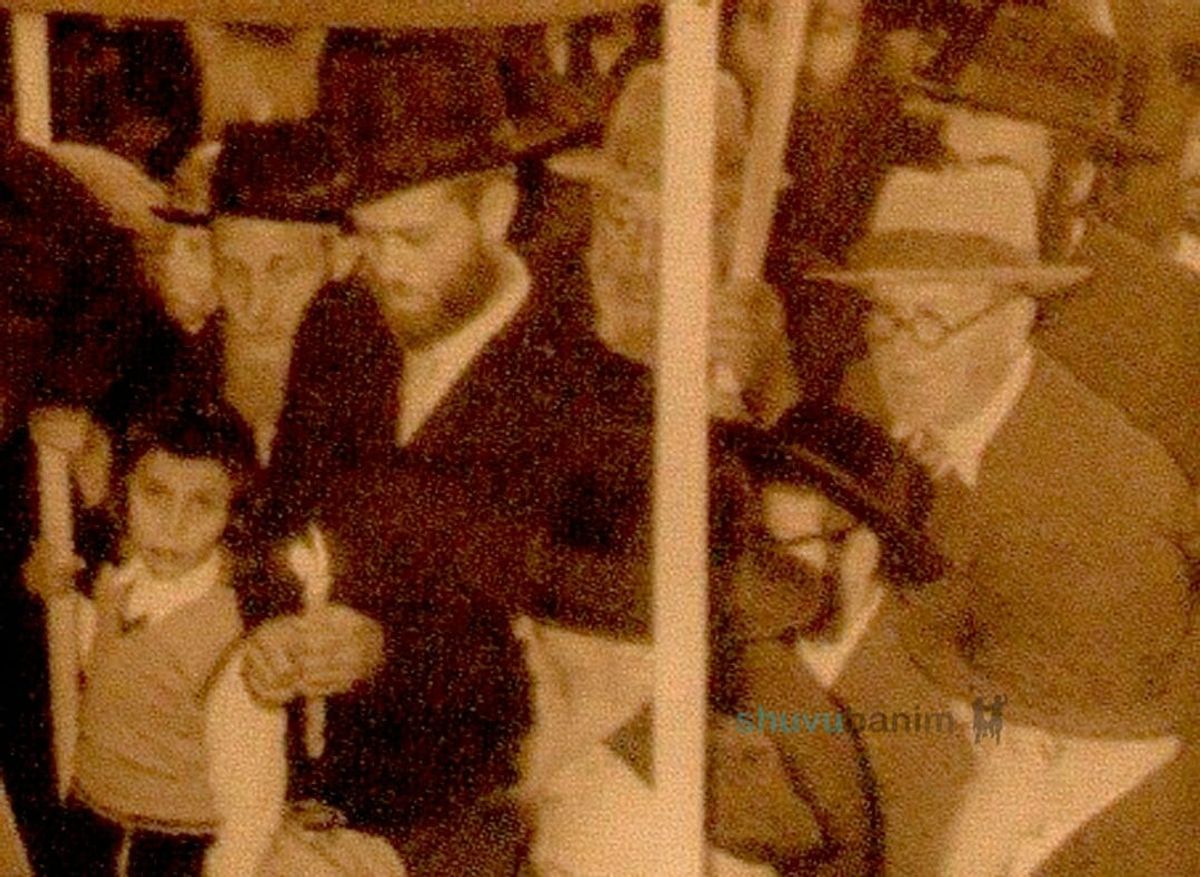
Rabbi Yitzchak Weitzhandler shlit"a succeeds in entering the Choshen Mishpat Kollel in the Torah city of Lakewood, New Jersey, USA, and there he interviews the great Torah scholar Rabbi Eliyahu Levin shlit"a, who was a student at the Kfar Chassidim Yeshiva together with our teacher, the holy tzaddik Rabbi Eliezer Berland shlit"a, and is today one of the greatest Torah scholars of the generation.
The interview is courtesy of the Breslov Information Line: 02-800-8800, from the USA 845-640-0007, from England 44-330-390-0474.
"Head of the Choshen Mishpat Kollel in the Torah city of Lakewood, and one who serves as a respondent in the largest yeshiva in the world, Lakewood Yeshiva, the great Torah scholar Rabbi Eliyahu Levin shlit"a."
Interviewer: "Rabbi Weitzhandler, for years we have been trying to interview Rabbi Levin shlit"a, who studied for years with our teacher Rav Berland shlit"a. We always heard that he has a story about our teacher the Rav’s work of enduring public humiliation (bizzayonot) back in Kfar Chassidim. Thank G-d, we merited that you were the messenger to catch him."
"Yes, and I am happy that Hashem merited me to see this tzaddik. He is a righteous Jew and a giant in Torah, head and shoulders above the rest. The Chassidim used to say about the author of 'Yesod v'Shoresh HaAvodah', whom Rebbe Nachman praised—it is written in Chayei Moharan that he departed from this world without any lusts—the Chassidim said about him that he was a Chassid before Chassidut."
"Rabbi Levin, we are talking here about a Jew of the same age as our teacher Rav Berland shlit"a—I think he is a little younger—who is in Lakewood, which is a great city of Torah... and he has his own private kollel... he sits without any external pretenses."
"We are talking about a Jew who, for example, during the terror attack on the Twin Towers, a man went missing who to this day has not been found, and his wife was an agunah. They asked Rabbi Elyashiv what to do. Rabbi Elyashiv sent the people to Rabbi Levin to solve this case. He is number one in Choshen Mishpat. I tried several times to catch him... I thought he did not want to be interviewed, but it turned out he really was not feeling well... Finally, he saw me in the middle of his studies and called me to sit next to him."
"Rabbi Eliyahu Lopian would work on focusing on the holy names of the first blessing of the Amidah prayer, and also to focus on the names in Birkat Hamazon. I remember there were 42 words to focus on; I do not know if it was about the names or the words of the first blessing."
"Rabbi Lopian asked in the va'ad (committee) and said, 'Anyone who does not focus, let him write down for himself half a grush for every name he does not focus on.' Later, at the next va'ad, he asked everyone, 'How much do you owe?' One answered three grush, another two grush. He reached Rabbi Eliezer Berland and asked, 'How much are you?' They spoke a little in Yiddish and Rav Berland said to him: 'Half a grush!'"
"Rabbi Lopian was startled and asked, 'Half a grush? Maybe you are confused with the Yiddish and mean...?'"
"Rav Berland answered, 'No! It is half a grush...' Rabbi Lopian was so impressed by this."
"The hallmark of Rav Berland in the yeshiva in Kfar Chassidim was that he was not afraid of public humiliation, that one must serve Hashem and not be afraid, not to avoid public humiliation."
"Meaning, Rav Berland was happy with public humiliation?"
"Yes, so much so! The reality is that it was impossible to stop him from his service because of public humiliation."
"The second incident I remember was on Tisha B'Av, when Rav Berland would sit on his knees—I think it was even after midnight, after the Kinot. He was making large movements, bending and rising, saying Kinot and lamenting over Jerusalem. This continued for a long time after everyone had already left the yeshiva."
"On Friday, when everyone would leave, Rav Berland would sit and study with all his might. We were with him for two and a half years in Kfar Chassidim. Rav Berland went after that to the Chazon Ish Kollel, and I would talk to him from time to time in Ponevezh. This was already after his wedding; I was at his wedding."
"He married at a young age. At the table... he sat with the older guests, the more important ones, and they were talking among themselves that the great ones say that marrying at a young age is the right thing to do. Later, the older boys told me that they regretted talking about it, because they did not notice that Rabbi Eliezer Berland was there with them, that he took everything seriously—that one needs to marry at a young age—and he arranged for someone to ask and set up a shidduch for him, immediately."
"Rav Berland decided after he saw that they were right; he said and did. They knew that with Rav Berland there is no hesitation; if there is something to do, then you do it. They did not want to take the responsibility that he would marry at a young age."
"He married in the year 5719 at the age of 20-21, and back then people did not marry at that age. He is 84 years old today. They said later, the older ones, that with him there is no hesitation. I assume that his whole life afterwards was conducted in this way..."
"There was once a Yom Kippur in Ponevezh when I asked Rav Berland, 'How does one awaken to teshuvah on Yom Kippur?' I saw him focusing so much in his prayers, so I asked him, 'How does one awaken?' I was young there."
"He told me: 'Simple, ask for insights in Torah, ask and it will awaken you.' That is a sign that he lives within these things."
"Once I asked him to ask the Steipler for me, 'What happens when I am in the middle of Tachanun and the prayer leader is already saying Kaddish?' He answered that the Steipler said—I do not remember exactly—that after saying two verses of Tachanun, one can already answer to Kaddish... something like that."
"In his childhood, Rav Berland studied at a school in Haifa, people who lean more towards the Mizrachi. I asked them later: 'How was Rabbi Eliezer Berland with you?' He answered me: 'He belonged to the World to Come. Already at a young age he did not belong to them; he belonged to the World to Come.'"
Rabbi Yitzchak Weitzhandler asks: "Rav Berland told me that they invited him to the recruitment office like all the boys, and he arrived without an ID card. They told him they would give him another date and that he should come with an ID card. He arrived and it was a women's day; he did not enter and ran away from them. To this day they are looking for him."
Rabbi Eliyahu Levin: "Yes, that is exactly how he was."
Rabbi Yitzchak Weitzhandler asks: "Someone said in your name that Rabbi Eliezer said to fast for a whole week, is that true?"
Rabbi Eliyahu Levin: "I don't remember, it could be."
Weitzhandler: "But was there such a concept of fasting?"
Rabbi Levin: "I remember that Rabbi Eliyahu Lopian told a story, but he did not say the name of the one who fasted. He said that someone fasted for a whole week, but so that they would not know he was fasting, he would come to the dining room at the end of the meal so they would not realize he had not eaten."
The merits of Rav Berland will protect us. Everything they say in the country about Rav Berland, I do not believe in any of these things, and you should not believe it either!
"Such things do not belong to him. After all, Rabbi Eliyahu Lopian never made a mistake—and you need to know that the state has made many mistakes..."
"May you all succeed, and may Rav Berland also succeed—give him my regards."
Subscribe to Our Newsletter
Receive Torah articles and inspiration directly in your inbox