
Yahrzeit of the Chazon Ish - Words of the Esteemed Rabbi Eliezer Berland shlit"a
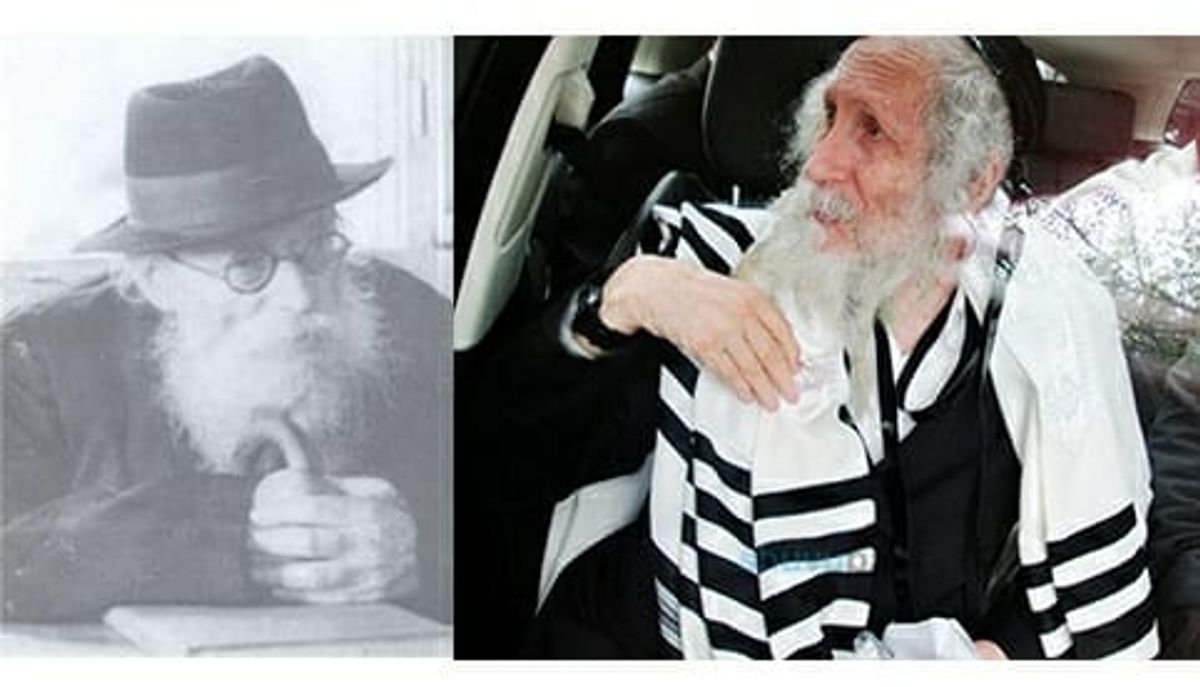
Today, 15 Cheshvan, marks the holy Yahrtzeit of the Chazon Ish, Rabbi Avraham Yeshayahu Karelitz zt"l (11 Cheshvan 5639, November 7, 1878 – 15 Cheshvan 5714, October 24, 1953).
We bring a selection of the holy words of our teacher, the Gaon and Tzaddik, Rabbi Eliezer Berland shlit"a, which were spoken over the years regarding the teachings of the Chazon Ish.
During "Bein HaZmanim" (the break between terms), one can study more Torah than during the term itself - (Delivered Tuesday, Parshat Bo, 2 Shevat 5766)
The Chazon Ish said that the entire "Zman" (term) is a preparation for "Bein HaZmanim," because during Bein HaZmanim, one can study a thousand times more than one studies during the term, as one is then free from all obligations. During the "Zman," one is committed to schedules, one is obligated to study partners, one is obligated to the Mashgiach; you studied for five or six months, this is preparation for the Bein HaZmanim of Nissan.
The difference between the approach of Rebbe Nachman and the Chazon Ish regarding the sleep required for a servant of Hashem during the day - (Delivered Tuesday, Parshat Nitzavim-Vayelech, 21 Elul 5767)
If one wants to be like our Rebbe, one must sleep only four hours a day.
To be like the Chazon Ish, eight hours a day is sufficient, but during all sixteen waking hours, one must not take one's head out of the book. Study Chok L'Yisrael, study the Jerusalem Talmud—it is all stories; study Masechet Ketubot—it is all stories about what fruits were in the Land of Israel, what abundance there was in the Land of Israel, it is all stories.
One travels for four hours and can finish all of Ketubot on the way each day; one returns for four hours and can finish Masechet Yevamot on the way. Yevamot is more difficult; it is written that the acronym 'Ani' (poor) stands for 'Eruvin, Niddah, Yevamot'—these are the most difficult tractates; the other tractates are all stories, they are all Aggadot.
The Chazon Ish's approach regarding the warning (hatra'ah) for a fetus/embryo regarding Shabbat labor - (Tuesday, Parshat Chayei Sarah, 18 Cheshvan 5768)
If one does not study Ketzot HaChoshen, it is impossible to understand any topic in the world.
We have a very puzzling interpretation from the Rambam. The Rambam says in Hilchot Sanhedrin, Chapter 12, that even Torah scholars require a warning (hatra'ah) if a person ignites fire or electricity on Shabbat.
Regarding electricity, there is a question as to why one is liable, because the neon, those wires that glow, is not fire. The gas that is here is not fire, the fluorescent light is not actual fire—according to the Chazon Ish, he is 'building' (Boneh), he is closing a circuit. One says that he is liable for 'cooking' (Mevashel), when the iron is glowing, one brings a coal; the person turns iron into a coal, and when the iron is glowing, it is called cooking, but it is not fire.
There is a question, why must one know what to warn him about? The Gemara says in Sanhedrin that one must know what to warn about; according to the Rabbis, it does not matter what one warns about, but according to Rabbi Yehuda, one must know what one is warning about. If you tell him 'this is fire,' he can say 'I say it is cooking,' 'I say like the Chazon Ish, it is for building (Boneh).' According to Rabbi Yehuda, therefore, you must tell him 'for building,' 'for cooking,' according to all the approaches...
Subscribe to Our Newsletter
Receive Torah articles and inspiration directly in your inbox