
A Lesson for Lithuanian Yeshiva Students at the Residence of the Gaon and
Tzaddik, Rabbi Eliezer Berland shlit"a
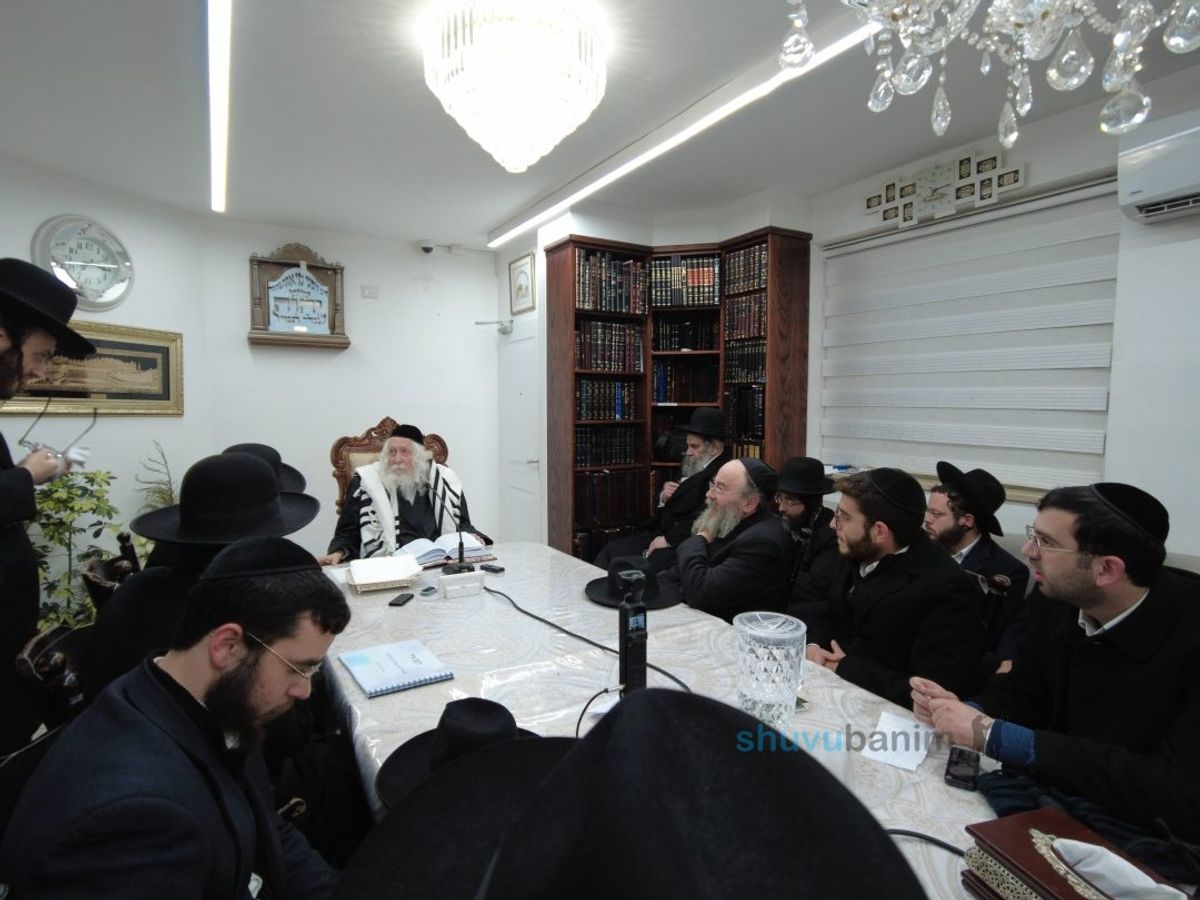
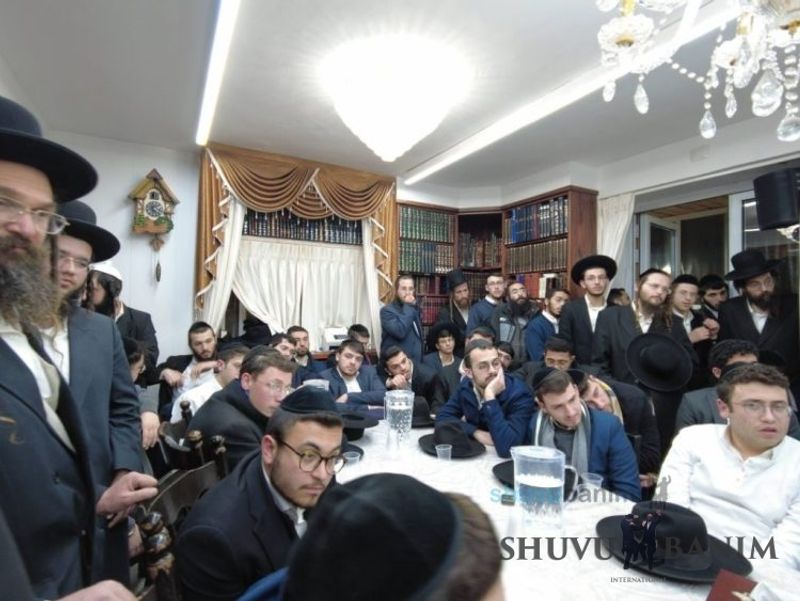
On Wednesday night, the eve of the 22nd of Shevat, a lesson was held at the residence of our teacher, the Rav, Rabbi Eliezer Berland shlit"a (may he live long and good days), for Lithuanian yeshiva students—among the elite of the yeshiva world who have merited to draw close to the holy. The lesson lasted for forty-five minutes; presented below is a summary of topics from the lesson:
One must study Gemara (Talmud) and the Ketzos HaChoshen (a classic work on Jewish civil law) in depth for 8 hours every day, and afterward, 6 hours of our Rebbe's (Rebbe Nachman's) books, Musar (ethical teachings), and Halacha (Jewish law). The topic of "Yakir" (the father's right to identify his firstborn) and its complexities in the Ketzos HaChoshen. Purim is the resurrection of the dead. The Kerestirer Rebbe (Rabbi Shayale of Kerestir zt"l) said that whoever serves me with faith will be saved from the Holocaust. In the Holocaust of Hungarian Jewry, 800,000 Jews were destroyed. They killed all the Jews except for those who paid in Budapest; the Danes sold iron to the Germans, so to atone for this, they saved many Jews later in the war. Stalin himself killed endless numbers of Jews; Hitler learned from Stalin how to kill Jews. The synagogue of the Bat Ayin (Rabbi Avraham Dov of Avritch zt"l) was the only one that survived in Safed; it happened during the middle of the Nefilas Apayim (prostration prayer). In Amsterdam, there were the Pekidim and Amarkalim (officials and administrators) who smuggled the money, and in Turkey, there were the Sephardim. One travels to Uman in order to "renew a visa"—so that a person may live another year. The Divrei Ribos (a book of Halachic responsa) discusses whether a daughter who was distressing her father over financial matters—and her father agreed to give her money on the condition that she take a maidservant, then the father passed away and stipulated to the brothers not to give it to the husband, and afterward the daughter died before she took a maidservant. In this case, the law is that they should not give it to the husband because the father did not want to give it to her from the start and she only forced him, and furthermore, she did not fulfill the condition. Coca-Cola is an acronym for "Kol Koreh HaTarnegol Kumu L'Avodas HaBorei" (The voice of the rooster calls out: Arise for the service of the Creator). Our "field" [for prayer] was there at Coca-Cola [the factory area]; we used to perform Hisbodedus (secluded prayer) there.

Subscribe to Our Newsletter
Receive Torah articles and inspiration directly in your inbox