
"By This You Shall Know That Hashem Has Sent Me" • Parshat Korach from the Gaon
and Tzaddik Rabbi Eliezer Berland shlit"a
Insights and Pearls for the Weekly Torah Portion - Korach from the Gaon and Tzaddik Rabbi Eliezer Berland shlit"a (may he live long and good days):
A. "And Korach, the son of Izhar, the son of Kohath, the son of Levi, took [himself aside], along with Dathan and Abiram, the sons of Eliab, and On, the son of Peleth, descendants of Reuben. And they rose up before Moses, with two hundred and fifty men from the children of Israel, princes of the assembly, those summoned to the meeting, men of renown." Korach and his assembly claimed that in the Land of Israel there is no honey and no... as it is written there, "Moreover, you have not brought us into a land flowing with milk and 'honey'." Behold, there was honey in abundance—lies, they saw the lies eye to eye. "And they gathered against Moses and against Aaron, and said to them, 'It is too much for you, for the entire congregation, all of them are holy.'" One woman—the wife of On ben Peleth—acted in such a way [The Rav slightly tilts his holy kippah (skullcap) to demonstrate how she did it, revealing a bit of her head] that everyone fled. She said to her husband, On ben Peleth, after telling him that he wouldn't gain anything from the dispute against Moses anyway—because if Aaron remains High Priest, he (On) remains without a position of authority, and even if Korach wins and becomes High Priest, he still remains without authority, as brought in Midrash Rabbah (18:20): "If Aaron is the High Priest, you are a student; if Korach is the High Priest, you are a student." Why should you enter into this dispute? He told her that he had already sworn to participate with them in the dispute, and if they come to call him, he would have to go with them. She answered him: "What are you worried about? I will just do this, and everyone will flee." All the girls need to see to lower their sleeves so they cover the entire arm, otherwise they will flee, everyone will flee here; one woman did this and everyone fled. Lower the sleeves; we need this to be the holiest Yeshiva (Torah academy). We ask everyone to lower their sleeves, just as it was in Johannesburg and Amsterdam. "All of them are holy"—they saw a woman act this way, and they fled.
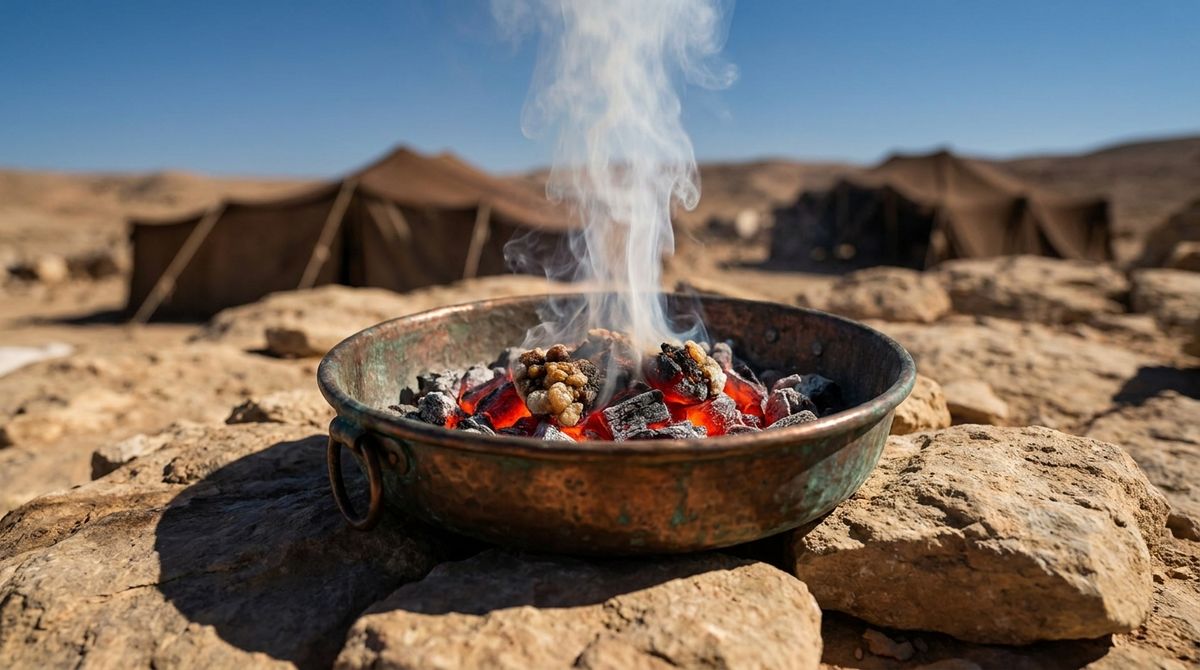
B. "...and Hashem is among them; why then do you lift yourselves up above the assembly of Hashem?" "And Moses heard and fell on his face. And he spoke to Korach and to all his company, saying, 'In the morning Hashem will make known who is His, and who is holy, and will bring him near to Him; and whom He chooses He will bring near to Him. Do this: Take for yourselves fire pans.'" Why fire pans for everything? Because Korach saw that Nadab and Abihu had already been burned. Korach proved everything with mathematical proof; he proved: "Behold, Nadab and Abihu were already burned with the incense; now we will bring more incense, and we will burn Moses and Aaron as well." On the first day Nadab and Abihu were burned, on the second day Moses and Aaron will be burned—every day we will bring the incense and burn a few more. This was all planned.
C. In the morning it will be known—Aaron will not be, Moses will not be, everyone will already be burned. "In the morning Hashem will make known who is His, and who is holy, and will bring him near to Him; and whom He chooses He will bring near to Him. Do this: Take for yourselves fire pans, Korach and all his company. And put fire in them, and put incense upon them before Hashem tomorrow." Tomorrow we will see who remains after the great fire. Korach was certain that he would remain, "and it shall be that the man whom Hashem chooses, he is the holy one." And the rest will be burned, because Moses said everyone would be burned. But Korach said everyone would be burned—he loved everyone so much, a love of the soul, he wanted to be with them in the World to Come. "Hear now, you sons of Levi: Is it too small a thing for you that the G-d of Israel has separated you from the congregation of Israel, to bring you near to Himself to do the service of the Tabernacle of Hashem, and to stand before the congregation to minister to them? And He has brought you near, and all your brothers the sons of Levi with you; and do you seek the priesthood also?" Why do they need the priesthood also? A Kohen (priest) is in the level of Adam Kadmon (the Primordial Man).
D. "Therefore you and all your company are gathered together against Hashem; and Aaron, what is he that you murmur against him?" And Moses sent to call Dathan and Abiram, the sons of Eliab. The first thing is to ask for forgiveness. The first thing is to ask forgiveness from Dathan and Abiram. It's very simple—it doesn't matter who opposes a person, even if it is Dathan and Abiram, who hated Moses since Egypt and informed Pharaoh that he killed the Egyptian, and he was almost killed and was saved by a miracle and fled—the first thing is to ask for forgiveness. Moses went to ask for forgiveness; they said, "We will not go up." "Is it a small thing that you have brought us up out of a land flowing with milk and honey?" They say "milk and honey" twice, here and in the next verse. "...to kill us in the wilderness, that you should also make yourself a prince over us? Moreover, you have not brought us into a land flowing with milk and honey, nor given us inheritance of fields and vineyards; will you gouge out the eyes of these men?" You want to gouge out people's eyes, you want to gouge out our eyes, "we will not go up"—absolutely not, you will not gouge out our eyes.
E. "And Moses was very angry." Why was he angry? This was a mistake; here it was a mistake. Hashem was strict about this—accept everything with love, all the humiliations. The Gemara says in Yevamos 15b that there were two families in Jerusalem: the family of Beit Tzevuim who descended from the family of Ben Achmai, and the family of Beit Kuppai who descended from the family of Ben Mekoshesh, in which the rival wives of forbidden relations performed Yibbum (levirate marriage) to the husband's brothers, according to the opinion of Beit Shammai, and High Priests descended from them. And how did they merit that High Priests came from them? If Beit Hillel says that Beit Shammai are mamzerim (illegitimate), then all the High Priests are from Beit Shammai. And the sons of Mekoshesh—the Mekoshesh (the wood-gatherer) merited that his sons would be High Priests. If one accepts humiliations, the children turn out to be High Priests.
F. "And Moses was very angry, and said to Hashem, 'Respect not their offering; I have not taken one donkey from them, nor have I wronged any one of them.'" Even when I went to Egypt to redeem you, I took a donkey with my own money. (16) "And Moses said to Korach, 'Be you and all your company before Hashem, you and they, and Aaron, tomorrow.'" (17) "And take every man his fire pan, and put incense in them, and bring before Hashem every man his fire pan." (18) "And they took every man his fire pan, and put fire in them, and laid incense thereon, and stood in the door of the Tent of Meeting with Moses and Aaron." (19) "And Korach gathered all the congregation against them to the door of the Tent of Meeting; and the glory of Hashem appeared to all the congregation." And then they fell on their faces. (20) "And Hashem spoke to Moses and to Aaron, saying:" (21) "Separate yourselves from among this congregation, that I may consume them in a moment." (22) "And they fell upon their faces, and said, 'O G-d, the G-d of the spirits of all flesh, shall one man sin, and will You be angry with all the congregation?'" Do not accept his sacrifice, but do not be angry with everyone.
G. (23) "And Hashem spoke to Moses, saying:" (24) "Speak to the congregation, saying, 'Get you up from around the Tabernacle of Korach, Dathan, and Abiram.'" He went to ask forgiveness from Dathan and Abiram. (25) "And Moses rose up and went to Dathan and Abiram; and the elders of Israel followed him." (26) "And he spoke to the congregation, saying, 'Depart...'" Dathan and Abiram said to him, "We don't want your forgiveness," and then the earth opened, and even the kippahs (skullcaps) were swallowed; if there was a kippah from Korach, the kippah flew in the air. (27) "So they got up from the Tabernacle of Korach, Dathan, and Abiram, on every side; and Dathan and Abiram came out, and stood in the door of their tents, and their wives, and their sons, and their little children." (28) "And Moses said, 'By this you shall know that Hashem has sent me to do all these works; for I have not done them of my own mind.'" For this he received a punishment; it is written in Midrash HaGadol on Va'etchanan that he received a punishment. Why are you making conditions? "I am the messenger of Hashem!" Shout it out—"I am the messenger of Hashem!" Shout, strike a blow! He received a punishment for this; Hashem said, "I do not accept your prayer." Because you made conditions: "If [they die] like all men, then Hashem has not sent me, and if they are swallowed by the earth, you will know that Hashem has sent me." What does it depend on whether they are swallowed? Hashem sent you, that's it—speak "dugri" (straightforwardly). Say, "I am not afraid of anyone," say, "Hashem sent me and all of you will be swallowed by the earth, I am the messenger of Hashem," why are you making conditions?
H. Therefore Hashem said, "Rav Lecha" (It is enough for you), I cannot accept your prayer. You made conditions—this was a Chillul Hashem (profanation of G-d's Name). People began to get confused—maybe Hashem didn't send him? Now we will see, we will do a test, we will do mathematics, we will do a mathematical equation to see if he will be swallowed by the earth or not. In the end, they said to him that it was all sorcery, altogether it was all sorcery, and that is what is written, that they then said, "You have killed the people of Hashem," because they did not believe that Hashem sent him, but rather that he killed them for no fault of their own.
I. Hashem says in Midrash HaGadol: "Why are you making conditions?" One might think now that if they aren't swallowed by the earth, then Hashem didn't send you. Hashem sent you! Say, "Hashem sent me," speak "dugri" (straightforwardly), do not fear them. "And it came to pass, as he had made an end of speaking all these words, that the ground clove asunder that was under them. And the earth opened her mouth, and swallowed them up, and their houses, and all the men that appertained unto Korach, and all their goods" until this day.
The lesson has undergone editing, and if any error has occurred, it should not be attributed, G-d forbid, to our Rav shlit"a, but to the writer—"and with us let our error lodge."
The Shuvu Banim website team wishes you, the readers and followers, a Shabbat Shalom and Blessed!!!!
Subscribe to Our Newsletter
Receive Torah articles and inspiration directly in your inbox