"Make for Yourself a Fiery Serpent and Place it on a Pole" • Shabbat Parshat
Chukat - Shabbat Sheva Brachos for His Great-Grandson in the Presence of the Gaon and Tzaddik Rabbi Eliezer Berland shlit"a
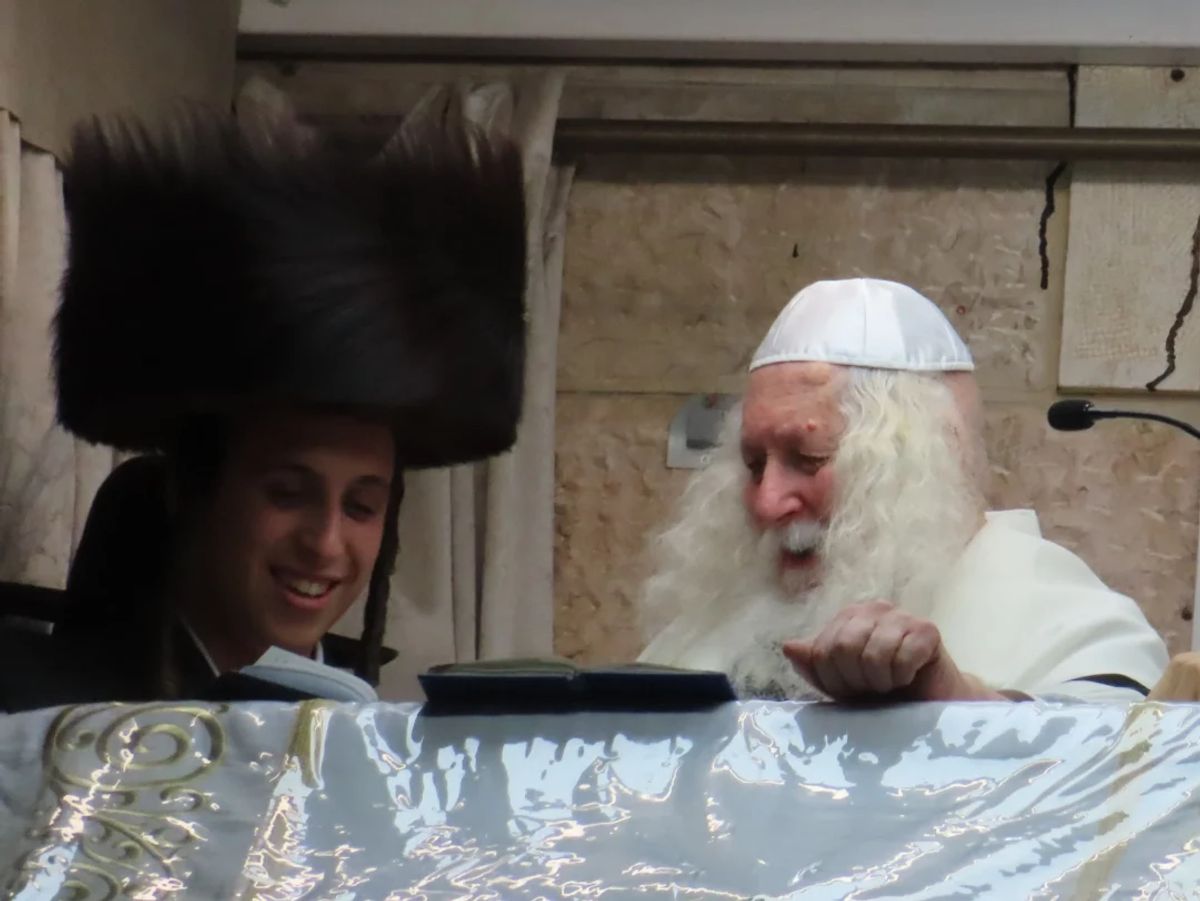
Also on Shabbat Parshat Chukat 5784, we merited an uplifting Shabbat in the presence of our teacher, the Rav, Rabbi Eliezer Berland shlit"a. This Shabbat also featured the celebration of the Tzaddik's household with the Shabbat Sheva Brachos (festive week of marriage) for his great-grandson, the groom, R' Shimon, son of the Chassid R' Nachman Treisman shlit"a, son-in-law of the Zucker family. He is married to the daughter of the R"M (Talmudic lecturer) in Yeshivat 'Chochma V'Daat', the Chassid R' Yitzchak Halperin shlit"a, son-in-law of the Chassid and Mashpia (spiritual mentor) R' Michael Gol shlit"a, Rosh Yeshiva of 'Maginei Eretz'. Before you is the full report of the prayers, lessons, and meals in the holy presence:
On Erev Shabbat Kodesh (Friday afternoon), the Rav came out for the Mincha (afternoon) prayer as he did last week—forty minutes before sunset at 7:10 PM—and began singing "Or Zarua" (Light is sown for the righteous) for ten minutes. After the singing, they stood for the Mincha prayer. At the conclusion of Mincha, he recited the order of Hiskashrus (spiritual connection) [prayers like 'I thank You... that You have set my portion', 'I hereby hand over', 'I hereby connect']. The Rav shlit"a says it word by word with everyone repeating after him. Afterward, the Rav began Kabbalat Shabbat (the service welcoming the Sabbath) with "Lechu Neranena," psalm after psalm, with great vitality and all the fire, life, and bren (burning enthusiasm). Then he began the pleasant singing of "Lecha Dodi," which lasted about thirty-two minutes. They repeated all the sections over and over with immense vitality. After finishing "Lecha Dodi," the Rav continued the prayer in its order—Maariv (evening prayer) with all the melodies in the Shuvu Banim nusach (prayer style) at the peak of vitality and joy. Then the Rav shlit"a finished the prayer with the singing of "Adon Olam" and "Yigdal Elohim Chai." Afterward, the Shabbat Kodesh zemiros (songs) that the Rav shlit"a customarily recites with the public were added—"Shalom Aleichem," "Ribon Kol HaOlamim," and "Eshet Chayil." He entered his holy home at 9:20 PM after a Friday night prayer service that lasted two hours and ten minutes.
Due to renovations in our Beit Midrash (study hall/synagogue), including replacing the flooring in the prayer hall and repairing drainage pipes, the Beit Midrash had become a construction site and was not fit for prayer with the Rav shlit"a. Therefore, our teacher the Rav shlit"a did not descend to the prayer hall for the Shacharit (morning) prayer this Shabbat. Nevertheless, on Shabbat morning, the Rav shlit"a entered for prayer on his balcony at 4:16 AM. He immediately recited the Birkat HaTorah (Torah blessings) and then began the Shacharit prayer in order, starting from Chatzos (the Midnight Lament)—Tikkun Leah—and the morning songs. The Korbanot (sacrificial readings) and Pesukei D'Zimrah (verses of praise) were recited with melodies and great vitality. Only about two hours after starting Shacharit, at 6:10 AM, the Rav shlit"a stood for the Shemoneh Esrei (silent prayer). After the Chazarat HaShatz (cantor's repetition), the Rav shlit"a began the Torah reading for Parshat Chukat. One after another, many people were called up for aliyahs (being called to the Torah)—those celebrating occasions and those observing yahrtzeits (anniversaries of passing). Among them was the groom, R' Shimon Treisman. For the Haftarah (prophetic reading)—the daughter of Jephthah the Gileadite—the Bar Mitzvah boy Naftali, son of the Chassid Israel Yagudayev shlit"a, was called up. The Torah reading, including both readings, lasted a full hour.
After the Haftarah, the Rav sang "Zara Chaya V'Kayama" (Living and enduring offspring) for about four minutes. Then the Rav sang "Ki Lekach Tov" (For I have given you a good teaching) as they returned the Torah scroll to the Ark. At 7:11 AM, the Rav shlit"a stood for the Musaf (additional) prayer of Shabbat. After the Chazarat HaShatz of Musaf, the Rav shlit"a continued with the conclusion of the prayer: "Kaveh el Hashem," "Aleinu L'Shabeach," "Adon Olam," "Yigdal Elohim Chai," and "Anim Zemirot." Finally, we even merited to recite the Tikkun HaKlali (the General Rectification) with him in melody and song, as is customary after the prayer. At the end of the Tikkun HaKlali, our teacher the Rav shlit"a made Kiddush (sanctification over wine). Behold the wonder: despite the Rav shlit"a's high elevation [on the balcony], people were able to hear the Kiddush from a distance. The Rav shlit"a gave a lesson for about a minute, speaking about the week's Haftarah concerning the daughter of Jephthah the Gileadite. The Rav shlit"a cited the Abudraham, explaining that the daughter wanted to be bound like Yitzchak Avinu (Isaac our forefather), but then a Bat Kol (Heavenly Voice) went out and said, "Do not stretch out your hand against the lad," and she lived forever. After the lesson at 7:45 AM, the Rav shlit"a entered his holy home after exactly three and a half hours of prayer—Shacharit, Torah reading, Musaf, Kiddusha Rabba, and the lesson we merited.
At sunset, the Rav shlit"a entered for the Mincha prayer of Shabbat Kodesh on his balcony, starting with Kaddish and then reciting "Brich Shmeh" (Blessed is His Name) and singing "Yehei Ra'ava" (May it be the Will) for five minutes. Afterward, he read from the Torah—Parshat Balak—with three people called up. Immediately following was the Shemoneh Esrei prayer. At the end of the Shabbat Mincha prayer, which lasted about twenty minutes, the Rav shlit"a washed his hands for Seudah Shlishit (the third meal) right there on the balcony. As is his holy custom, even while eating the first kezayit (olive-sized piece of bread), he began "Atkinu Seudata" (I will prepare the meal)—the songs of the third meal—for about twenty minutes. Afterward, he sang "Yah Ribon" (Lord of the world) for thirty-seven minutes. The Rav shlit"a repeated the verses "Ravrevin" (Great are Your works), "Elaha Dileh" (The God to Whom power belongs), and "L'Mikdashech Tuv" (Return to Your Sanctuary) dozens of times. Then he continued with the song "Thus says Hashem: [The people...] found grace in the wilderness" for about six minutes, followed by "Thus says [Hashem]: I remember for you the kindness of your youth" for another five minutes. Surprisingly, the Rav shlit"a transitioned to singing "Until now Your mercies have helped us." It should be noted that for over half a year, we have not merited to sing this with the Rav shlit"a. The Rav repeated this song of gratitude to Hashem over and over for twenty-five minutes. Then the Rav shlit"a led the Zimun (invitation to grace after meals) over a cup of wine. It should also be noted that Seudah Shlishit this Shabbat was longer than usual—an hour and forty minutes for the third meal alone. Needless to say, throughout this entire time, the Rav shlit"a, at his advanced age, stood on his holy feet!
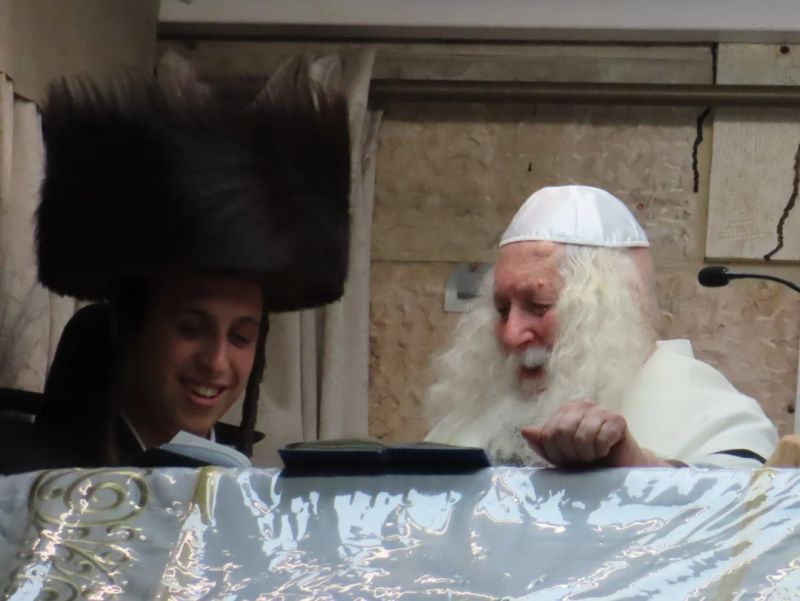
At 10:00 PM, the Rav shlit"a began singing "Lamnatzeach BiNginot" (To the Chief Musician with stringed instruments) for about five minutes. Then he continued with the Maariv prayer of Motzaei Shabbat (Saturday night) with melodies. After Maariv, during the recitation of "Vihi Noam," our teacher the Rav shlit"a began singing "Baruch Hu Elokeinu SheBeranu Lichvodo" (Blessed is our God Who created us for His glory) and "Hu Yiftach" (May He open [our hearts]), which the Rav extended for about ten minutes. After finishing the prayer, the Rav shlit"a performed Havdalah (ceremony marking the end of Shabbat) with the singing of "Layehudim Hayta Ora..." (The Jews had light...) for about a minute. Immediately after Havdalah, the Rav shlit"a began the songs for Melaveh Malkah (the post-Shabbat meal)—"B'Motzaei Yom Menucha"—even before washing his hands for the Melaveh Malkah, which is the meal of David, the King Mashiach. After washing hands and the Hamotzi (blessing over bread), the Rav shlit"a continued all the songs with special vitality and pleasantness. It should be noted that during the Melaveh Malkah, the groom, Shimon Treisman, stood by the Rav shlit"a's side. The groom merited to stand like a king next to the Saba Kadisha (Holy Grandfather)—our teacher the Rav shlit"a—throughout the entire Melaveh Malkah.
Before the song "Eliyahu HaNavi," he gave a lesson for about seventeen minutes with voices and lightning (great intensity). Afterward, he continued the songs until the end, "Ribon Kol HaOlamim." In the Birkat HaMazon (Grace After Meals), he added the liturgical poem for Sheva Brachos, "Devai Haser V'Gam Charon" (Remove suffering and also wrath). At the conclusion, he naturally performed the Sheva Brachos for the groom. After finishing the Sheva Brachos, he began singing "Sameach Tesamach Re'im HaAhuvim" (Gladden the beloved friends), concluding the Shabbat Sheva Brachos, and entered his holy home at 11:30 PM. This followed a continuous period of three hours and thirty-five minutes that we merited to be with him from the Mincha prayer until the end of Melaveh Malkah. In total, we merited about nine hours in the holy presence throughout this Shabbat Chukat, 7th of Tammuz, 5784.
Photo gallery from Motzaei Shabbat Kodesh, Parshat Chukat (Courtesy of the "Hitchadshut" bulletin):
Subscribe to Our Newsletter
Receive Torah articles and inspiration directly in your inbox