
The Power of Charity for the Sake of Heaven
Parshat Terumah from the Gaon and Tzaddik, Rabbi Eliezer Berland shlit"a
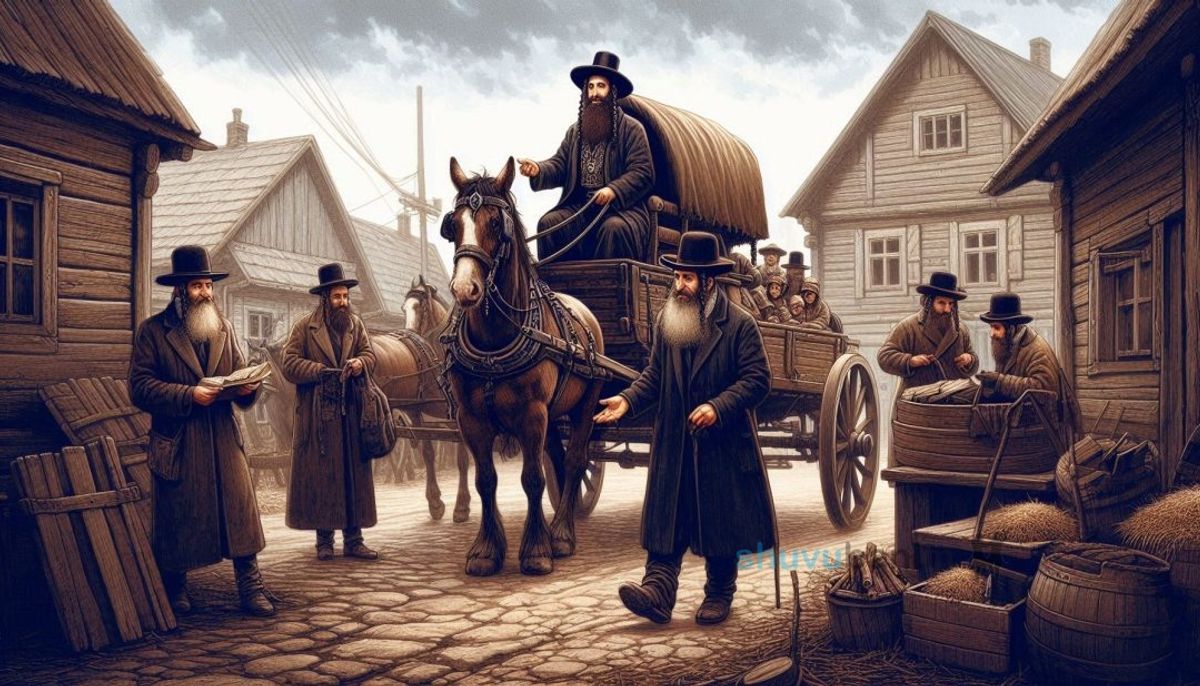
In this article, we will dive into the depths of the moving story of the meshulach (fundraiser) from the yeshiva of the Chafetz Chaim zt"l (of blessed memory), who traveled from village to village to collect tzedakah (charity). The story describes the tension between giving with a whole heart and the battle with the Yetzer Hara (evil inclination)—when a certain villager decided to stop donating after noticing a change in the way the charity was collected. Through the dynamic story of the meshulach, we are exposed to the supreme value of kavanah (intention) for the sake of Heaven, to spiritual principles emphasizing that every penny and cent is measured according to the intention of the giving, and to the deep understanding that acts of charity are also a cornerstone in Torah study and in fulfilling the dream of the Beis HaMikdash (the Holy Temple).
These are the words of our teacher, the Gaon and Tzaddik, Rabbi Eliezer Berland shlit"a (may he live long and good days). His words on the Haftarah (prophetic reading) add another layer, connecting the story of charity to the future vision of building the Temple and the revival of the Jewish spirit.
"And He filled him with the spirit of G-d in wisdom and in knowledge," these are his holy words:
In the time of the Chafetz Chaim zt"l (of blessed memory), there was a certain meshulach (fundraiser) who would go on foot from village to village (apparently collecting tzedakah for the Chafetz Chaim's yeshiva). There was one villager who would donate 50 zlotys to him—this was a massive sum in those days of the Chafetz Chaim—he donated 50 zlotys every time the fundraiser arrived. Sometimes he went by wagon, sometimes on foot. One day, he said to the Chafetz Chaim, "Listen, I think if I had a horse and carriage with a driver, I could collect much more money. This way, I walk on foot, sinking in the mud and snow until I reach a village, and when I arrive, people aren't home. If I had a horse and carriage, we could collect many times more." (Apparently, the Chafetz Chaim agreed that he should buy a horse, carriage, and hire a driver using the charity funds).
Well, when the meshulach arrived at this villager's home with a horse, carriage, and driver, the villager didn't want to give to him. He said, "I don't want to." So the Chafetz Chaim asked (the fundraiser), "What about that villager?" He replied, "He didn't want to give to me. He saw me arrive with a horse and carriage and said, 'You've become rich, you already have a horse! I don't give for horses and drivers; I give for yeshiva students, not for horses and drivers.'" Well, the Chafetz Chaim himself went down to him. The Chafetz Chaim arrived at this villager's home. The villager said, "I am not willing to give for horses. When he used to walk on foot, he would hire a driver for a few pennies (and I gave to him, but now) he is already with a horse and carriage, he's become a wealthy man (gvir). I don't give tzedakah for horses and drivers."
The Chafetz Chaim explained to him that it is written regarding Bezalel, "And He filled him with the spirit of G-d in wisdom and in knowledge," and it is written afterward, "to devise artistic designs in gold, silver, iron, and copper." (And it is difficult to understand:) If he has the spirit of G-d, why do we need to mention gold, silver, iron, and copper? He says that everyone who gives tzedakah—one gives tzedakah with a whole heart, so that it truly reaches the orphans, widows, and the poor and miserable people, and especially then it is the "Holy of Holies." So there were those who gave tzedakah lishmah (for its own sake), and they prayed that the money they gave should be used to make the Keruvim (Cherubim), the Ark, and the Keruvim. There were others who didn't think as much—the main thing was to give—they felt honored that they were bringing a respectable donation, so they made the adanim (sockets) from that. Others who had even less intention, they made the cords and the pegs from that, and after that the oxen to pull the wagons, which the Nesi'im (Princes) donated.
So the Chafetz Chaim told him that Bezalel knew exactly the intention of each and every person. This is what it tells us: "And He filled him with the spirit of G-d," and afterward it is written, "to devise artistic designs in gold, silver, iron, and copper." Bezalel knew regarding every cent, every penny, every gold coin—he knew what the intention of the one who gave it was. If he gave it to show off, or if he gave it truly L'shem Shamayim (for the sake of Heaven). According to this, he knew where to place it. In the Holy of Holies, he only placed those who intended truly for the sake of Heaven. And if not, he didn't place it there; if it was missing, then no—he waited until someone would come and donate truly for the sake of Heaven.
So he explained to the villager: If you do this truly for the sake of Heaven, then it will reach the Torah scholars—it is divided automatically. It is divided automatically. So when a person does something truly for the sake of Heaven, a person thinks truly for the sake of Heaven, and he thinks truly for the sake of Hashem, may He be blessed, for the sake of the Shechinah (Divine Presence)—he thinks truly—then he can merit that through his Torah study, the Beis HaMikdash (Holy Temple) will be built.
The words of our teacher, Rabbi Berland shlit"a, on the Haftarah:
"And he came to lie down at the end of the heap" (Ruth 3:7). Boaz revealed to Ruth, "May your reward be complete (shleimah)." He said, "I see that Solomon (Shlomo) will come from you, that he will build the Beis HaMikdash, and he will bring in the Ark with the Keruvim (Cherubim), and you will see the Keruvim; you will be present for this." This is what Boaz revealed to Ruth: "May your reward be complete (shleimah)." The Midrash says (Pesikta de-Rav Kahana 16:1), "Shleimah"—this refers to the fact that he prophesied to her about the kingdom of Solomon (Shlomo). And it is written in the Gemara (Bava Batra 91b), "And he placed a throne for the mother of the king" (I Kings 2:19). Who was this? Ruth, who lived until the time of Solomon. After Solomon built the Beis HaMikdash and he merited the Beis HaMikdash together with Ruth, she continued to live; she lived for almost 400 years.
Because Ruth was at the beginning of the days of the Judges, and all the days of the Judges were 400 years. Joshua and the Elders were 30 years. 440 (years from the Exodus) until they built the Beis HaMikdash. It was 410 years from the passing of the Elders until (the Temple was built). Ruth was at the beginning of the days of the Judges, and all of Ruth's prayers were that her son (should build the Temple, as it is written), "She considers a field and buys it"—this refers to Bathsheba and Ruth, who prayed that Mount Moriah and the Beis HaMikdash would be built by their son, King Solomon, the grandson and great-grandson of Ruth—that he would merit to build the Beis HaMikdash.
And this is what she says (to Naomi), that he told me to stick with the "lads" (ne'arim) (Ruth 2:21). But it is written that he told her (Ruth 2:8) to go with the "young women" (ne'arot). He didn't (say "lads" to her). Rather (the explanation is), he told me that he would reveal to me that I would yet merit to see the "lads"—meaning the Keruvim (Cherubim). (As it is written), "The angel who redeems me from all evil shall bless the lads (ne'arim)"—these are the Keruvim; this is the angel Metat-Sandal (Metatron and Sandalphon).
King Solomon built the Holy Temple because he merited that even his eyes turned to milk, turned to the Supernal Whiteness. Because with King Solomon, Arich Anpin (the level of Divine 'Long Face') shone into Zeir Anpin (the level of Divine 'Small Face'). And now, if we want to build the Holy Temple, we must once again draw down the eyes of Arich Anpin to shine into Zeir Anpin. And this is (what Boaz said to Ruth), "Lie down until the morning"—which is the time of the Resurrection.
Subscribe to Our Newsletter
Receive Torah articles and inspiration directly in your inbox