
The Secret of Humility and Submission: The Vessel for Comprehending the Torah
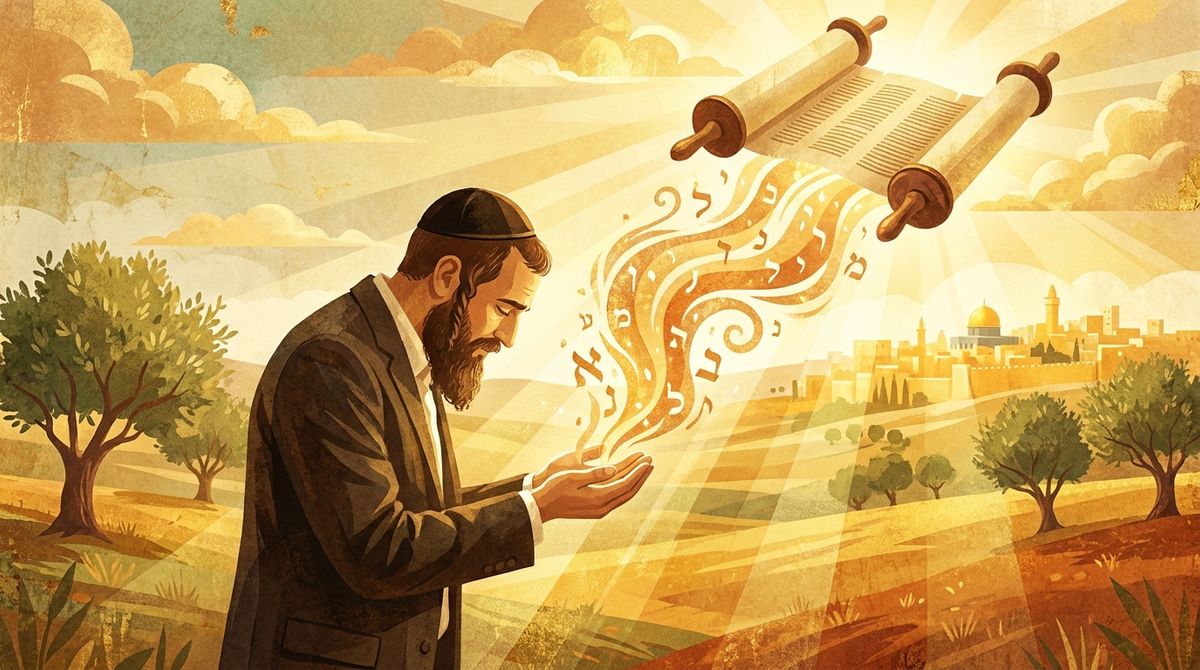
Class No. 62 | Thursday, Parashas Matos-Masei, the eve of 25 Tammuz 5756 (Continued in No. 61)
The article explains how humility and submission are the essential conditions for meriting high spiritual attainments, as we saw with Rabbi Akiva and Rabbi Yehoshua ben Chananya. Furthermore, it explains that drawing close to the tzaddik does not exempt a person from the work of teshuvah (repentance); rather, it requires him to pour out his heart like water and weep over every spiritual blemish.
The Gemara relates that Rabbi Akiva was the son of converts. The entire essence of a baal teshuvah (returnee to the faith) is that he must always approach Hashem with humility and submission. The Kotzker Rebbe explained the Talmudic statement, "In the place where baalei teshuvah stand, completely righteous people cannot stand," in an inverse way: baalei teshuvah do not always manage to "stand" and hold their ground. They become enthusiastic and excited, but because they do not always grasp things with deep understanding, their fire is liable to fade.
In order to hold his ground, a person must glue himself to the benches of the Beis Midrash (study hall), literally tying himself down with handcuffs. Otherwise, the enthusiasm will be like a flying saucer that appears and vanishes, or like gas that ignites and immediately evaporates, leaving the person empty and regretting that he ever drew close.
Magnificent Wisdom in an Ugly Vessel
The more humble a person's mind is, the higher the spiritual attainments he merits. The Gemara in Tractate Taanis (7a) tells of Rabbi Yehoshua ben Chananya, who had a very ugly physical appearance, yet his wisdom was so immense that even the Emperor Hadrian—who destroyed the city of Beitar—would completely nullify himself before him. If the nations of the world were to see just one proper Jew, with the radiance of the Shechinah (Divine Presence) shining upon his face, they would all nullify themselves before him.
One day, the Emperor's daughter asked him: "How is it possible that such magnificent wisdom is placed in such an ugly vessel?"
"Rabbi Yehoshua ben Chananya said to her: 'Your father, in what does he store his wine, in earthenware vessels or in metal vessels?' She said to him: 'In earthenware vessels.' He told her: 'You are royalty, you should store your wine in vessels of gold!'"
The Emperor's daughter went and ordered that all the wine in the cellar be transferred into golden vessels, and immediately the wine spoiled. When the Emperor asked why she had done this, she told him about Rabbi Yehoshua's advice. The Emperor summoned him and asked him to explain the matter. Rabbi Yehoshua answered him: "I showed her that if you put wine in a simple earthenware vessel it is preserved, but in a precious vessel it spoils."
The Emperor challenged him: "But aren't there many Torah scholars among the Jewish people who are handsome and beautiful?" Rabbi Yehoshua replied: "If they were ugly like me, they would be much wiser!" The more a person is humbled, the more his intellect and wisdom grow, and his surrounding spiritual lights expand.
The Secret of Rabbi Akiva's Attainment
The Pri Tzaddik of Lublin explains that specifically Rabbi Akiva, being the son of converts, always approached Hashem out of absolute humility and submission. It was this lowliness that earned him spiritual attainments that no other Tanna (Mishnaic sage) ever merited.
It is told of Rabbi Akiva that the Romans combed his flesh with iron combs, and he cried out, "Hashem is One." When Moshe Rabbeinu saw this, he was shaken and asked:
"Is this the Torah and this its reward? A man who raised twenty-four thousand students, who established Rabbi Shimon bar Yochai and spread Torah throughout the entire Jewish nation—at the age of 120 they take him and comb his flesh with iron combs?" Hashem said to him: "Be silent! Thus it has arisen in My thought."
The Gemara describes that when Moshe Rabbeinu ascended to the Heavens, he found Hashem sitting and tying crowns to the letters of the Torah. Moshe, who did not yet know the secret of the tagin (crownlets on the letters), thought they were mere decorations and asked: "Master of the Universe, who is forcing Your hand to add these?" Hashem answered him: "There is a man destined to be born at the end of several generations, and Akiva ben Yosef is his name, who will expound upon each and every point mounds upon mounds of halachos (laws) and secrets."
Returning Backwards to the Sefirah of Binah
Moshe Rabbeinu asked to see this great man. Hashem told him: "Turn backwards." To achieve this, Moshe had to ascend eight levels backwards through the Sefiros (Divine emanations)—from Malchus to Hod, from Netzach to Tiferes, and so on, until he reached the Sefirah of Binah (Understanding). Only there, in the Sefirah of Binah, could Moshe see and comprehend the attainment of Rabbi Akiva.
Moshe went and sat at the end of eight rows of Rabbi Akiva's students. He heard them expounding secrets on every single point, and he did not understand a single word! He grew faint, until he heard the students ask Rabbi Akiva: "Rebbe, from where do you know these secrets?" Rabbi Akiva answered them: "It is a law given to Moshe at Sinai." At that moment, Moshe Rabbeinu's mind was put at ease, and he realized that he was destined to receive all of these secrets during the continuation of his forty days on Mount Sinai.
The True Work of Teshuvah and Tears of Repentance
From here we learn about the true essence of serving Hashem. A person cannot think that just because he traveled to Uman or drew close to Breslov Chassidus, everything is already fine and he is exempt from spiritual work. It is a terrible mistake to think that there is a Rebbe who promises to pull you out of Gehennom (Purgatory) without any effort on your part. The Rebbe will indeed pull you out, but the question is when—perhaps after a million years, depending on how many "packages" of sins you arrived with.
For every blemish and every evil we have committed, we will have to pay and make a tikkun (rectification). The only way is to pour out oceans of tears. When a person travels to the tziyun (gravesite) of the tzaddik, the goal is not "a vacation from the wife" or a trip to Russia, but rather to fulfill the verse, "Pour out your heart like water." People arrive in Uman with a heart of stone, having never shed a tear in their lives, and there their heart opens up and rivers of tears begin to flow from them.
One must take the Gemara, internalize the intellect into the mind, and then one sees all the guidance and salvations. The Torah illuminates like a sun burning at millions of degrees. Moshe Rabbeinu did not seek honor, and a true tzaddik does not "just blindly atone" for sins against Halacha — for every transgression, one must cry and simply lament against the wall, and rectify everything out of true lowliness and submission.
Part 2 of 2 — Lesson No. 62
All parts: Part 1 | Part 2 (Current)
Subscribe to Our Newsletter
Receive Torah articles and inspiration directly in your inbox