"And the Kohen Shall Purify Him" • A Review of Shabbos Rosh Chodesh Iyar, Parshas Tazria-Metzora, in the Presence of Rabbi Eliezer Berland shlit"a
The Holy Friday Night
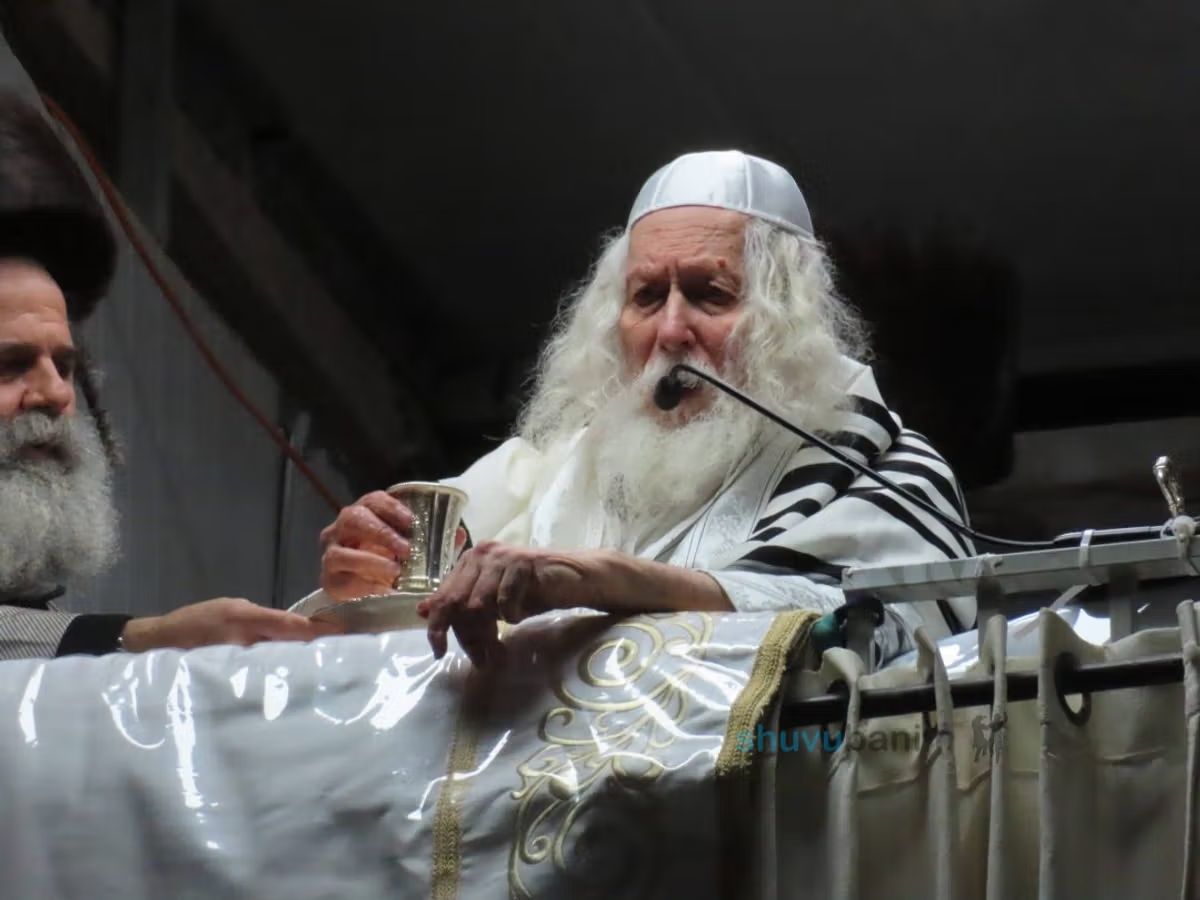
At 6:44 PM, Rabbi Berland shlit"a came out to the balcony of his home for the Minchah (afternoon) prayer of Friday evening, adorned in his Shabbos garments. The congregation sang "Ohr Zarua LaTzaddik" for twenty minutes. Afterward, Rabbi Berland shlit"a stood for the Minchah prayer. At the conclusion of the Friday afternoon Minchah, he recited the Seder HaHiskashrus (prayer of connection to the tzaddikim) word for word, with the entire congregation repeating after him. Following this, the Rav began Kabbalas Shabbos, reciting all the psalms from "Lechu Neranena" through "Mizmor LeDavid." He then began singing "Lecha Dodi," which lasted for about thirty minutes, followed by "Kevgavna" and the Friday night Maariv (evening) prayer, filled with song and melodies. At the end of Maariv, the Rav began Sefiras HaOmer (the counting of the Omer) for the day of Gevurah shebeTiferes, which took about twenty minutes. After counting the Omer, he continued with the traditional Friday night zemiros (Shabbos songs) as is his holy custom every Shabbos, extending the singing of "Shalom Aleichem" for about five minutes. Just like last Shabbos, after reciting "Ki Malachav Yetzaveh Lach," he recited Kaddish, skipping "Ribon Kol HaOlamim" and "Eishes Chayil." Rabbi Berland shlit"a announced that the Shacharis (morning) prayer would begin at 4:45 AM, and the evening prayers concluded at 9:07 PM, after two hours and twenty-three minutes.
Shacharis Prayer and Hallel for Rosh Chodesh
Rabbi Berland shlit"a came out for the Shacharis prayer at 5:01 AM. The Rav began the prayer with Birkos HaShachar (morning blessings), followed by Chatzos (midnight lament over the Temple) and the morning zemiros. During this time, he wrapped himself in his tallis and continued with the Korbanos (offerings). At 5:50 AM, he began reciting "Hodu LaShem Kir'u Bishmo." During Pesukei Dezimra (verses of praise), he extended the prayers with melodies and songs, just as he does every week. In particular, he prolonged the singing of "Hoshia Es Amecha" for about eight minutes, as well as "HaNechemadim MiZahav" for five minutes. At 6:30 AM, they recited "Baruch She'amar," and he extended the singing of "Ki Chol Peh Lecha Yodeh" for an additional five minutes. Rabbi Berland shlit"a stood for the Shemoneh Esrei (silent devotion) at 7:17 AM.
After the conclusion of the Chazzan's repetition, Rabbi Berland shlit"a recited the blessing over the Hallel for Rosh Chodesh. At the opening of Hallel, he extended the singing of "BeTzeis Yisrael MiMitzrayim" for over twenty minutes. He also prolonged the melodies for "Hodu LaShem Ki Tov" and "Ana Hashem Hoshia Na." After about forty-five minutes of immense joy and dancing during the singing of Hallel, the Rav shlit"a concluded the Shabbos Shacharis prayer along with the Rosh Chodesh Hallel at 8:20 AM.
The Torah Reading
Following the Chazzan's repetition, two Torah scrolls were taken out—one for Parshas Tazria-Metzora and the other for the Rosh Chodesh reading. Rabbi Berland shlit"a immediately instructed his grandson and gabbai to begin the Torah reading. One after another, those celebrating joyous occasions and those observing a yahrtzeit (anniversary of passing) were called up to the Torah, meriting to stand beside the Rav shlit"a during the prayer. The Torah reading for the weekly portion, followed by the Rosh Chodesh reading as mentioned, along with the Haftarah of "HaShamayim Kis'i," lasted for a full hour.
At the conclusion of the Haftarah, Rabbi Berland shlit"a began reciting "Yekum Purkan," extending the singing of the words "Zar'a chaya vekayama" (viable offspring) for about three minutes.
Mussaf Prayer for Shabbos Rosh Chodesh and Kiddusha Rabba
Afterward, he recited Ashrei, and at approximately 9:25 AM, he approached the amud for the Mussaf (additional) prayer. They recited the specific Mussaf prayer for Shabbos Rosh Chodesh, "Atah Yatzarta." Following the Chazzan's repetition, the Rav concluded the prayer in its regular order. After reciting The Tikkun HaKlali, he made Kiddush over a cup of wine for Kiddusha Rabba (the daytime Kiddush) and delivered an extensive Torah lesson lasting about twenty-six minutes.
At 10:27 AM, he returned to his holy home after five hours and twenty-six minutes (26 being the numerical value of Hashem's holy name, Havayah). The congregation merited to experience Shacharis, Hallel for Rosh Chodesh, the Torah reading, the "Atah Yatzarta" Mussaf prayer, and a Torah lesson during Kiddusha Rabba, all together with Rabbi Berland shlit"a.
Minchah Prayer
At 6:50 PM, Rabbi Berland shlit"a came out to the balcony of his home for the Shabbos Minchah prayer, beginning with the singing of "Ohr Zarua LaTzaddik" for ten minutes. He then recited Kaddish, and the Holy Ark was opened with the singing of "Yehei Ra'ava" for about five minutes. Following this, the Rav shlit"a read the Torah for three aliyos from Parshas Acharei Mos. At the conclusion of the reading, the Torah scroll was returned to the Ark with the singing of "Ki Lekach Tov," and the congregation stood for the Shabbos Minchah Shemoneh Esrei.
Ra'ava Deravin (The Third Shabbos Meal)
At the conclusion of the Shabbos Minchah prayer at 7:28 PM, from his place on the balcony, Rabbi Berland shlit"a washed his hands for Shalosh Seudos (the third Shabbos meal). Instead of immediately beginning with zemiros as is his holy custom, the Rav shlit"a delivered a Torah lesson for fifteen minutes. Afterward, he began the zemiros for the third meal. As the singing began, the Rav went inside his holy home while the congregation continued the zemiros in order. During the song "Ki Eshmera Shabbos," the Rav shlit"a returned to the balcony. At the conclusion of the zemiros, which lasted about twenty-three minutes, he began singing "Yah Ribon" for about fifty-five minutes, extending it greatly. Following this lengthy singing, just as in recent weeks, the Rav did not continue with the usual melodies but instead began delivering a twenty-minute lesson to his grandchildren on the balcony. At 9:20 PM, he began "Tzur Mishelo Achalnu" and led the Birkas HaMazon (Grace After Meals) over a cup of wine.
Maariv and Havdalah
Immediately after Birkas HaMazon, Rabbi Berland shlit"a began singing "LaMenatzeach BiNeginos" once. He then immediately began the Motzaei Shabbos (Saturday night) Maariv prayer with fiery, passionate melodies. After the Shemoneh Esrei, he surprisingly began delivering a third Torah lesson for this prayer session. This time, since Shabbos had already concluded, the entire congregation merited to hear the lesson broadcast over a loudspeaker. During the lesson, he repeatedly mentioned the spiritual virtue of the Omer counting of "Tiferes shebeTiferes," explaining that in the returning light (Ohr Chozer), this corresponds to "Hod shebeHod." He also recounted the miraculous salvation from the gallows of the tzaddik Rabbi Shmuel Horowitz zt"l, as brought down in the book Yemei Shmuel.
At the end of the lesson, he began Sefiras HaOmer, counting "Tiferes shebeTiferes." The counting of the Omer lasted for about fifteen minutes. Upon concluding, Rabbi Berland shlit"a recited Havdalah over a cup of wine, accompanied by the singing of "LaYehudim."
At the Conclusion of the Day of Rest
After Havdalah, at 10:27 PM, the Rav washed his hands for Melaveh Malkah—the traditional post-Shabbos meal known as the feast of King David, the Mashiach. Rabbi Berland shlit"a sang all the Melaveh Malkah zemiros together with the entire congregation. During the song "HaMavdil," the Rav went inside his home. Before singing "Eliyahu HaNavi," the congregation waited for about ten minutes until the Rav returned. Rabbi Berland shlit"a came back and delivered a Torah lesson lasting thirty-two minutes. Immediately after the lesson, the Rav announced that he had already recited Birkas HaMazon in his residence and returned to his holy home at 11:24 PM. This concluded an extended period of four hours and thirty-four minutes that the congregation merited to spend together with him, spanning from the Minchah prayer through Shalosh Seudos, Maariv, and Melaveh Malkah.
In total, the congregation spent approximately twelve hours and twenty-three minutes in his presence over the course of Shabbos. We merited to take shelter in his holy shadow on the holy Shabbos of Parshas Tazria-Metzora, the second day of Rosh Chodesh, the 1st of Iyar, 5786.
Subscribe to Our Newsletter
Receive Torah articles and inspiration directly in your inbox