
Whoever Mourns for Jerusalem • Extensive Coverage of Tisha B'Av in the Presence
of the Gaon and Tzaddik Rabbi Eliezer Berland shlit"a
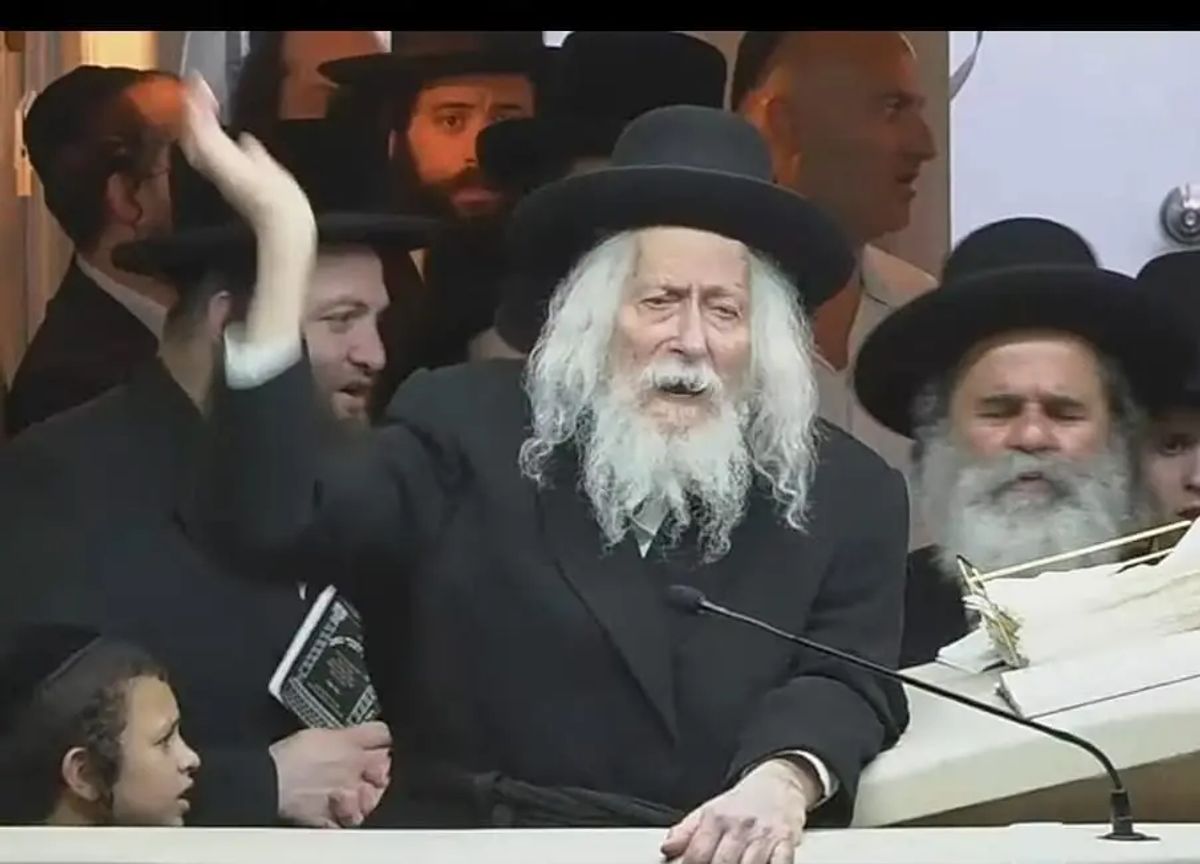
As published here in the week preceding Tisha B'Av (the ninth of Av, a day of mourning), our teacher, the Rav shlit"a (may he live long and good days), did not feel well and was forced to be hospitalized immediately after the conclusion of the Sabbath—Rosh Chodesh Av (the start of the month of Av)—for a full week of observation and tests in the hospital. Despite the frail health of the Rav shlit"a, through Hashem's immense kindness and abundant mercy, on the eve of the holy Sabbath of Parshas Devarim-Chazon, the Rav shlit"a decided to sign an early release document and return to spend the Sabbath of Parshas Devarim-Chazon together with our community (Anash). With Divine assistance, we also merited to be in the presence of the Rav shlit"a on Tisha B'Av.
"The Pleasantness [of the Sabbath] has Ceased at the Conclusion of the Sabbath"
This year, the fast of Tisha B'Av fell on the conclusion of the Sabbath (it should be noted that quite rarely, Tisha B'Av, when not postponed, falls on a Sunday). For this reason, the Mincha (afternoon) prayer and Seudah Shlishis (the third festive meal) of Sabbath Devarim-Chazon were held by our community without the Rav shlit"a, and they finished eating as is customary before sunset. However, the songs continued until the conclusion of the Sabbath.
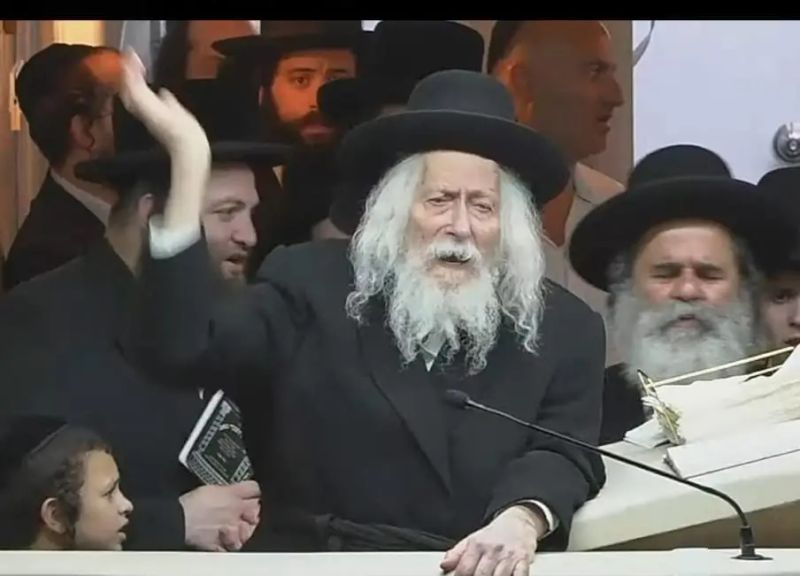
About half an hour after the conclusion of the Sabbath according to the time of Rabbeinu Tam (a stricter halachic opinion), at 9:12 PM, the Rav shlit"a entered for the Maariv (evening) prayer for the night of Tisha B'Av, saying the blessing "Baruch HaMavdil bein kodesh l'chol" (Blessed is He who distinguishes between the holy and the mundane).
Immediately afterward, the Rav sang the melody before 'Barchu' and then the Maariv prayer, which lasted about fifteen minutes in the usual tune, following the Shemoneh Esrei (the standing prayer).
The Rav shlit"a said he would give a lesson (shiur) to wait for those who take longer with the Shemoneh Esrei prayer. For sixteen minutes, he spoke from the depths of his heart about the destruction of the Temple (Beis HaMikdash). He primarily cited the Zohar on the verse "Behold, I will lay your stones with fair colors," explaining that Heaven forbid one should say those heathens burned the Palace of Hashem; rather, "From on high He sent fire into my bones, and it prevailed against them." The Temple remains alive and exists! During the lesson, the Rav also cited Midrash Eichah (Lamentations Rabbah, Parsha 1, 51) regarding the cow that lowed twice—once for the destruction of the Temple and immediately after for the birth of Mashiach (the Messiah). He spoke at length about how on this day, a Temple of fire descends.
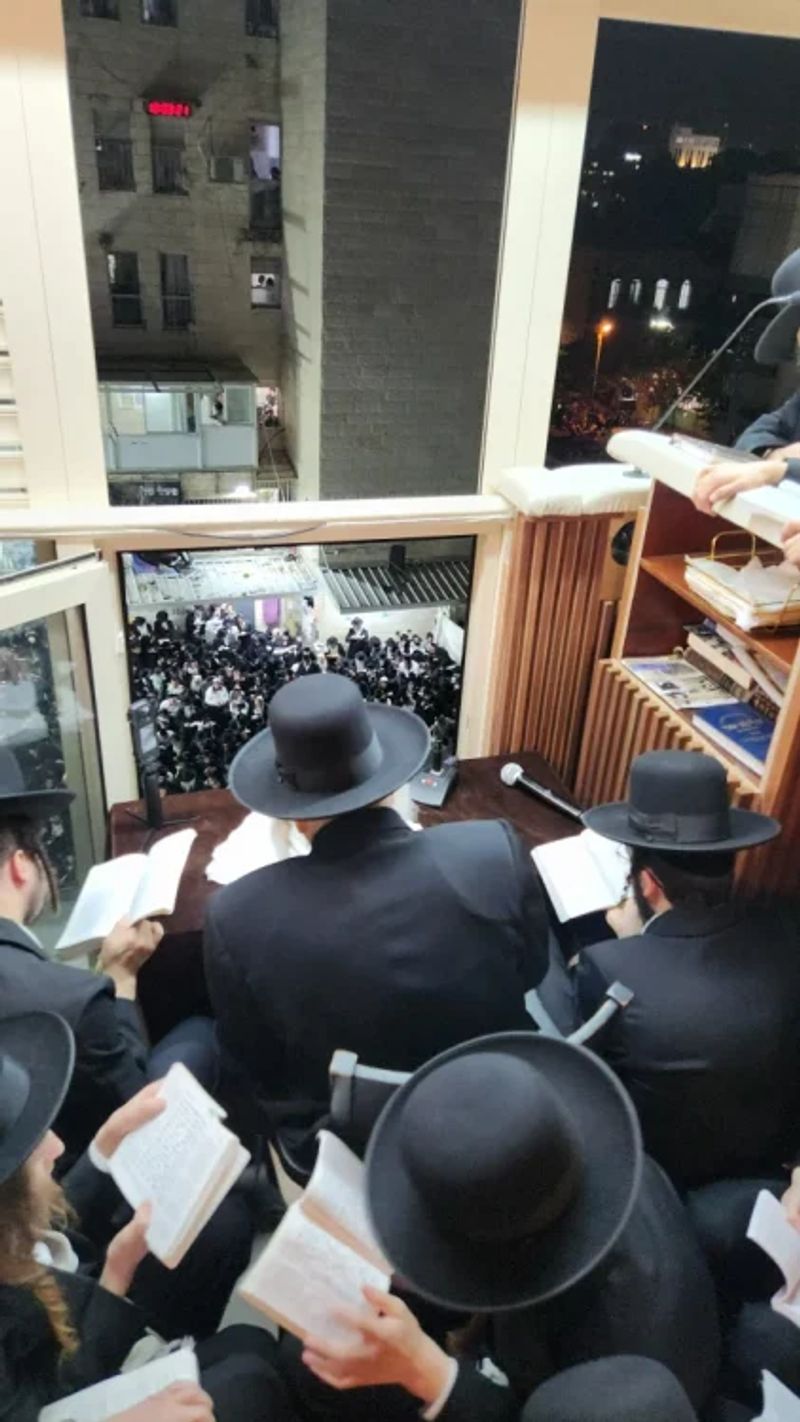
After the lesson, the Rav shlit"a sat down for the reading of Megillat Eichah (the Book of Lamentations) with great awakening. The Rav, with his stirring melody, read verse by verse; there was no one who did not feel the pain of the destruction. When he reached the verse "The kings of the earth did not believe, nor all the inhabitants of the world, that the adversary and the enemy would enter the gates of Jerusalem," his crying intensified, and he choked with great weeping and mourning over the destruction of Jerusalem.
After finishing the reading of Eichah, which lasted about half an hour, the Rav shlit"a began reciting the five Kinnot (elegies) customary to say on the night of Tisha B'Av, along with the elegy "Vayehi Noam Nishbat b'Motzaei Shabbat." Afterward, he said Kaddish, 'Uva L'Tzion,' and after 'Aleinu L'Shabeach,' he entered his home, saying that everyone should stay awake during the night and travel to the Cave of the Patriarchs (Me'arat HaMachpelah) and even to the graves of the Tzaddikim in the north of the country. The Shacharit (morning) prayer would begin at 4:30 AM.
"For This Our Heart Was Faint"
On that day when the wicked entered His Sanctuary, the Rav shlit"a entered for the Shacharit prayer without Tallis (prayer shawl) and Tefillin (phylacteries) at exactly 4:30 AM. He began by reciting the verses from Tikkun Chatzos (the Midnight Lament) that are customary to say on a day when Tachanun (supplication prayers) is not said, such as Tisha B'Av, of which it is written "He called a festival against me." He spent about two minutes on the melody of "For Hashem has comforted Zion."
Afterward, the Rav shlit"a began the Shacharit prayer in the usual tune, starting from the morning Korbanot (sacrificial readings), Pesukei D'Zimra (verses of praise), and the blessings of the Shema. Lengthy melodies were recorded for 'Hoshia es Amecha' (Save Your people) for about 5 minutes, and for the singing of 'Lamnatzeach Binginot Mizmor Shir' for about fifteen minutes. After the Shemoneh Esrei, the Rav shlit"a read from the Torah portion 'Ki Tolid Banim,' followed by the Haftarah (prophetic reading) 'Asof Asifam.' Immediately after the Haftarah, the Rav shlit"a descended from his place.
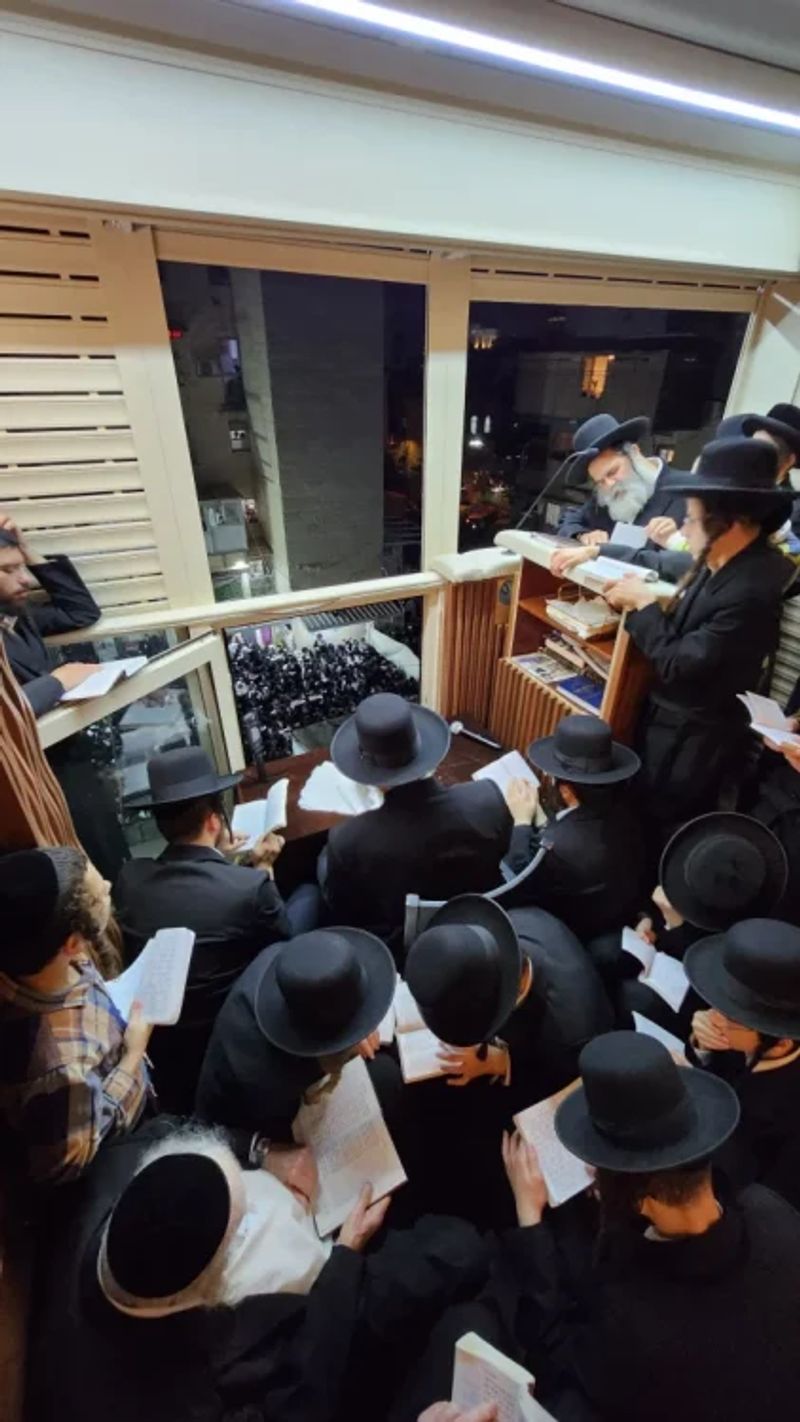
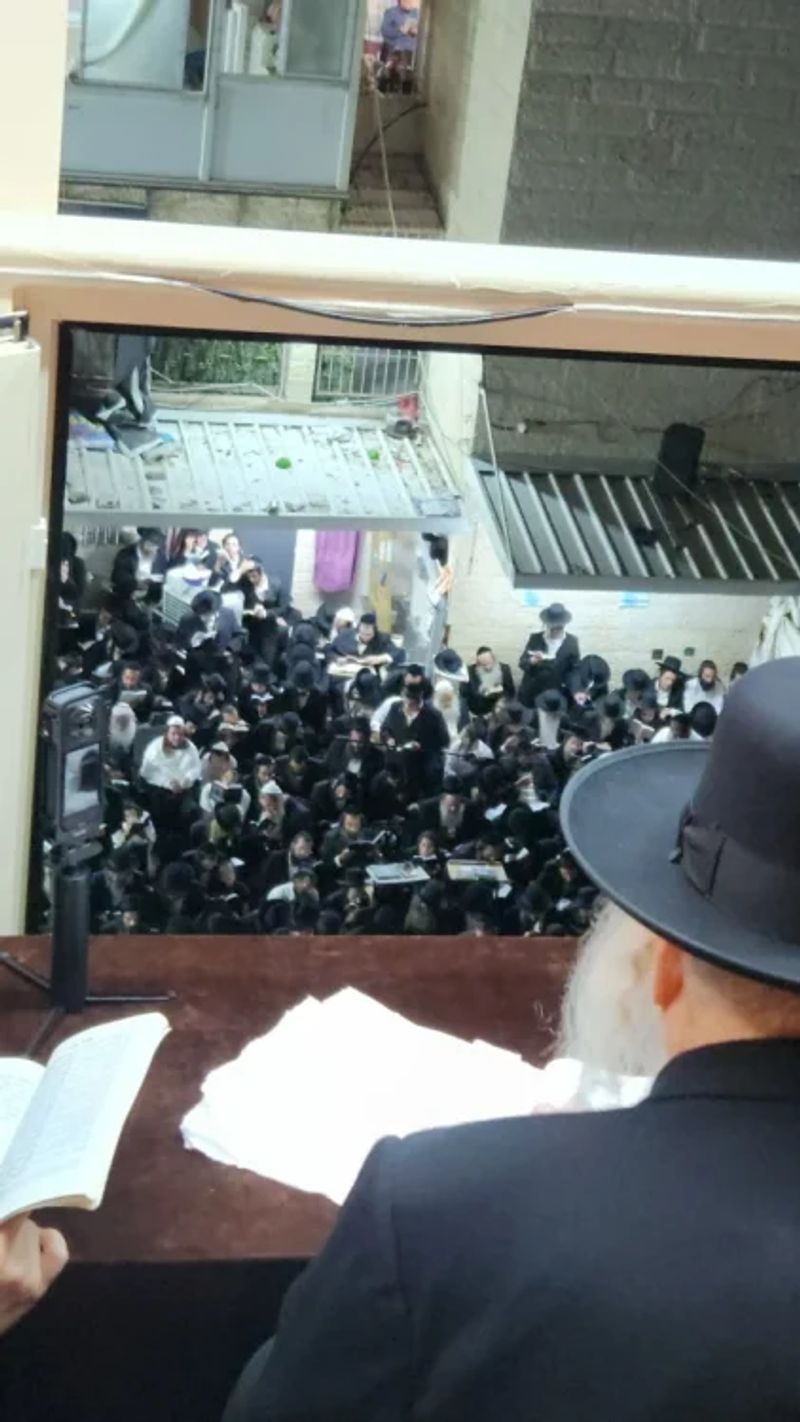
At 6:52 AM, the Rav shlit"a sat on the ground and began to lament with weeping and mourning over the destruction of the Temple and the suffering of the Shechinah (Divine Presence). In the large plaza outside, over a thousand of our community members (Anash)—men, women, and children—sat weeping bitterly over the breaking of the daughter of my people in the destruction of Jerusalem and the concealment of the Tzaddik, which is the cause of all calamities in every generation. "Every generation in which the Temple is not rebuilt in its days, it is as if it were destroyed in its days."
Due to the terrible heat that prevailed in the Holy Land on Tisha B'Av, the managers (gabbaim) of the Beis Medrash (study hall) rented portable air conditioners for the large crowd that came to mourn for Jerusalem together with the Rav shlit"a. It should be noted that due to the massive crowd, may they be protected from the evil eye, even though the Kinnot (elegies) were held in the large plaza outside our Beis Medrash this year, the great crowding was still felt.
Before the elegy 'Arzei HaLevanon' (Cedars of Lebanon), the Rav shlit"a stood up, and from then on, for nearly two hours—throughout the entire recitation of the Kinnot—he remained standing. During the Kinnot, the Rav shlit"a delivered several short lessons, including: before the elegy of the Ten Martyrs—'Arzei HaLevanon'—where he mentioned the killing of Rabbi Akiva; before the three Kinnot speaking of the decrees of 1096 (Tathnav); and before the elegy 'Sha'ali Serufah Ba'esh' (Inquire, O consumed by fire) composed by the Maharam of Rothenburg, where he spoke at length about how much was lost and cannot be found from those thousands of commentaries whose letters went up in fire, never to return. Likewise, before the elegy of Rabbi Yehuda HaLevi—'Zion Halo Tishali.' The Kinnot were recited with great awakening; especially unique was the final elegy 'Eli Zion Ve'areiha,' which the Rav shlit"a reads every year with a stirring melody, during which the Rav literally choked with tears.
After nearly three hours, at 9:47 AM, the Rav finished the recitation of the Kinnot. The Rav shlit"a sat on the ground again for the reading of Megillat Eichah, which was shorter than the previous night—exactly fifteen minutes. At the conclusion of Megillat Eichah, the Rav finished the prayer, saying that everyone should now go to the Western Wall (Kotel HaMa'aravi) until midday (Chatzos), and afterward travel to the graves of the Patriarchs in Hebron. The Rav shlit"a entered his holy home at 10:05 AM after five and a half hours of the Tisha B'Av day prayer.
"Renew Our Days as of Old"
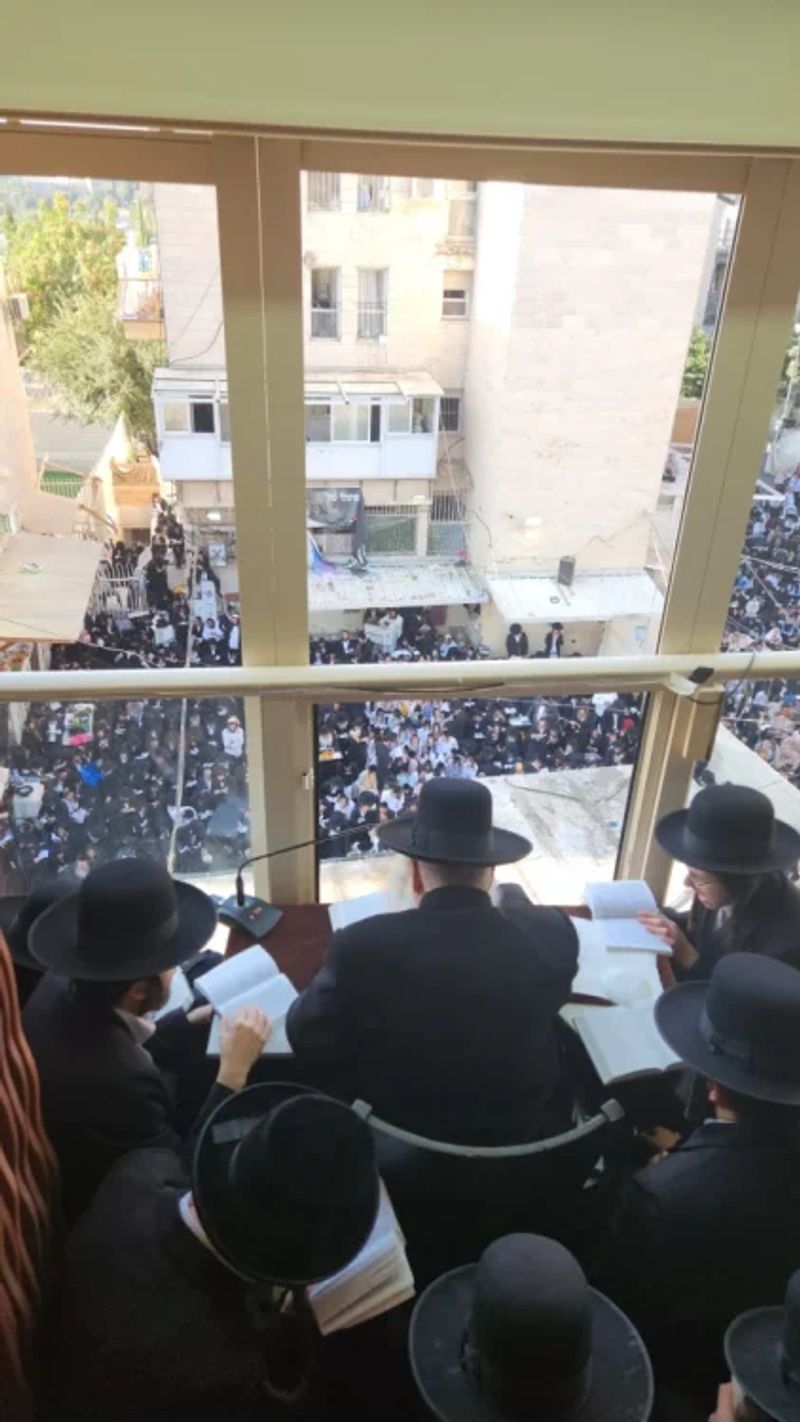
During the afternoon of the fast, the Rav shlit"a, who fasted despite his advanced age approaching ninety and despite his health condition for which he had been hospitalized only two days prior, did not feel well. Despite the clear halachic (Jewish legal) permission for him to break the fast, the Rav shlit"a paid no heed to the words of the doctor brought before him. On the day of the destruction of the Temple, on a day when all of Israel mourns and sits on the ground, on this day one does not eat or drink!
However, the body, to which the Rav shlit"a gives no rest at all, could not withstand the current state, and toward the afternoon hours, the Rav shlit"a began to feel unwell. Despite everything, the Rav still did not break the fast, but on the other hand, he announced the obvious—that he did not have the strength to go out and pray with the congregation. Toward 6:00 PM, the announcement was made that the Rav would not come out to pray with the public.
Consequently, many prayer groups (minyanim) organized for the Mincha prayer with the Torah reading and the Haftarah for Tisha B'Av. After Mincha and before Maariv, the congregation recited the Tikkun HaKlali (the General Rectification) for the healing of the Rav shlit"a, and at the conclusion, they prayed Maariv. With the end of Maariv, Rabbi Azizian shlit"a, who recites the Kiddush (sanctification over wine) for the community every Sabbath morning, performed the Havdalah (separation prayer) for the conclusion of Tisha B'Av that falls on a Sunday. Afterward, the managers of the Beis Medrash, under the auspices of 'Ichud Chassidei Breslov - Shuvu Banim,' brought out an immense abundance of refreshments, including over one hundred and fifty watermelons that were cut for the large crowd that came to seek refuge on the day of Tisha B'Av in the presence of the Rav shlit"a.
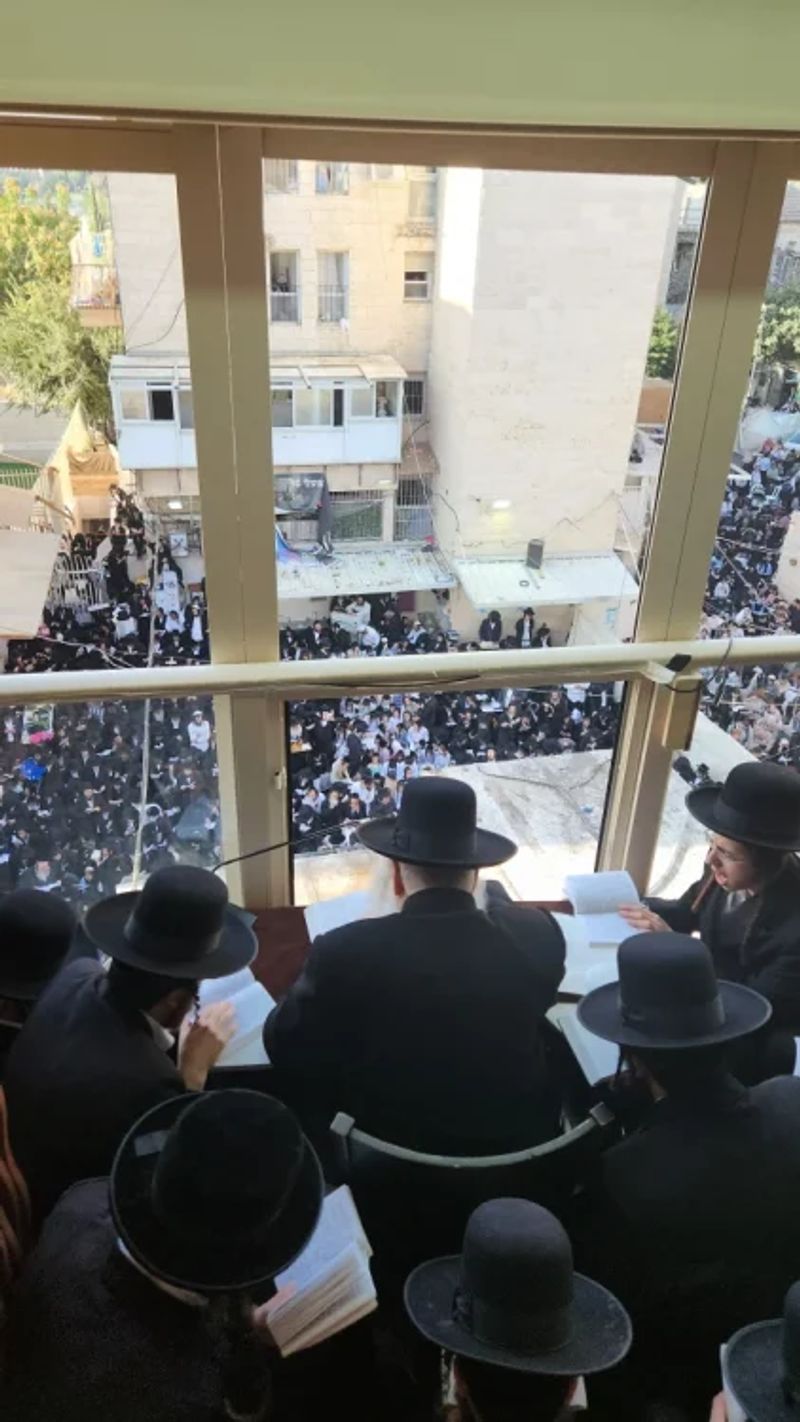
It should be noted that on the night following Tisha B'Av, around 11:00 PM, the Rav shlit"a went out again for medical treatment and from there continued to rest abroad for several days.
May it be His will that just as we merited to mourn together with the Rav shlit"a, we shall merit to see the rebuilding of our Holy Temple speedily in our days, Amen!
Subscribe to Our Newsletter
Receive Torah articles and inspiration directly in your inbox